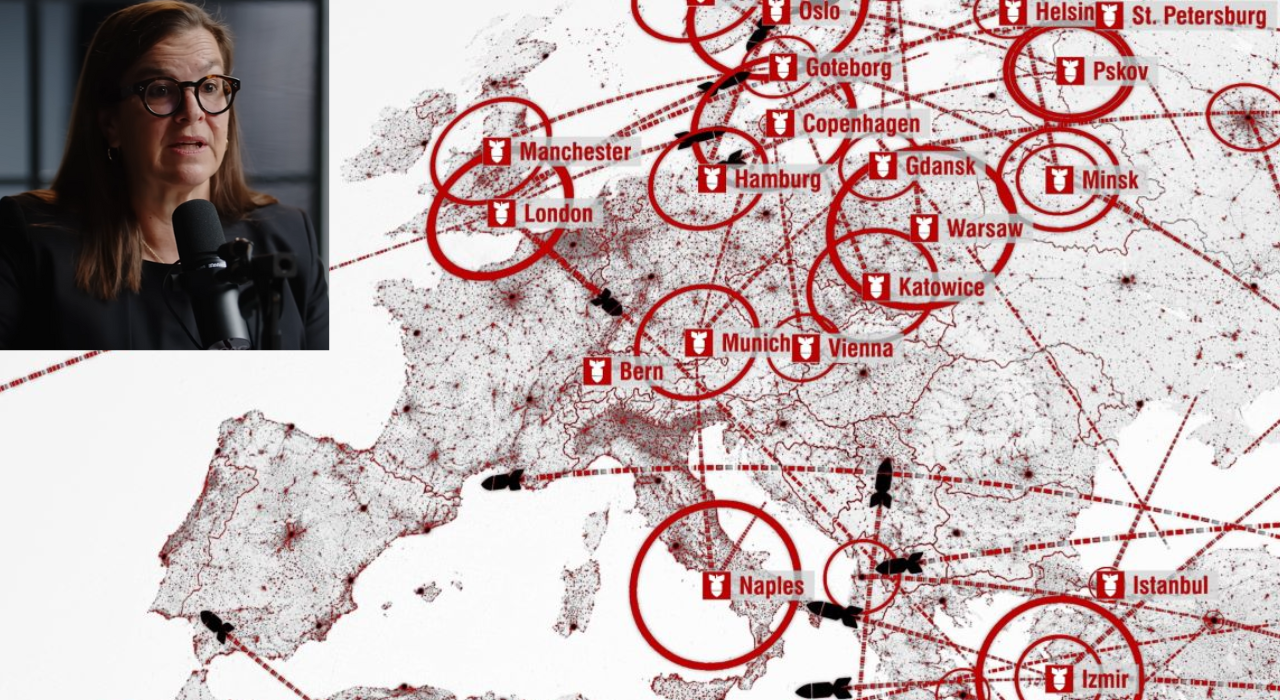
Okay, let's face it, the news lately has been… unsettling. With global tensions seemingly dialed up to eleven, it's no surprise that folks are asking the big, scary questions. Like, where on Earth would *actually* be safe if the unthinkable happens? And what's chilling is that experts are actually trying to answer that.
WW3 Survival: Why Australia & New Zealand Could Be...
Investigative journalist Annie Jacobsen has dived deep into this terrifying topic, and her findings, meticulously researched and frankly, pretty alarming, suggest that a full-blown nuclear war could erupt and escalate in just over an hour – 72 minutes to be exact, according to her sources. The result? Billions dead, and agriculture decimated across huge swathes of the globe. Think about that – 72 minutes.
So, where does one go to, you know, *not* be part of that statistic? Jacobsen, drawing on missile trajectory studies and nuclear winter simulations, points to Australia and New Zealand as potentially being among the few places left able to actually grow food after the dust settles. Let's be clear, it's not going to be a picnic. But the ability to produce sustenance is, to put it mildly, pretty crucial.
Now, I know what you might be thinking: is this just alarmist talk? Well, Jacobsen's analysis isn't some doomsday prepper fantasy. She's built her argument on launch trajectories, presidential decision-making timelines (which, by the way, are scarily short), the physics of firestorms (apparently a single one-megaton bomb could trigger a firestorm over 100 square miles, leaving nothing but ash), ozone depletion, and even modelling how food production would fare in a nuclear winter. Pretty comprehensive, right?
The current geopolitical climate, with Russia's war in Ukraine, China's increasingly assertive stance on Taiwan, the ever-simmering tensions between Iran and Israel, and North Korea's ongoing missile tests, only adds fuel to the fire – pun intended, I guess. It’s a stark reminder that these kinds of simulations aren’t just theoretical exercises; they're based on very real and escalating global tensions. It is always better to be prepared.
Of course, there are no guarantees. But Jacobsen's work, while undeniably grim, highlights the importance of understanding the potential consequences of nuclear war, and frankly, the need for de-escalation and diplomacy. Because even if you *are* lucky enough to be in one of the "safe" zones, life as we know it would be irrevocably changed. Let's hope it never comes to that.
Comments
Please sign in with Google to post a comment
No comments yet. Be the first to comment!