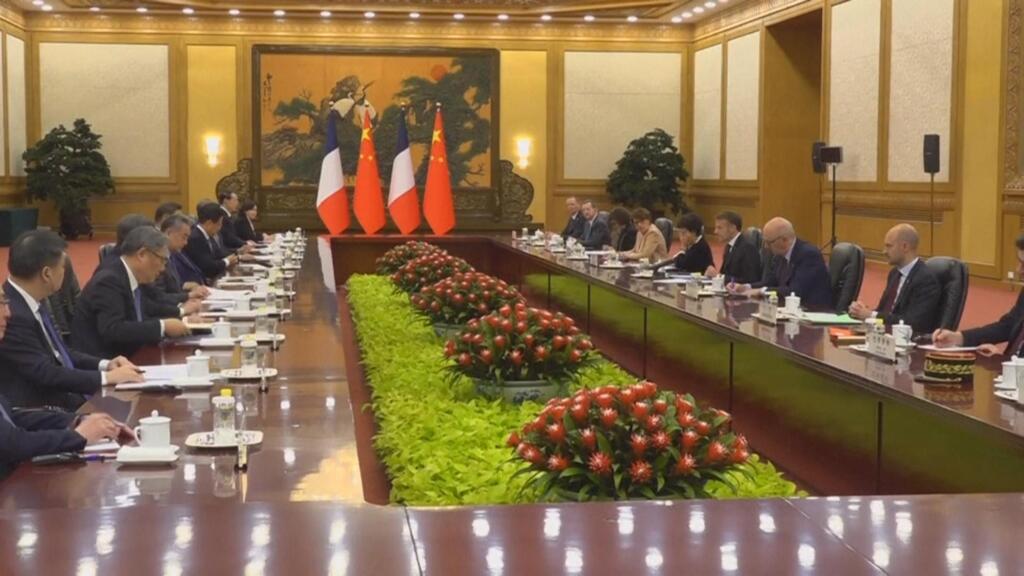
French President Emmanuel Macron's trip to China this week is making headlines, and rightly so. He's not just popping over for a quick hello; he's leading a significant delegation of French business leaders, all with a clear agenda: attract more Chinese investment into France and, crucially, reduce the gaping trade deficit between the two nations. It’s a high-stakes diplomatic and economic dance, and the world is watching.
Macron's China Gamble: Will It Pay Off Or Spark Tr...
The trade imbalance is a real sore point for France. They're importing far more from China than they're exporting, and that puts a strain on their domestic economy. Macron is hoping to level the playing field, and he’s likely using a combination of charm, persuasion, and perhaps a bit of subtle pressure to get China to open its markets further to French goods and services. Think luxury goods, agriculture, and maybe even some high-tech sectors. It's a delicate balancing act, though. France needs Chinese investment, but not at the expense of its own industries.
Of course, this visit isn't happening in a vacuum. The geopolitical landscape is shifting constantly, and trade relations are increasingly complex. Macron's visit is undoubtedly influenced by the broader global context, including concerns about fair trade practices and the rise of economic nationalism. It makes you wonder if he's also subtly positioning France as a more reliable and predictable partner compared to some other Western nations, especially given recent shifts in global politics. It's all part of the grand game.
Meanwhile, back in the US, the Trump administration is reportedly planning to ease fuel efficiency standards for vehicles. This move is being hailed as a victory by car manufacturers, who argue that stricter standards increase production costs and limit consumer choice. They've been lobbying hard for this, and it seems they're getting their way.
However, environmental advocates are understandably furious. Loosening fuel efficiency standards means more greenhouse gas emissions, which obviously contributes to climate change. It's a step backward in the fight against global warming, and it seems to contradict the urgent calls for climate action we're hearing from scientists and activists around the world. I can't help but think that short-term economic gains are being prioritized over the long-term health of the planet. It's a familiar story, unfortunately, but one that needs constant challenging. The contrast between Macron's efforts to foster international cooperation and this potential policy shift in the US is pretty stark, isn't it?
Comments
Please sign in with Google to post a comment
No comments yet. Be the first to comment!