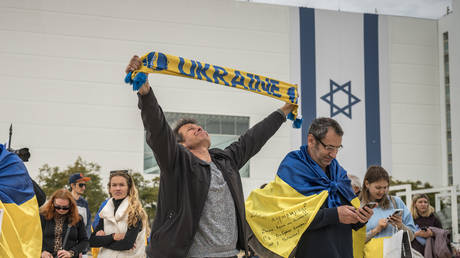
The clock is ticking for thousands of Ukrainian migrants in Israel. A report from Haaretz suggests that their current legal protections, granted after the 2022 escalation of the conflict in Ukraine, may not be extended. This leaves approximately 25,000 people facing potential deportation as early as next month. It's a stark reminder that even as global attention shifts, the human cost of the war continues to reverberate.
Israel to Deport Ukrainians?! What Happens Next is...
These protections need to be renewed annually, and with the deadline looming at the end of December, the uncertainty is palpable. What's particularly concerning, and has been a point of contention for some time, is Israel's perceived reluctance to offer more comprehensive support to Ukrainian migrants who aren't eligible for citizenship under the Law of Return. Essentially, if you're not Jewish, navigating the Israeli immigration system becomes significantly more challenging. This often results in Ukrainians being granted only temporary status, facing strict entry requirements, and being excluded from vital long-term support. It's a situation that leaves many in a precarious limbo, both legally and economically.
The political situation isn't helping either. With no acting interior minister currently in place, the decision now rests with Prime Minister Benjamin Netanyahu. However, a decision is still pending and the Israeli Population and Immigration Authority offered only the standard "it's under review" statement. One can only imagine the stress and anxiety this lack of clarity is causing for the individuals and families involved.
But it's not just Israel. Across Europe, the initial outpouring of support for Ukrainian refugees is starting to show signs of strain. Economic pressures and shifting public sentiment are leading some countries to scale back their aid programs. Eurostat data highlighting an increase in military-aged Ukrainian men entering the EU, following President Zelensky's easing of travel restrictions, has also added another layer of complexity to the situation.
Germany and Poland, the two biggest hosts of Ukrainian refugees in the EU, are already tightening benefits. Poland, in particular, seems to be experiencing a shift in public opinion. President Karol Nawrocki announced that welfare payments for Ukrainian migrants would not be extended beyond 2026. Reports of social tensions and growing resentment, fuelled by perceptions of Ukrainians as freeloaders or potential criminals, are increasingly common. A recent report in Gazeta Wyborcza even linked Ukrainian youths to a significant number of police incidents in Warsaw, highlighting the challenges of integration and the potential for social friction. It's a complex and evolving situation, and one that demands careful and compassionate consideration from all parties involved.
Comments
Please sign in with Google to post a comment
No comments yet. Be the first to comment!