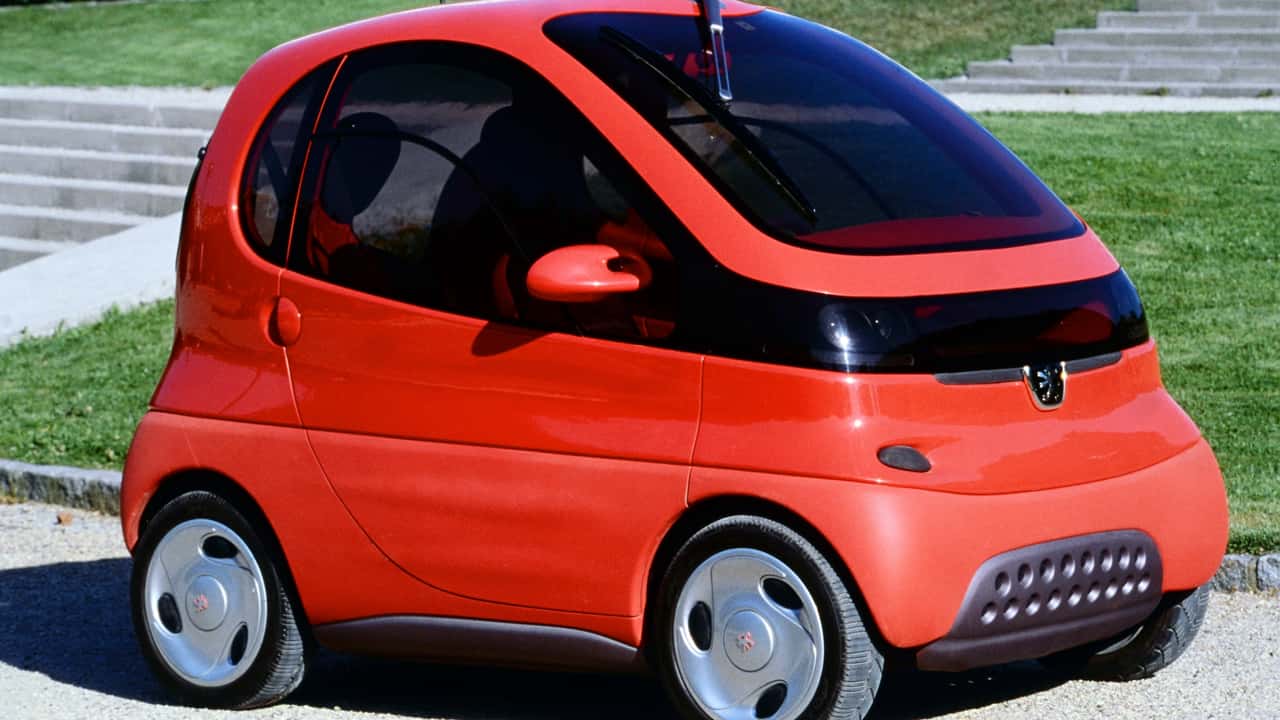
Remember the days when car companies dreamed big, really big, about urban transportation? Long before ride-sharing apps dominated our phones, Peugeot was tinkering with a fascinating concept called the Tulip, back in 1996. It’s a name you probably haven't heard in a while, but it represents a forgotten, and maybe even prescient, vision of how we could navigate cities.
Peugeot Tulip: The Forgotten Concept Car That Coul...
The Tulip’s story actually began a year earlier, in 1995. The PSA Group, parent company of Peugeot and Citroen, decided to explore a totally new approach to city mobility. Envisioned as a joint project, the aim was clear: create a compact, two-seater electric car perfect for zipping around town. Think practicality, a bit of comfort, and a whole lot of service-oriented thinking – basically, designing the whole experience around the user, not just the car itself. This wasn't just about building a vehicle; it was about building a system.
One of the coolest visual cues was the rooftop light. Simple, but brilliant. A quick glance would tell you if the car was available for use or currently charging. Imagine that replacing the frantic app checking we do today! Under the hood, or rather, under the floor, the Tulip packed a 9.6 kW (13 hp) electric motor. Now, that doesn’t exactly sound like a speed demon, but it was designed for urban agility, not highway cruising. Top speed was around 70 km/h (about 43 mph), and the range was a respectable 80 kilometers (roughly 50 miles). More than enough for a typical day of errands and commutes within a city.
The interior was all about comfort and ease of use. Remember, this was meant to be a pleasant experience, not just transportation. An electronic ventilation and heating system automatically adjusted the cabin temperature – a nice touch. But here’s where it gets really interesting. The Tulip came with a remote control, shaped like a telephone. With it, you could open and close the sliding doors and activate various other functions. Now, think about that for a second. This was the mid-90s! The Tulip was essentially predicting the future of smartphone-controlled cars and mobility services decades before they became commonplace. Pretty wild, right?
Looking back, the Peugeot Tulip wasn’t just a quirky concept car; it was a glimpse into a future of shared, electric urban mobility. While the execution might seem a little dated now, the core ideas – convenience, accessibility, and a focus on the user experience – are more relevant than ever. It makes you wonder what other brilliant ideas are gathering dust in automotive design archives, just waiting to be rediscovered and brought to life.
Comments
Please sign in with Google to post a comment
No comments yet. Be the first to comment!