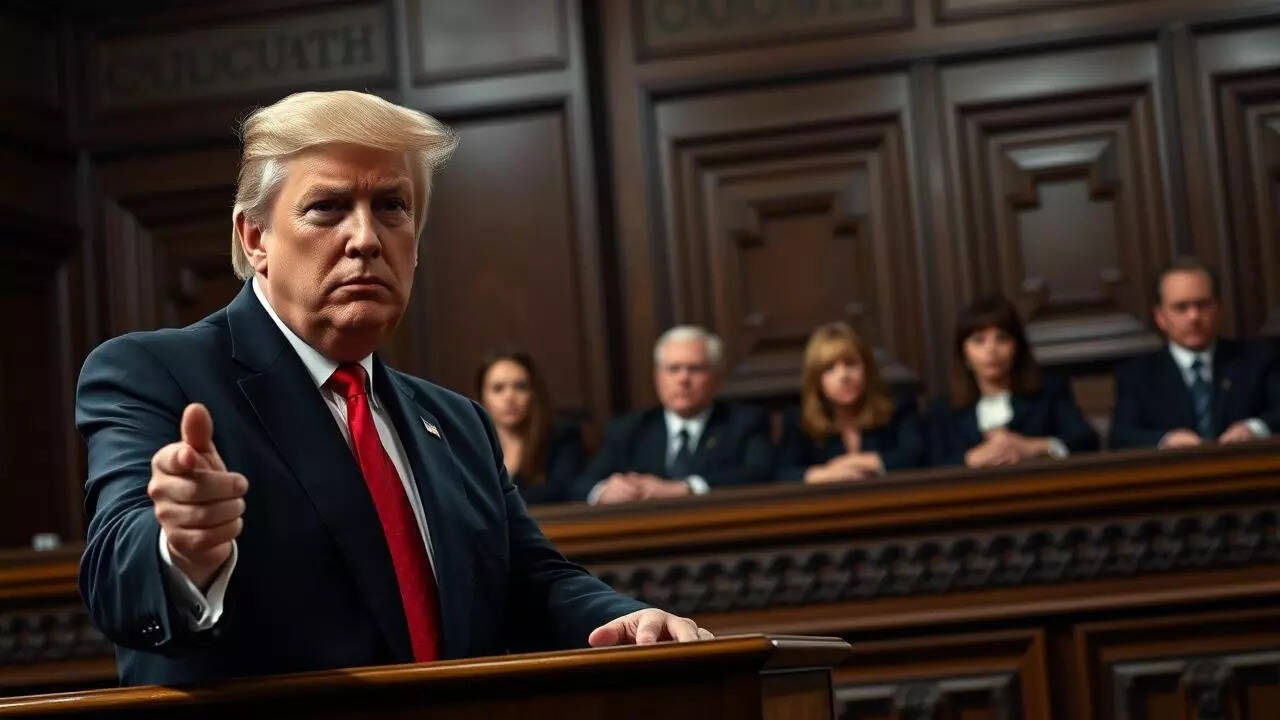
Trump Defends Tariffs, Lashes Out at Supreme Court Amid Trade Authority Review
Washington D.C. – Former President Donald Trump has launched a vigorous defense of his administration's tariff policies, asserting they have been instrumental in bolstering the American economy and elevating the nation's global standing. His comments come as the U.S. Supreme Court is actively deliberating the extent of presidential authority in imposing import duties, a decision that could reshape the landscape of future trade negotiations.
Trump Unleashes Fury, Branding Tariff Opponents "F...
In a post on his social media platform, Truth Social, Trump declared that opponents of tariffs are "fools," arguing that these measures have contributed to making the U.S. the "Richest, Most Respected Country In the World." He further cited a thriving stock market, record 401(k) values, and a surge in domestic investment as evidence of the tariffs' success. Trump claimed the U.S. is now taking in "Trillions of Dollars" and will soon begin paying down the national debt.
The Supreme Court's review stems from
The Supreme Court's review stems from a challenge to the tariffs imposed during Trump's presidency. Critics argue that these duties exceeded the president's constitutional authority and disrupted international trade relationships. The Trump administration, however, maintained that the tariffs were necessary for national security and to protect American industries from unfair competition.
Trump specifically highlighted what he perceives as a direct link between tariffs and increased investment in the U.S., stating that "businesses are pouring into the USA ONLY BECAUSE OF TARIFFS." He even suggested the possibility of a substantial dividend for Americans, excluding high-income earners, funded by tariff revenue.
Beyond the economic benefits, Trump also questioned the perceived limitations on presidential power in trade matters. He contrasted the ability of a president to completely halt trade with a foreign country – a power he asserts is approved by Congress – with the scrutiny surrounding the implementation of tariffs.
The Supreme Court's decision in this case is anticipated to have far-reaching implications. A ruling against the president's broad tariff authority could significantly curtail future executive power in trade negotiations, potentially shifting the balance of power between the executive and legislative branches. Conversely, a ruling in favor of the president could solidify the executive branch's control over trade policy, paving the way for more unilateral actions in the future. The business community, legal scholars, and international trade partners are closely watching the case, as its outcome will undoubtedly shape the future of U.S. trade policy for years to come.
Comments
Please sign in with Google to post a comment
No comments yet. Be the first to comment!