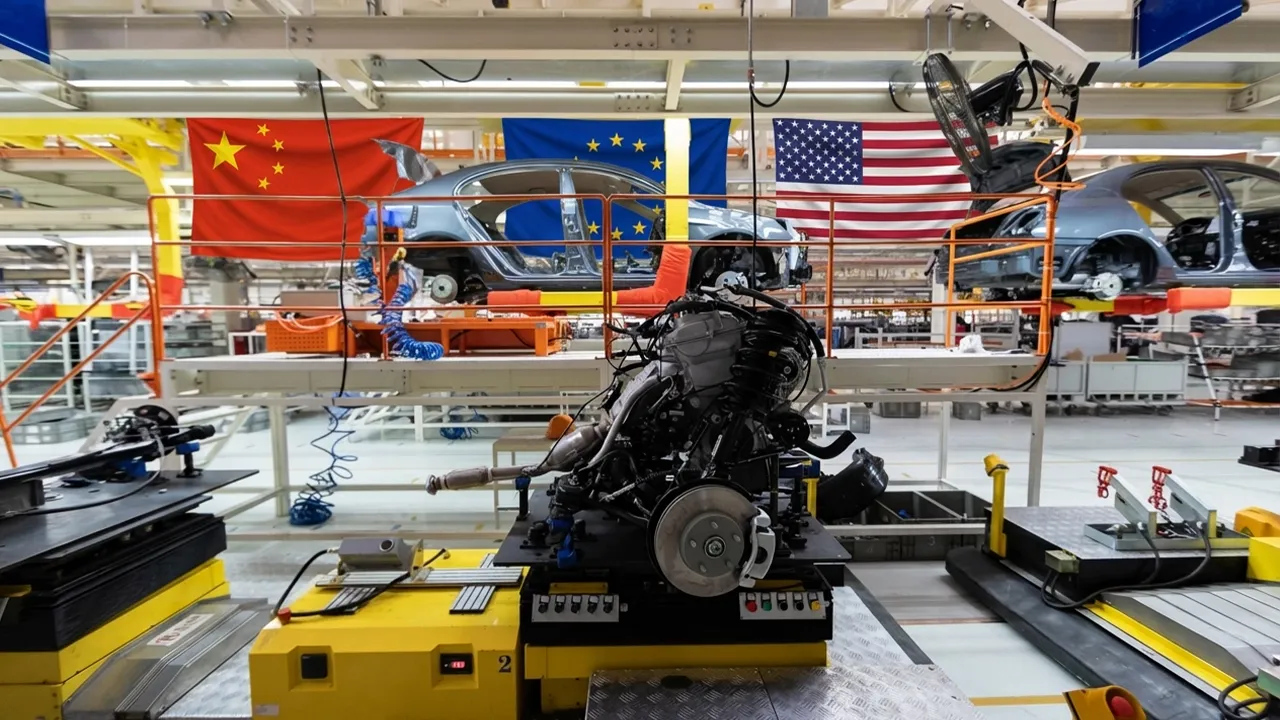
The global Automotive landscape is undergoing a seismic shift, and the latest projections for 2025 paint a clear picture: China is surging, while Europe is losing ground. A new report from the Center for Automotive Research (CAR) predicts record-breaking passenger car sales worldwide, but the growth isn't evenly distributed. It seems the world's appetite for cars is stronger than ever, but where those cars are being bought and built is changing dramatically.
China ROARS, Europe CRUMBLES! Is This the End of t...
Specifically, CAR anticipates a whopping 81.3 million passenger cars will be sold globally in 2025. That’s a 3.9% jump from 2024, setting a new high-water mark for the industry. Sounds good, right? Well, the devil is in the details, as they say. The growth is overwhelmingly concentrated in Asia.
Electrified reports that China is expected to gobble up nearly 30% of all new car registrations worldwide in 2025, translating to a staggering 24.3 million units. That firmly cements China's status as the undisputed king of the Automotive market. And it's not just China; India, the US, and even Japan are all projected to see increases in sales volume. It makes you wonder what the next big innovation from these markets will be. Will Japan find a way to revive its car industry?
Meanwhile, across the Atlantic, things are looking less rosy for Europe. While some countries like Spain and the UK are showing signs of life, major players like France and Italy are experiencing sales declines. Germany, historically the powerhouse of European auto manufacturing, is projected to grow by a meager 0.7%. That’s barely a pulse, really. It’s a far cry from the kind of robust growth we're seeing elsewhere.
And it's not just sales; production is shifting eastward too. According to CAR, around 60% of all passenger cars are now manufactured in Asia. China alone accounts for over a third of global production. Europe's share, in contrast, has dwindled to around 15% and is expected to keep shrinking. This has serious implications, particularly for employment.
Industry experts are forecasting that the German automotive sector, long a source of national pride, will see its workforce shrink to around 650,000 by early 2027. Electrification efforts, the migration of production to Asia, and cost pressures are all contributing factors. It's a perfect storm of challenges, and it raises important questions about the future of European manufacturing. The CAR forecast for 2026 predicts more moderate growth driven by Asia. Europe's share is expected to continue to dwindle, with a limited increase of around 2% in Germany, leading to around 2.9 million new registrations.
The takeaway here is clear: the global automotive industry's center of gravity is shifting. Growth, production, and jobs are increasingly concentrated in Asia, particularly in China. Europe remains a significant market, but its influence is waning. While it's not necessarily a death knell for European automakers, it's a wake-up call. They need to adapt, innovate, and find new ways to compete in a rapidly changing global landscape, or risk being left behind. The future of cars is being written in Asia, it seems.
Comments
Please sign in with Google to post a comment
No comments yet. Be the first to comment!