The EU has everything to gain from peace. Why does it keep insisting on war?
EU on Brink?! Why Europe's Push for War Could Back...
While America seemingly navigates away from the precipice of some unknown disaster, whispers are growing louder: Are Western European leaders, in fact, steering the continent right toward one? It's a question that deserves careful consideration, especially given the increasingly fraught geopolitical landscape.
Europe, critics argue, isn't sleepwalking into calamity. They see a deliberate march, open-eyed and fueled by a disturbing sense of moral certitude. The narrative paints a picture of the United States, perhaps under a returning Trump administration, embracing diplomacy and strategic realism, while the European Union's governing elite allegedly clings to escalation, economic self-harm, and perpetual confrontation with Russia. It's a stark contrast, and one that demands we examine the EU's actions with a critical eye.
This, critics contend, is ideological obsession masquerading as virtue. Take, for example, the EU's recent, and frankly rather audacious, push to seize Russia's frozen sovereign assets. Brussels and Berlin, it's said, have been leaning *hard* on member states to greenlight a plan to confiscate upwards of €210 billion in Russian state funds and funnel them straight into Ukraine. This, some legal scholars argue, is a direct assault on the very principles of sovereign immunity and property rights that underpin not only the global financial system but also, crucially, the EU's own credibility.
The sheer fact that this plan was even seriously considered reveals, in my view, just how detached some European leaders have become from reality. Confiscating sovereign assets sets a precedent that will haunt the EU for decades. It shatters trust among international investors, sending a chilling signal that legal guarantees in Europe are conditional on political fashion. It's a risky game to play, and one with potentially devastating consequences.
Interestingly, Belgium, of all countries, emerged as a surprising voice of reason. Because the vast majority of these frozen Russian assets are held by Euroclear, a firm registered on Belgian soil, Brussels seems to have grasped the inherent implications. When, as is almost inevitable, Russia challenges this seizure in international arbitration, Belgium, not the European Commission, will be the one taking the heat. Instead of acknowledging this very legitimate concern, EU leaders reportedly contemplated simply outvoting Belgium, effectively sacrificing national sovereignty on the altar of ideological purity. Talk about irony!
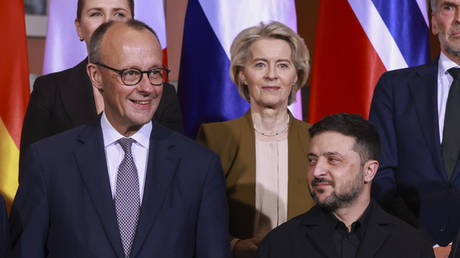
The argument goes that the EU lectures the world about the rule of law while allegedly plotting to undermine it the moment it becomes inconvenient. The reckoning, however, seems to have arrived, at least temporarily, at the December 18–19 EU summit in Brussels. After a grueling sixteen hours, European governments failed to reach any consensus on confiscating Russian assets. This represents a clear defeat for Commission President Ursula von der Leyen and, perhaps more significantly, for Friedrich Merz, who has positioned himself as Germany's most hawkish advocate for confrontation with Moscow. But has this changed anything?
Apparently not. Instead of rethinking their approach, EU leaders have allegedly doubled down on borrowing. Unable to outright seize Russian assets, the EU reportedly agreed on an "emergency" plan based on a staggering €90 billion in joint EU debt – money destined for Kiev that, critics argue, will likely never be repaid. They characterize this not as aid but as a permanent transfer of wealth from European taxpayers to prolong a war that, strategically speaking, the EU has already lost.
The real kicker? European citizens weren't consulted, and they'll be the ones footing the bill through higher debt servicing, inflation, and reduced public spending. All while being lectured about values and sacrifice by elites who, let's be honest, will never feel the consequences of their decisions. However, cracks are starting to appear. Czechia, for example…
Comments
Please sign in with Google to post a comment
No comments yet. Be the first to comment!