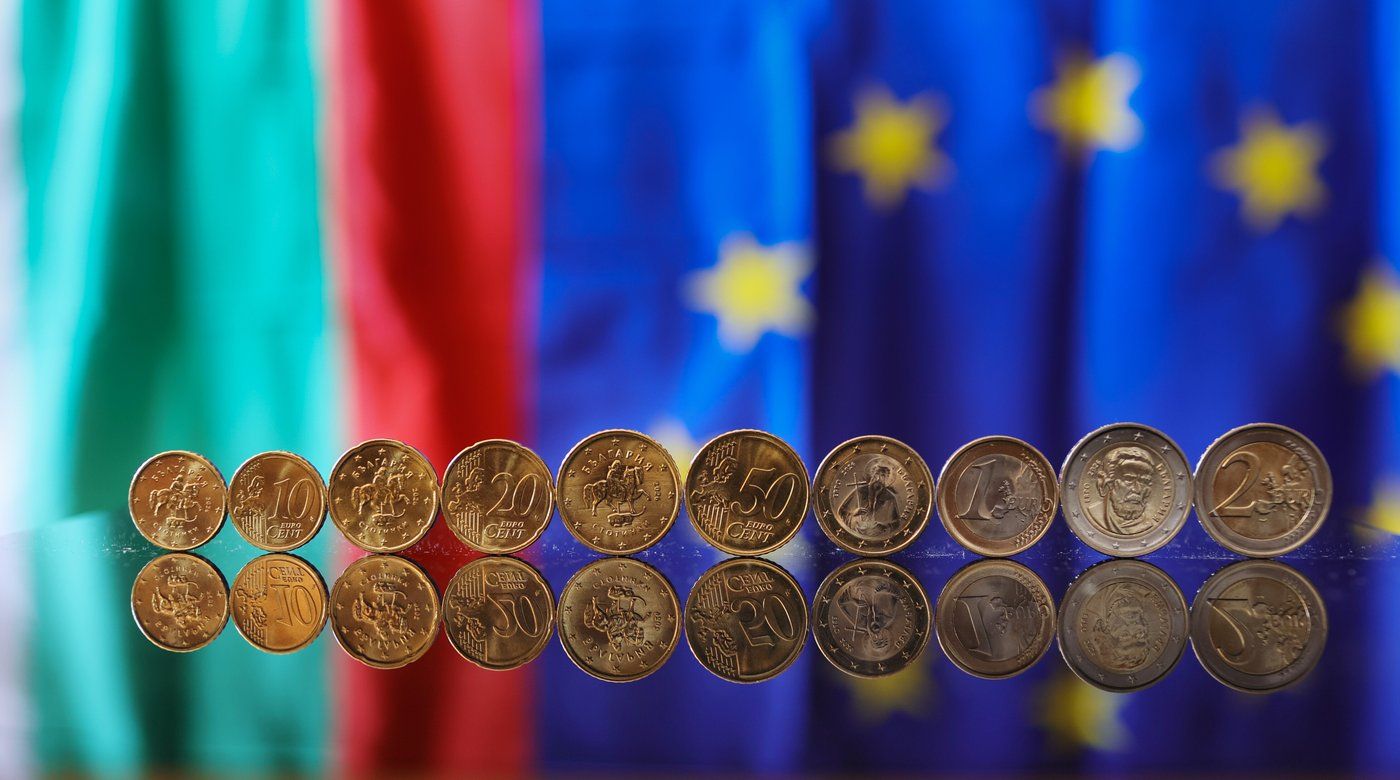
Bulgaria is poised to officially adopt the Euro as its currency on New Year's Day, becoming the 21st member of the Eurozone. It's a significant step, no doubt, but it's happening against a backdrop of political instability and a rather nervous populace. The big worry? That prices will skyrocket.
Bulgaria Euro Shock: Will It Trigger Economic Cris...
For proponents, ditching the lev for the Euro is a huge win, marking another milestone since the country transitioned from a Soviet-style economy back in '89. The idea is that a stronger connection to Western Europe's richer economies is going to attract more investment, and frankly, bring the country closer to its European partners.
But there's a lot of skepticism brewing. Bulgaria has struggled with corruption for years, and public trust in, well, pretty much everything isn't exactly sky-high. The main fear is that businesses are going to see this as an opportunity to hike up prices, making an already tricky inflation rate (currently bouncing around 3.7%) even worse. And let's not forget, they're gearing up for their *eighth* general election in just five years. Talk about uncertainty.
I spoke to a couple of people about it. Nevelin Petrov, a 64-year-old I met in Sofia, is all for the euro. "Bulgaria is a full member of the European Union," he told me, "and it belongs alongside the other developed and democratic European nations. I truly believe the euro will contribute to the country's long-term prosperity."
However, another woman, who preferred not to be named, had a different perspective. "The standard of living here is nowhere near those in the richer European countries, but prices are already rising. Life is going to become even harder for the average person." She conceded that using the same currency when traveling to neighboring Greece would be convenient, though. It's a small consolation, I think.
Bulgaria, with its 6.4 million people, is one of the EU's poorest members, with an average monthly wage of about 1,300 euros. While joining the EU means eventually adopting the euro, the process can take years, and some members aren't exactly rushing. Poland, for example, has seen pretty impressive economic growth since joining the EU in 2004 and hasn’t felt the need to switch.
There's been a lot of fear-mongering going on, with opponents claiming the euro will lead to even more poverty and a loss of national identity. Social media has been a breeding ground for misinformation, like wild claims that the euro could result in the government seizing bank accounts. It's classic fear-mongering, and unfortunately, it seems to be working on some segments of the population.
Pro-Russian groups, like Vazrazhdane, have been capitalizing on these anxieties, organizing anti-euro rallies. While these rallies haven't been huge, the underlying discontent is definitely there. It seems to me the older generation is more concerned about economic anxiety whereas younger Bulgarians seem more interested in integrating into the rest of Europe. It’s a complex picture, and how it plays out remains to be seen.
Comments
Please sign in with Google to post a comment
No comments yet. Be the first to comment!