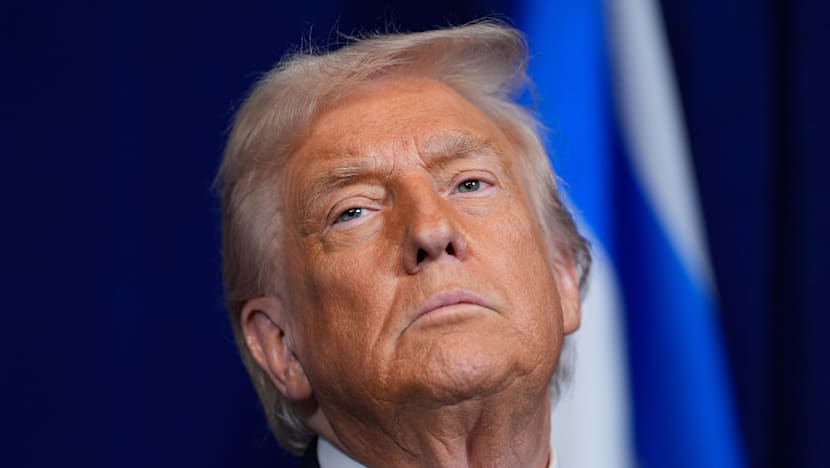
It’s been a wild ride watching US-Europe relations under the Trump administration, to say the least. From the Greenland debacle to surprise travel bans, you can’t help but wonder: if *this* is how things are going across the Atlantic, what’s in store for Asia? Kevin Chen from RSIS offers some much-needed perspective on this increasingly complicated situation, and honestly, it's a mixed bag.
Trump's Asia Strategy: You Won't Believe What's Co...
Remember that time Trump floated the idea of buying Greenland? Yeah, that wasn't just a quirky news story. The appointment of a special envoy, with the explicit goal of making Greenland "a part of the US" for "national security" reasons, felt like something out of a political satire. The joint response from the Danish and Greenlandic prime ministers – “You cannot annex other countries” – was blunt, but entirely necessary. It highlights the, shall we say, *unconventional* approach the US has been taking.
But the aggression isn’t just territorial. The recent sanctions slapped on five Europeans, including a former European Commissioner, for allegedly suppressing American viewpoints? It felt like a move typically reserved for outright adversaries, not allies. Add to that the massive fine levied against X by the European Commission, and you see a pattern emerging: the US seems determined to force Europe into alignment with its own conservative values, using everything from economic pressure to…well, annexation attempts.
So, what’s the good news for Asia in all this? According to Chen, the US doesn't appear to have the same political, cultural, or territorial ambitions in the region. That’s a definite plus. We’re not likely to see any surprise offers to buy, say, Singapore. However, the bad news is that Washington is still very much seeking leverage through trade policy and, perhaps more worryingly, those infamous "poison pill" termination clauses in agreements. These clauses are designed to give the US an out, and could potentially undermine regional stability.
The recently released 2025 National Security Strategy (NSS) provides a telling glimpse into the administration's thinking. While it still deems Europe "strategically and culturally vital," it goes beyond the usual complaints about defense spending. It points to a deeper concern: a perceived threat of "civilizational erasure" caused by policies that, in the US view, erode Europe's "national identities and self-confidence." Things like mass migration and censorship, which US officials believe unfairly target far-right viewpoints, are painted as destabilizing forces.
Ultimately, the NSS seems to suggest that Europe's current liberal leadership is a threat to US interests, and the proposed solution is to align Europe more closely with Trump's political values. It’s like extending the culture war that’s already raging within the US, onto the international stage, all for political gain. For Asia, this means navigating a complex and potentially volatile relationship with a US that's increasingly willing to use its power to shape the world in its own image. Buckle up, folks.
Comments
Please sign in with Google to post a comment
No comments yet. Be the first to comment!