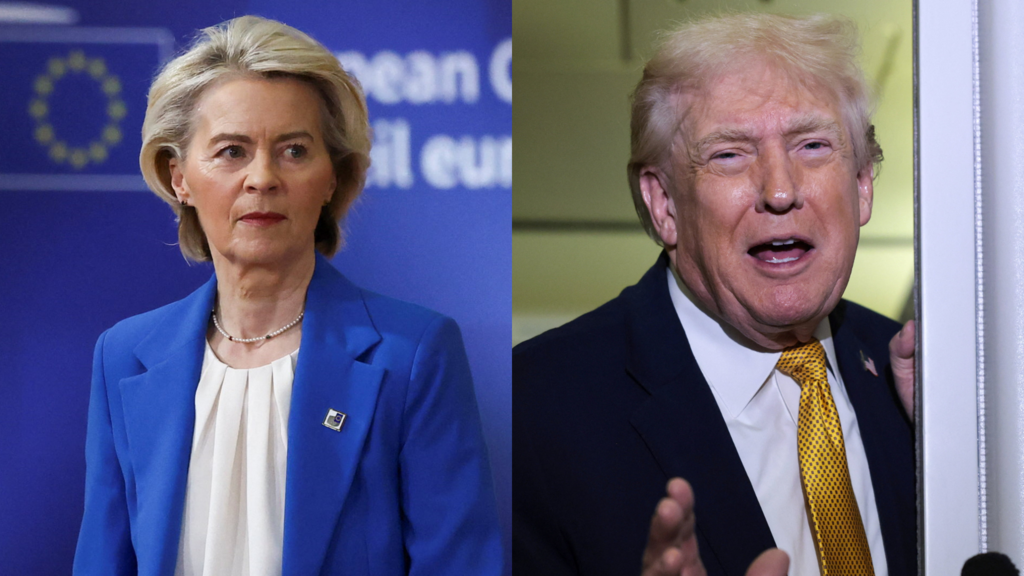
The dust is still settling after the recent US action in Caracas, and while condemnation has been widespread, the reaction from Europe feels...soft. Almost hesitant. The usual suspects in the international community have voiced their disapproval, but the pronouncements from European capitals, and even from the EU itself, have been noticeably restrained. We're hearing the familiar calls for "restraint" and "respect for international law," but it lacks the sharp edge, the outright condemnation, that one might expect.
Europe's Shocking Secret: Is the US Really in Cont...
So, what gives? Why this muted response? Is it simply diplomatic caution, or is something deeper at play? Our own seasoned EU correspondent, and I can personally vouch for his sharp insights, has just released a book that might shed some light on this very question. It's provocatively titled "The Owned Continent," and it pulls no punches in its assessment of the United States' relationship with Europe.
The core argument of the book, as I understand it, is that Europe, for all its economic power and cultural influence, has become increasingly dependent on the US – militarily, economically, and even politically. This isn't some new revelation, of course. The long shadow of NATO, the pervasive influence of American tech giants, these are realities we all acknowledge. But "The Owned Continent" delves into the *how* and the *why* of this dependence with a forensic eye. It argues that successive US administrations, but particularly the Trump era, have actively exploited this dependence for their own strategic advantage.
Think about it. The US military presence across Europe, initially intended as a safeguard against Soviet aggression, has morphed into a complex web of influence, shaping defense policy and procurement decisions. The dominance of US tech companies has created a reliance on American infrastructure and algorithms. And then there's the ever-present threat of trade sanctions, a powerful lever that Washington can, and has, used to influence European policy decisions. I've seen this firsthand covering trade negotiations – the subtle (and not-so-subtle) pressure applied behind closed doors.
The book isn't just a litany of complaints, though. It also proposes a path forward, a way for Europe to reclaim its sovereignty and forge a more independent course. The key, according to our correspondent, lies in strategic investments in European industries, greater cooperation on defense, and a willingness to stand up to US pressure when necessary. It won't be easy, of course. Decades of dependence are hard to shake off. But the muted reaction to the Caracas situation might just be the wake-up call Europe needs to start taking its independence seriously. The question is, will they listen?
Comments
Please sign in with Google to post a comment
No comments yet. Be the first to comment!