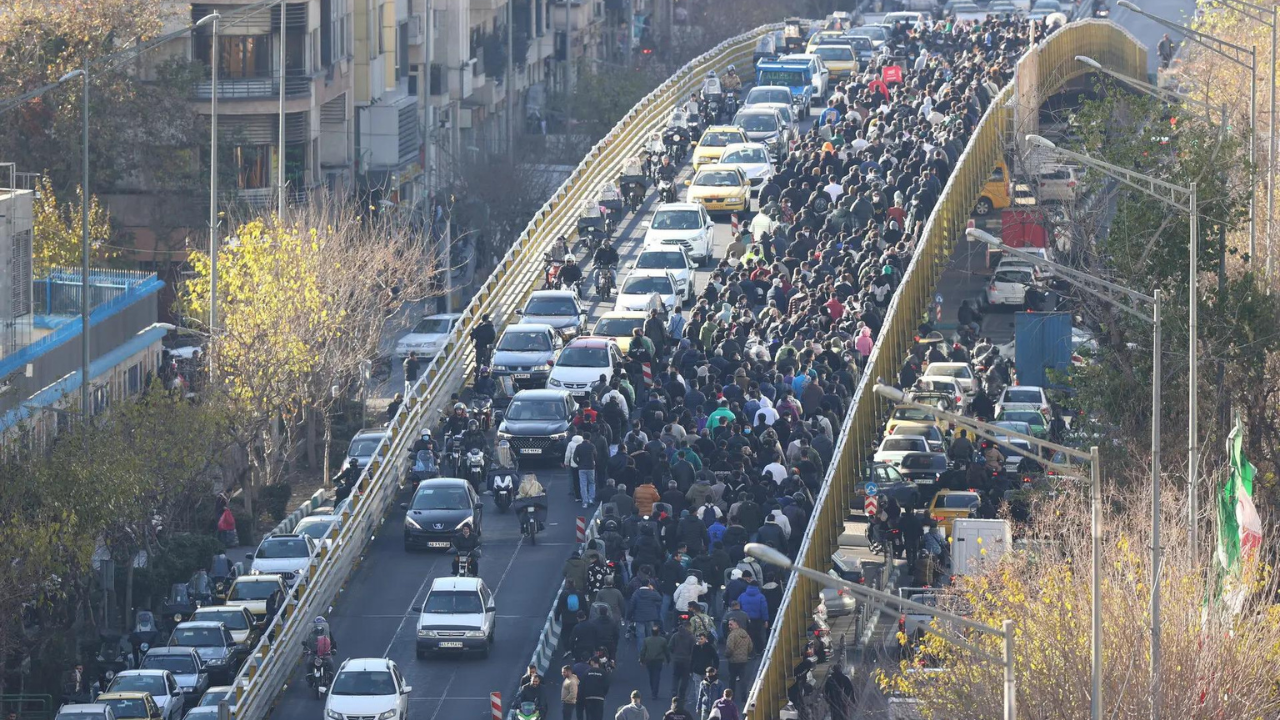
Iran's judiciary has adopted a decidedly hard-line stance as protests continue to simmer across the country. Chief Gholamhossein Mohseni Ejei has publicly stated there will be "no leniency" for those deemed "rioters," a label that seems conveniently applied to anyone engaging in more than just polite dissent. This, even as he acknowledged the right of Iranians to voice their grievances – a delicate balancing act that rings rather hollow in the current climate.
Iran's Crackdown Approved: What Will Happen Next?!...
The unrest, now entering its second week, is primarily fueled by the country's ailing economy. We're talking about significant currency devaluation and rampant inflation, issues that hit ordinary Iranians hard. The protests started with shopkeeper strikes, triggered by the soaring cost of goods following the Rial's plummet against the US dollar. However, the discontent has clearly spread beyond mere economic concerns, morphing into something more politically charged as the demonstrations have fanned out across numerous provinces.
According to AFP reports, authorities are attempting to draw a sharp distinction between "peaceful protesters" and those deemed to be engaging in violence. This distinction, of course, is crucial for justifying the crackdown that now appears imminent. Ejei's instructions to the attorney general and prosecutors, as reported by the judiciary's own Mizan news agency, were unequivocal: act decisively, show "no leniency or indulgence" toward rioters and their supposed supporters. The message is clear: dissent will be met with force.
Demonstrations have been reported in a staggering 25 out of Iran's 31 provinces. That's a widespread expression of discontent if I've ever seen one. The epicenter seems to be in the small and medium-sized towns in the west. Official figures state that at least 12 people, including members of the security forces, have been killed in clashes since the end of December. There's also been reports of significant property damage, particularly in those western regions. It's a volatile mix, to say the least.
Interestingly, the state-sponsored Fars news agency is painting a somewhat different picture, claiming a "notable decrease" in both the number and geographical reach of the protests compared to previous nights. It's hard to know what to believe. Access to reliable information is always a challenge in these situations. AFP points out that local media coverage has been severely limited, and the videos circulating on social media, which are often our only window into what's happening on the ground, are notoriously difficult to verify independently.
Meanwhile, the larger geopolitical context can’t be ignored. The Iranian Rial has lost over a third of its value against the US dollar, a stark reminder of the economic pressure the country is under. And, of course, we can’t forget the constant shadow of potential renewed sanctions or even military action – something former President Trump was never shy about threatening. This internal unrest, combined with external pressure, creates a precarious situation. Whether Iran can successfully weather this storm remains to be seen, but Ejei's "no leniency" vow suggests a rocky road ahead.
Comments
Please sign in with Google to post a comment
No comments yet. Be the first to comment!