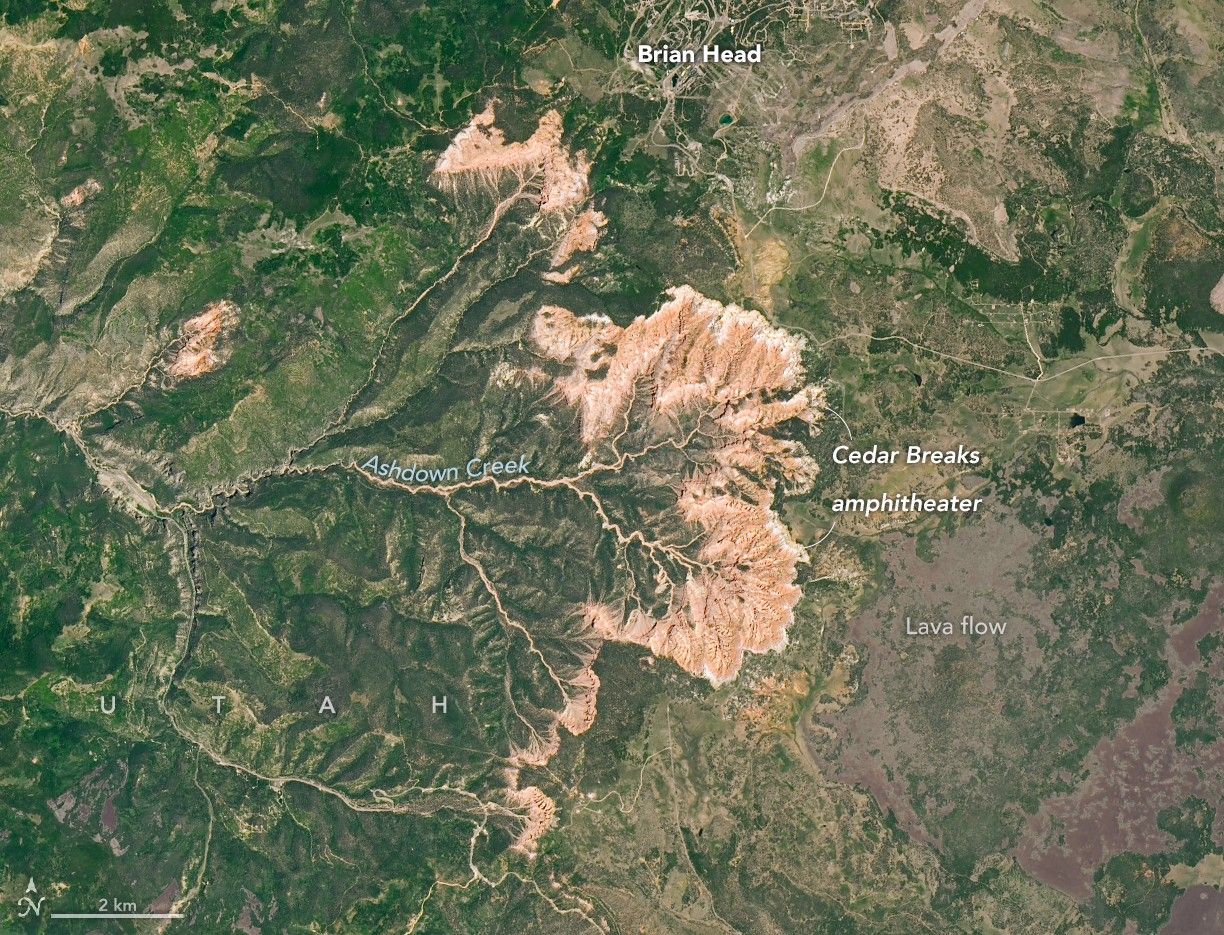
Utah's Cedar Breaks National Monument, often overlooked in favor of its more famous cousins like Zion and Bryce Canyon, is finally getting its due – from space, no less! A recent image from Landsat 9 has revealed the breathtaking beauty and geological complexity of this natural amphitheater, and trust me, it’s a sight to behold.
Cedar Breaks to Transform Into Rock Paradise?! You...
The image, captured by the Operational Land Imager-2 (OLI-2) instrument on June 18, 2025, shows the monument's semicircular rim, carved deep by Ashdown Creek and its tributaries. You can practically see the relentless weathering at work, shaping the channels, cliffs, and canyons that define this stunning escarpment. It really gives you a sense of the power of nature over immense timescales.
But what makes Cedar Breaks truly special is its geology. These vibrant rock formations are composed of sedimentary layers deposited a staggering 25 to 50 million years ago, back when this area was a vast lake known as Lake Claron. The limestone layers we see today started as carbonate-rich mud sediments on the lakebed. Think of it like a giant, ancient scrapbook, with each layer telling a story of changing environmental conditions. It’s especially interesting to think about how the varying colors, from reds to oranges, are due to iron oxidizing during drier periods – nature's own painting palette!
And here’s where it gets even cooler. Tectonic forces eventually uplifted these layers, placing them at the very top of the Grand Staircase, a geological marvel that stretches all the way down to the Grand Canyon. Cedar Breaks, sitting at around 10,000 feet above sea level, is the highest point, giving you perspective on the vastness of this sedimentary sequence. I always find it mind-boggling to think of these places as interconnected, parts of one gigantic geological story.
The high elevation also creates some pretty extreme conditions. We're talking long, cold, snowy winters – nearby Brian Head gets an average of 30 feet of snowfall each year! Despite this, incredibly resilient bristlecone pines thrive along the rim, some reaching ages of over 1,700 years old. Their dense wood protects them from disease, insects, and even wildfires. They are a testament to the enduring power of life in the face of adversity.
Don’t forget the area’s volcanic past either! You can see dark basaltic lava flows east of the amphitheater, remnants of eruptions from the Markagunt Plateau. And the soft, gray rock around Brian Head’s summit? That’s from pyroclastic flows that deposited tuff across the landscape. It’s a reminder that Cedar Breaks is more than just sedimentary rock; it’s a complex tapestry woven together by both slow, erosive forces and dramatic volcanic events.
So, next time you're planning a trip to Utah, consider adding Cedar Breaks to your list. It's a geological masterpiece, a living testament to time and the power of nature, and now, even space agrees.
Comments
Please sign in with Google to post a comment
No comments yet. Be the first to comment!