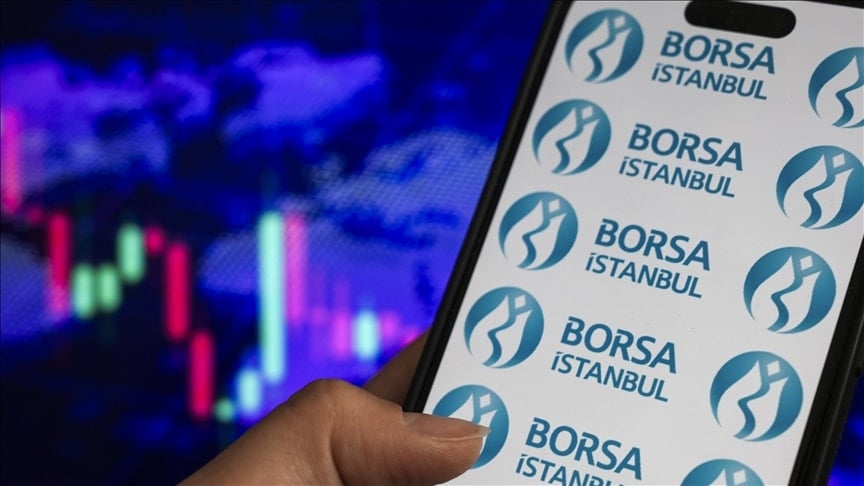
Istanbul's BIST 100 index is making headlines, surging to a new high after a roughly four-month lull. The Istanbul Stock Exchange is buzzing, fueled by a potent mix of lower-than-expected inflation figures, a welcome decline in Credit Default Swaps (CDS), and a general reduction in borrowing costs for Turkey. It's a breath of fresh air for the market, to say the least.
BIST 100 Soars! Will This Rally Last? Investors St...
The index, starting the year at a solid 11,296.52 points, actually hit a record high right at the beginning of January. This recent jump simply revisits those levels. The financial leasing and factoring sector is leading the charge, climbing impressively and giving the whole index a significant boost. You love to see that kind of sector-specific strength.
Right after the opening bell, the BIST 100 hit a peak of 11,675.73 points. Now, the previous record was set way back on August 26, 2025, at 11,605.30 points. So, we've officially broken through. Globally, there's a strong expectation of interest rate cuts by the U.S. Federal Reserve, and of course, the relentless advancements in tech are playing a role in general market sentiment. It’s all connected, isn’t it?
These global tailwinds are certainly helping, but the positive developments are really resonating *within* Turkey. Sound economic management strategies, and the Central Bank of the Republic of Turkey's (TCMB) monetary policy are showing up in the macroeconomic data. That's the key thing to remember here; domestic policy impacts are paramount.
And the data is looking good. December inflation came in at 0.89%, which was below what everyone expected. The annual inflation rate has also dropped to 30.89%, which is the lowest it's been in a whopping 49 months! The TCMB is also gradually easing things up, and a steady increase in total reserves is helping to cushion any potential exchange rate shocks. As of late December, the TCMB's total reserves were sitting pretty at $193.872 billion.
There's more good news too. Regional tensions seem to be easing, and Turkey's strong position in its geographical area has attracted more foreign investors to Turkish lira assets. This increased demand is leading to a decrease in borrowing costs. Turkey's 5-year credit risk premium (CDS) has fallen to 204.5 basis points, which is the lowest it's been since May 2018. Big deal.
Adding to the positive outlook, Turkey recorded a current account surplus of $457 million in October. That's four consecutive months of positive performance! All told, the current account surplus for the four-month period covering July, August, September, and October reached a significant $8.653 billion.
Seda Yalçınkaya Özer, Director of Economic Research at İntegral Yatırım, rightly pointed out that the stock exchange has refreshed its record level in Turkish Lira terms. “The December CPI data, which came in below market expectations, supported the index, along with the optimism from last week,” she said. So, it really is a confluence of factors.
However, and this is important, Yalçınkaya also noted that the stock exchange is still a good 28% away from its dollar-based record level. “It is critical to consider the base when evaluating the return. With the current exchange rate levels, the index needs to settle above approximately 14,800 to test a new dollar-based peak. If domestic and global risks remain balanced, a convergence towards these levels may be possible during the year,” she added. So, while the news is good, there's still a way to go before we can really celebrate a full recovery to previous dollar-denominated highs. It's all about context, isn't it?
Comments
Please sign in with Google to post a comment
No comments yet. Be the first to comment!