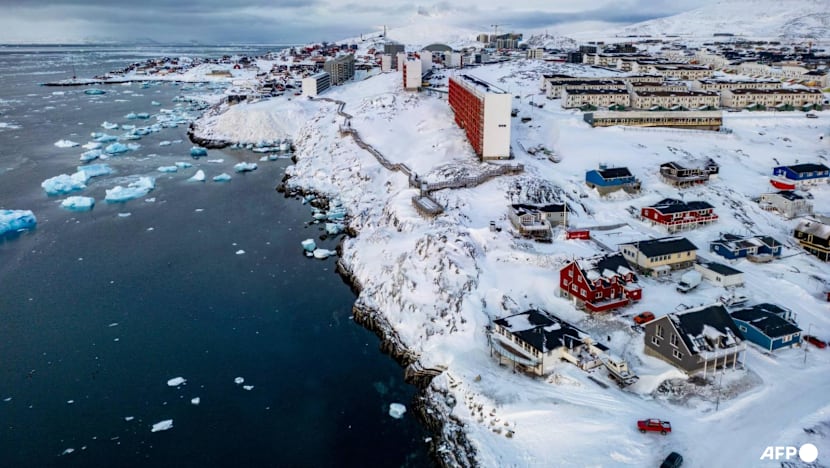
The resurfacing of President Trump's past interest in acquiring Greenland has certainly raised eyebrows, especially given the recent US actions in Venezuela. Remember when that whole Greenland thing was a headline grabber? Well, it's back, folks.
Trump to BUY Greenland?! What Happens Next Will Sh...
During his time in the White House, Trump repeatedly expressed his desire to, let’s just say, bring Greenland under US control. At one point, the idea of using military force was even floated. The issue largely faded from the spotlight, but now the US strike in Venezuela seems to have re-ignited the discussion, sparking renewed anxieties about Trump's intentions.
"We need Greenland from the standpoint of national security, and Denmark is not going to be able to do it," Trump stated rather bluntly on Sunday. It's not exactly diplomatic language, is it?
Predictably, Greenland's Prime Minister Jens-Frederik Nielsen didn't take kindly to Trump's pronouncements. He firmly told Trump to back off, emphasizing Greenland's willingness to engage in dialogue through established channels and with due respect for international law. The message was clear: No hostile takeovers allowed.
So, what's the big deal about Greenland anyway? Well, for starters, it's the world’s largest island and boasts a strategic location between the North Atlantic and the Arctic. More importantly, it's sitting on vast reserves of critical minerals and fossil fuels, making it a highly coveted piece of real estate for the US and its rivals, China and Russia. Think of it as a treasure chest of untapped rare earth minerals. And, with the polar ice melting, it could also become a pivotal player in newly accessible shipping routes. Pretty strategic stuff.
Trump, however, downplays the resource aspect, claiming the US is already resource-rich. He insists his interest is purely about national security. "We do need Greenland, absolutely. We need it for defence," he told The Atlantic in an interview.
And he has a point. Greenland's location makes it a crucial site for the US ballistic missile defence system and lies on the shortest flight path for missiles between Russia and the US. The island already hosts Thule Air Base, the US’ northernmost air base, and a radar station used for detecting missile threats and monitoring space. So, militarily, it's a big deal.
While a military seizure might not present insurmountable obstacles, the political and legal ramifications would be huge, according to Assistant Professor William James from the S Rajaratnam School of International Studies (RSIS). We're talking potentially "era-defining" consequences.
Here's the kicker: Greenland, while self-ruling, is covered by Denmark's NATO membership, which, of course, includes the US. Any act of aggression could put NATO allies at each other's throats. Danish Prime Minister Mette Frederiksen put it plainly: "If the US decides to military attack another NATO country, then everything would stop - that includes NATO and therefore post-World War II security." She also pointed out that the US already enjoys extensive military access to Greenland under existing agreements. Why fix what isn't broken?
“I need to say this very directly to the US,” Frederiksen stated. “The US has no right to annex any of the three countries of the Kingdom of Denmark.” So, while the Trump administration has been focused on Venezuela and other geopolitical hotspots, the Greenland issue serves as a stark reminder of the complex web of international relations and the potential consequences of unilateral action.
Comments
Please sign in with Google to post a comment
No comments yet. Be the first to comment!