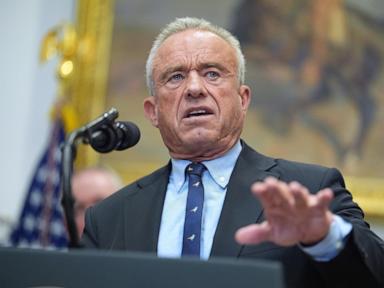
In a move that's already sent shockwaves through the medical community, the U.S. government has significantly reduced the number of childhood vaccines recommended nationwide. This decision, spearheaded by Health Secretary Robert F. Kennedy Jr., has been met with swift and fierce opposition from prominent medical organizations who fear it could leave children vulnerable to preventable diseases.
Shocking Change: Child Vaccine Guidelines Slashed!...
The Trump administration, however, stands by the overhaul. They assure everyone that access to vaccines will remain and that insurance coverage won't be affected. But let's be honest, assurances don't always translate to reality. Medical experts are worried that this change will just create more confusion and hesitancy among parents, potentially leading to a resurgence of illnesses we thought were largely eradicated.
While it's true that states ultimately decide on mandatory vaccinations for schoolchildren, the Centers for Disease Control and Prevention (CDC) guidelines carry a lot of weight. They often set the standard, influencing state regulations. It's not surprising, then, that some states are already banding together, preparing to challenge the Trump administration's new vaccine guidance. This could get messy, and quickly.
According to the Department of Health and Human Services (HHS), President Trump himself initiated this whole process back in December. He wanted a comparison of U.S. vaccine recommendations with those of other developed nations. HHS concluded that the U.S. was an "outlier" when it came to the sheer number of recommended vaccinations and doses for children. So, the rationale is to bring the U.S. in line with other countries.
Agency officials are spinning this as a way to rebuild public trust by focusing on the most "crucial" vaccinations. "This decision protects children, respects families, and rebuilds trust in public health," Kennedy stated. That sounds good on paper, but is it really that simple? Trump, predictably, took to Truth Social, calling the new schedule "far more reasonable" and claiming it "finally aligns the United States with other Developed Nations around the World." The man loves a good slogan, doesn't he?
The vaccines that remain on the universally recommended list include those for measles, whooping cough, polio, tetanus, chickenpox, and HPV. Interestingly, the guidance also reduces the recommended HPV vaccine doses from two or three to a single dose for most children. It's this kind of change, without clear justification, that has many doctors raising red flags.
Medical experts are particularly concerned about the lack of transparency and public discussion surrounding these changes. "Abandoning recommendations for vaccines that prevent influenza, hepatitis, and rotavirus, and changing the recommendation for HPV without a public process to weigh the risks and benefits, will lead to more hospitalizations and preventable deaths among American children," warned Michael Osterholm of the Vaccine Integrity Project at the University of Minnesota. Strong words, but they reflect the seriousness of the situation.
Dr. Sean O'Leary of the American Academy of Pediatrics rightly pointed out that countries carefully tailor vaccine recommendations based on their specific disease prevalence and healthcare systems. A one-size-fits-all approach, driven by a desire to be "in line" with other nations, could have serious consequences for public health here in the U.S. Only time will tell how this plays out, but the initial reaction from the medical community suggests a long and difficult fight ahead.
Comments
Please sign in with Google to post a comment
No comments yet. Be the first to comment!