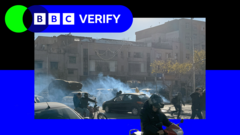
Simmering discontent in Iran has seemingly boiled over, with anti-government protests now raging in a majority of the country's provinces. Forget isolated incidents – we're talking about a widespread uprising, potentially the biggest challenge to the ruling clerics since the "Women, Life, Freedom" protests that shook the nation in 2022. It's a tense situation, to say the least.
Iran Uprising: Is This The End?! Protests Explode!
Videos circulating online, meticulously verified by BBC Verify and BBC Persian, paint a stark picture: Over 40 towns and cities are experiencing unrest. What's truly significant, and frankly quite alarming for the regime, is that these protests are even reaching areas traditionally considered strongholds of government support. At least 17 of Iran's 31 provinces are now seeing demonstrations. That's not just a flash in the pan; that's a full-blown fire.
Professor Sina Azodi, a Middle East expert at George Washington University, hits the nail on the head. He argues that the spread of unrest into these traditionally supportive areas is "very telling." The economic hardship gripping Iran, exacerbated by international sanctions and allegations of widespread corruption, is clearly eroding the government's base. People are hurting, and they're directing their anger at the top.
Of course, Iran has a history of brutally suppressing dissent. The 2022 protests, sparked by the tragic death of Mahsa Amini while in custody for allegedly violating hijab rules, were met with a brutal crackdown. Human rights groups estimate that over 550 people were killed by security forces. The memory of that violence undoubtedly looms large, adding another layer of complexity to the current situation.
The authorities are already issuing stern warnings. The government says it will "deal firmly" with anyone seeking to "exploit the situation" and "incite riots." The Islamic Revolutionary Guards Corps (IRGC) has even directly threatened protesters in Lorestan province, making it clear that street gatherings will no longer be tolerated. It's a tough stance, but it's a familiar one.
The human cost is already mounting. BBC Persian has confirmed at least 11 deaths since December 28th, based on verified funeral videos and interviews with grieving families and friends. HRANA, a foreign-based human rights group, puts the number much higher, at at least 35, including two members of the security forces. Then there's the incident in Ilam city, where verified videos show security forces firing towards Imam Khomeini Hospital. An investigation has been ordered, according to reports, but the damage is done.
Perhaps most worrying is the shift in tone. While the protests initially focused on economic grievances, they've increasingly become anti-state, with demonstrators openly chanting slogans against Supreme Leader Ayatollah Ali Khamenei and the entire clerical establishment. Some videos even show chants in support of Reza Pahlavi, the exiled son of the Shah of Iran, harkening back to a dramatically different era. The stakes are clearly rising.
The million-dollar question is: where does this go from here? Experts warn that a heavy-handed response from the security forces could actually backfire, further fueling the flames of discontent and potentially pushing the country toward even greater instability. It's a delicate, dangerous situation, and the world is watching closely.
Comments
Please sign in with Google to post a comment
No comments yet. Be the first to comment!