Snow Falling Upwards? NASA Finds Something Very Strange on Saturn's Moon
Snow Falling From The Sky To The Ground: NASA's Sh...
Okay, folks, buckle up, because NASA just dropped a bombshell that's rewriting the rules of snow days. Forget everything you know about snowflakes gently drifting down from fluffy clouds. On Saturn's icy moon Enceladus, it's snowing… upwards. That's right, *upwards*. And the reason why could be even more astonishing: the possibility of life.
Enceladus, at first glance, seems like just another frozen rock orbiting the ringed giant. But scratch beneath that icy surface, and you'll find a dynamic, geologically active world hiding a subsurface ocean. And it's this ocean that's responsible for the bizarre, "bottom-up" snow cycle that NASA scientists have been studying using data from the now-retired Cassini spacecraft. I remember when Cassini first sent back images of those plumes – "tiger stripes" they called them. Even back then, we knew something special was going on.
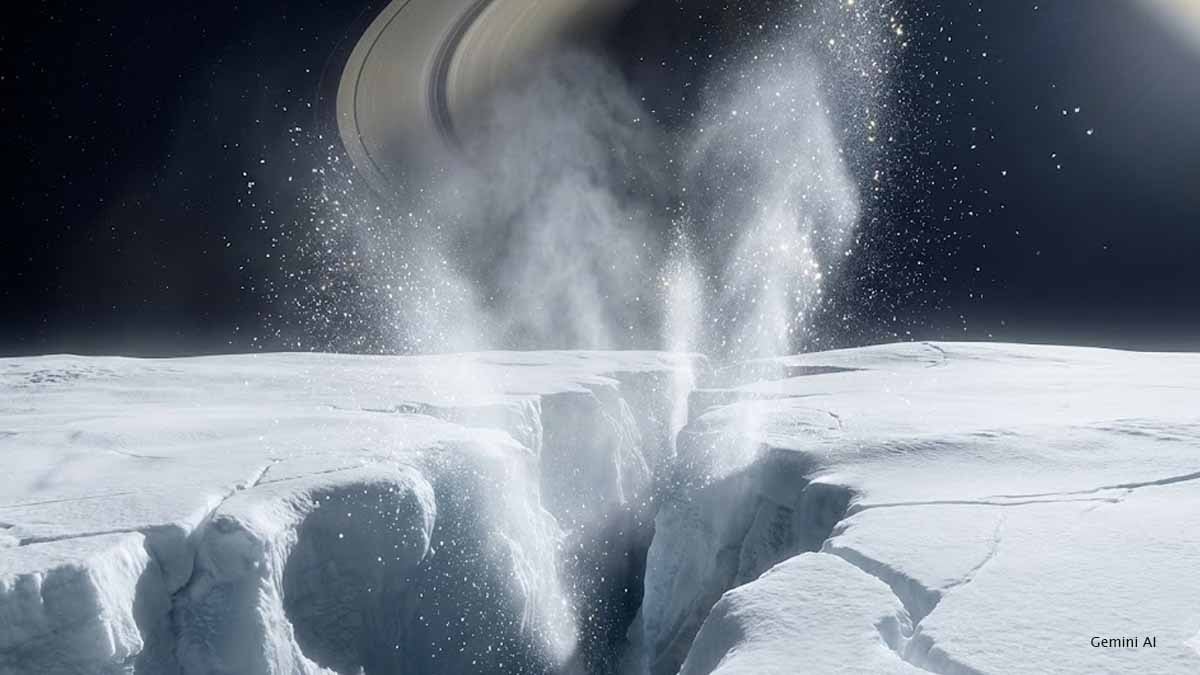
So, how does upward-snow work, you ask? Well, Enceladus has vents at its south pole that spew water vapor, ice particles, and organic molecules into space at incredible speeds. Think of it like a geyser on steroids. Some of this material escapes to become part of Saturn's rings, but a good chunk of it freezes and then falls back onto the moon’s surface. This constant bombardment of icy particles creates a smooth, thick layer of fresh ice, burying craters and essentially resurfacing the entire moon. It's like a perpetual snow globe, but instead of a tiny cabin, it’s an entire ocean churning beneath.
And here's where it gets *really* interesting. Cassini's analysis of the plumes revealed the presence of not just water, but also carbon dioxide, carbon monoxide, and, crucially, phosphorus. Phosphorus is a key ingredient for life as we know it, a vital component of DNA and cellular energy transfer. Finding it in Enceladus's ocean significantly boosts the chances that this hidden sea could be habitable. It suggests that chemical reactions within the ocean are generating energy – essentially creating a battery that could support biological processes. Imagine that: life thriving in a dark, cold ocean, fueled by the chemistry of its environment.
But wait, there’s more! According to NASA researchers, this falling "cryovolcanic snow" acts like a time capsule, preserving samples of the ocean's contents. Each layer of ice contains information about the ocean's salinity, organic compounds, and mineral composition. It's like a naturally occurring archive, waiting to be read.
The next step? Landing a probe on Enceladus. The dream is to drill into the ice and analyze these frozen layers, potentially providing direct evidence of microscopic life. It's a long shot, sure, but the potential reward – answering one of humanity’s biggest questions – is worth the effort. This "snow falling upwards" isn't just a quirky phenomenon; it's a tantalizing clue pointing towards the possibility of a warm, potentially living ocean hidden beneath the ice. And that, my friends, is enough to make any science journalist excited.
Comments
Please sign in with Google to post a comment
No comments yet. Be the first to comment!