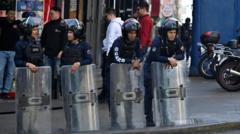
Venezuela is a nation on edge. Following the recent U.S. forces' seizure of Nicolás Maduro, fear is palpable, and Venezuelans are increasingly wary of expressing dissent. Authorities are cracking down, detaining media workers and scrutinizing social media activity with a fervor that chills the blood.
Venezuela on Edge: Journalists Detained! What's Re...
Just this Monday, at least 14 journalists were detained while trying to cover the unfolding situation. The Venezuelan media workers' union reported that the vast majority worked for foreign news organizations. While they were eventually released later that day, it was a stark reminder of the risks involved in reporting from the country. One reporter, unfortunately, was deported. It’s worth noting that foreign news outlets have long faced bureaucratic hurdles in Venezuela, with visas becoming increasingly difficult to obtain. This detention serves as a concerning escalation.
The detentions themselves occurred in key areas of Caracas – the National Assembly, its surrounding areas, and the Altamira neighborhood. According to the union, agents from Venezuela's military counterintelligence agency and the intelligence service were responsible for the apprehensions. Equipment was searched, phones were checked, and social media posts were dissected. It’s a clear message being sent: Big Brother is watching.
The crackdown isn't limited to Caracas. Two reporters, one Colombian and one Spanish, were detained near Cúcuta, right on the Venezuelan border with Colombia. They were held incommunicado for hours before being released back across the border. The union has understandably described these incidents as "alarming," and is demanding the release of the remaining 23 media workers still detained within the country.
But this isn't just about journalists. The repression extends far beyond the media landscape. One community leader in the Petare neighborhood of Caracas, speaking to BBC Mundo, described a chilling scene: "hooded men with guns are patrolling, checking people's WhatsApp statuses." A 33-year-old masseuse, wishing to remain anonymous for obvious reasons, simply stated, "there is so much fear in the streets and in our homes." This underscores the climate of intimidation that's taking root.
Adding to the anxiety, government officials seem intent on flaunting the security forces' presence. Interior Minister Diosdado Cabello even posted a photo of himself on Monday night, posing with armed police. It’s a power play, a not-so-subtle reminder of who is in control. And for those critical of the government, it's a terrifying sight.
One woman recounted how "military people are on every corner, and groups of armed civilians supporting the government are causing fear among the population." Another anonymous source told the BBC that "the regime is not allowing news to come out of here," adding, "there are uniformed personnel on the streets stopping people and checking their phones." All of this paints a bleak picture of a country gripped by fear and repression. The journalist detentions are just the latest symptom of a deeper malaise.
Comments
Please sign in with Google to post a comment
No comments yet. Be the first to comment!