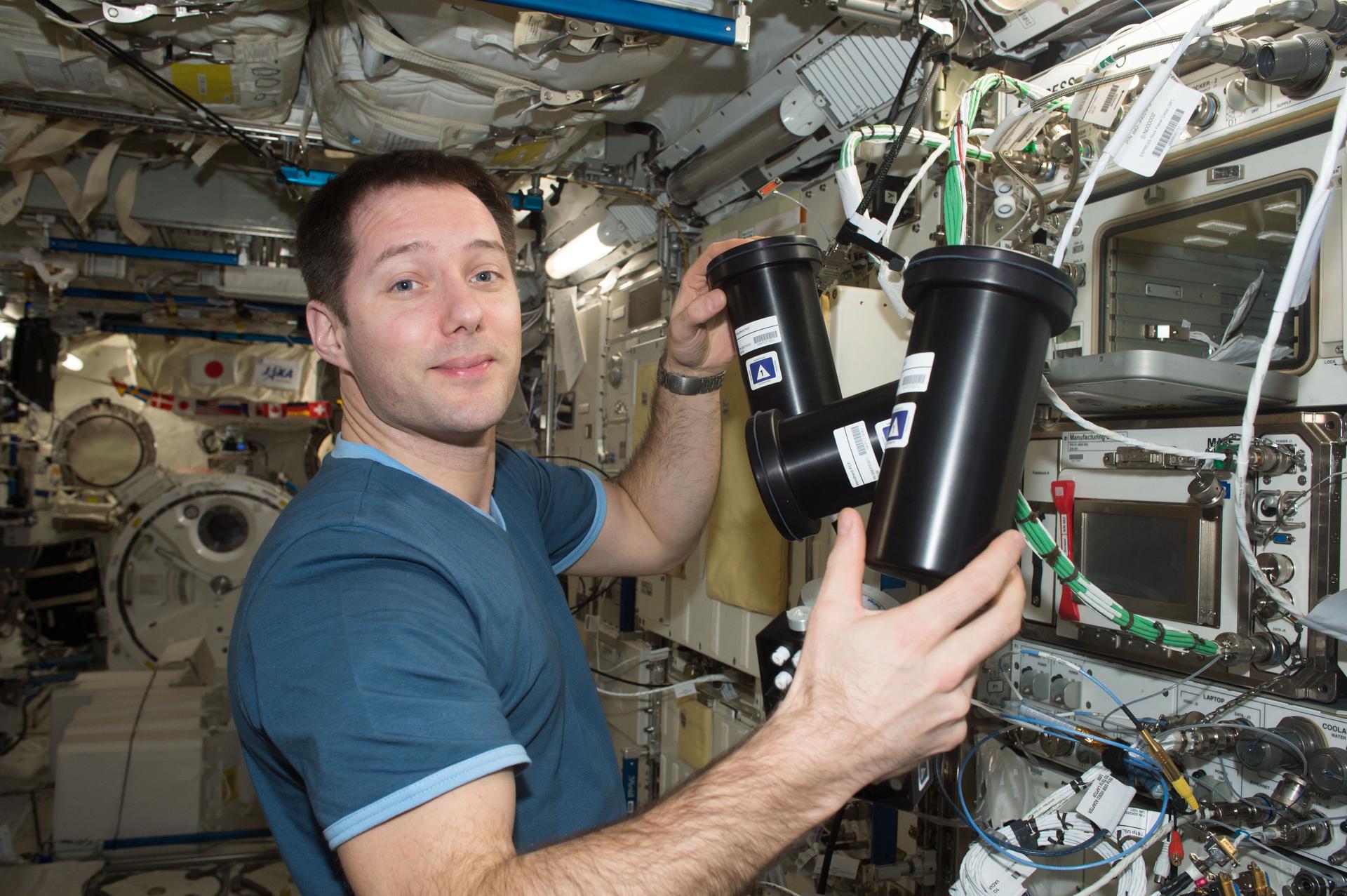
Hold on to your hats, folks, because science just got a whole lot more out-of-this-world! Remember when space was just about astronauts, rockets, and the occasional blurry photo of a distant galaxy? Well, NASA is now actively opening up the International Space Station (ISS) to scientists and private companies, turning it into a bona fide research lab in the sky.
Space Station Secret Weapon: FDA Approves Groundbr...
And it's already paying off, big time. The unique microgravity environment of the ISS – where gravity's pull is greatly reduced – is allowing researchers to conduct experiments that simply aren't possible on Earth. This includes some pretty incredible work in medical research, aimed not only at keeping our astronauts healthy on long voyages but also at tackling some of the most pressing health challenges we face right here at home.
One of the most exciting examples? Cancer research. Yep, you read that right. A recent collaborative effort between Merck Research Labs and the ISS National Laboratory, involving protein crystal growth experiments conducted on the ISS, has directly led to a game-changing improvement in the delivery of the cancer medicine pembrolizumab. I'm talking about a U.S. Food and Drug Administration (FDA)-approved subcutaneous injection as an alternative to the traditional intravenous (IV) infusion.
Let's break down why this is such a big deal. Previously, patients receiving pembrolizumab had to endure lengthy in-office visits for IV infusions, sometimes lasting up to two hours. Even with improvements, the infusion time was still around 30 minutes, every three weeks. Now? The subcutaneous injectable form takes just about one minute, administered every three weeks. Talk about a quality of life upgrade! This saves valuable time for both patients and healthcare providers, reduces costs, and, frankly, makes the whole experience significantly less burdensome. As someone who has witnessed a loved one undergo similar treatments, I can tell you this kind of improvement is invaluable.
So, how did space come into play? Well, in microgravity, the absence of gravity allows for the growth of larger, more uniform, and higher-quality protein crystals. Merck leveraged this unique environment to refine their formulation of pembrolizumab, creating crystalline suspensions that dissolve more easily in liquid. This ultimately made the injectable version possible. UV imaging comparisons of ground-based and space-grown samples revealed a striking difference in crystal uniformity, showcasing the power of microgravity in this type of research. It's pretty amazing to think that something grown in space is now directly impacting and improving cancer treatment here on Earth. The ISS is more than just a space station; it's a beacon of hope for advancements in science and medicine. And I, for one, am eager to see what other breakthroughs are just over the horizon.
Comments
Please sign in with Google to post a comment
No comments yet. Be the first to comment!