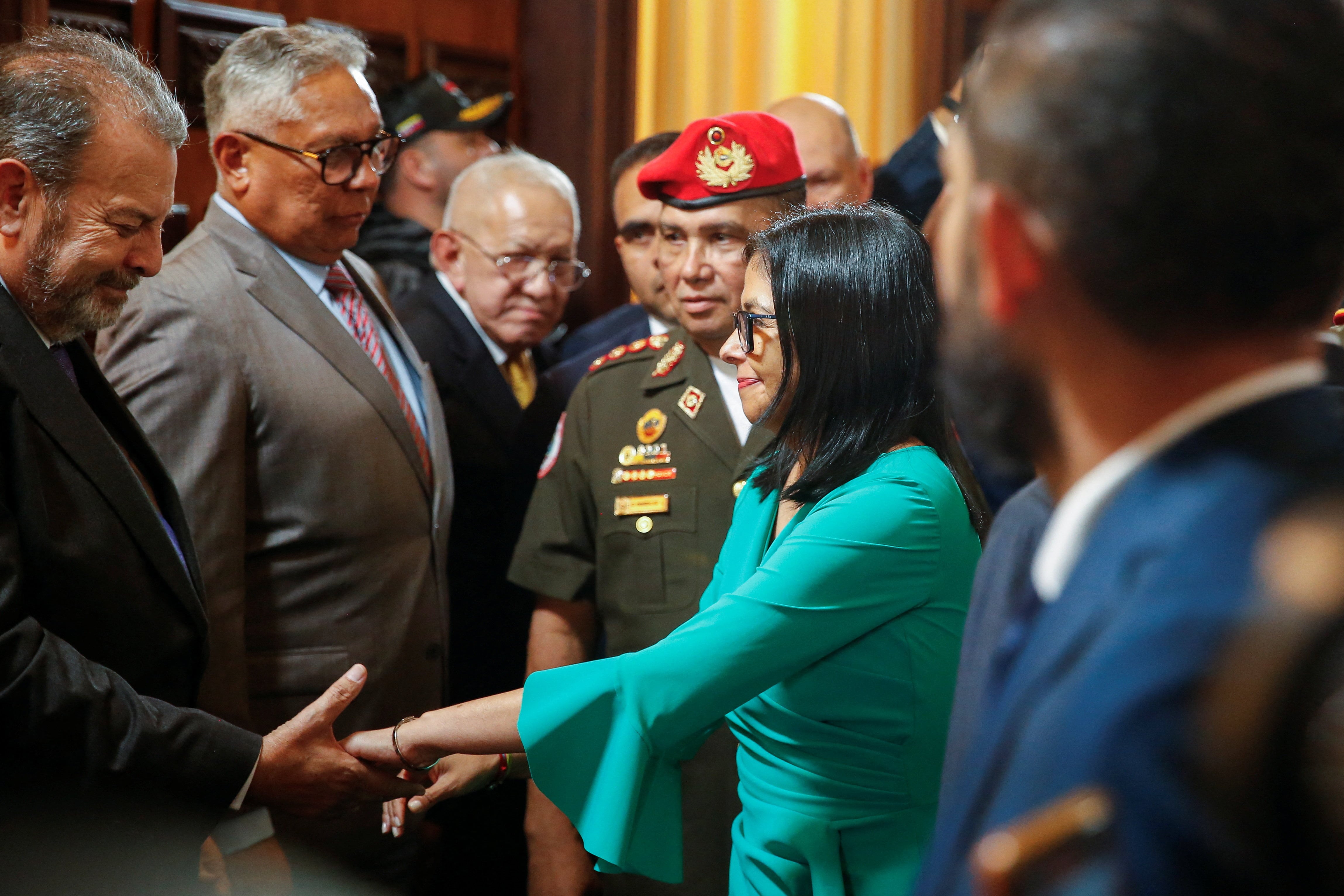
In a stunning turn of events that has left many scratching their heads, former President Donald Trump appears to have actively considered handing power in Venezuela to Delcy Rodríguez, a prominent figure in the Chavista regime, following the purported arrest of Nicolás Maduro. This is quite a departure from the fiery rhetoric we've come to expect, and it raises serious questions about the true objectives of U.S. foreign policy in the region.
Trump's SHOCK Venezuela Plan: Hand Power to... Rod...
Just days after reports surfaced of Maduro's capture by U.S. military forces in Caracas, Rodríguez, previously his second-in-command, was unexpectedly sworn in as president. This move, according to sources within the intelligence community, was not a spontaneous decision, but rather the result of careful deliberation and, perhaps more surprisingly, the direct influence of CIA recommendations.
Now, let's not forget María Corina Machado. The 2025 Nobel Peace Prize laureate had long been a vocal critic of Maduro and a proponent of a tougher stance against the Bolivarian regime. She even endorsed the U.S. pressure campaign aimed at removing Maduro. You'd think she'd be the obvious choice for U.S. backing, right? Wrong. In a press conference detailing the operation, Trump conspicuously avoided endorsing Machado, stating, “I think it would be very tough for her to be the leader... She doesn’t have the support or the respect within the country. She’s a very nice woman, but she doesn’t have the respect.” This is a pretty damning assessment coming from a former president, especially considering Machado's international acclaim.
The real kicker? Apparently, a CIA report played a significant role in shaping Trump's thinking. This report, commissioned to analyze the post-Maduro political landscape, reportedly advised against military intervention to install Machado. Instead, it suggested that key Chavista figures – Rodríguez, along with Minister of Justice and Interior Diosdado Cabello, and Minister of Defense Vladimir Padrino – were better equipped to lead a temporary government and maintain stability in Caracas. The rationale, as I understand it, was that Machado lacked the necessary military control and internal support to prevent a potential power vacuum and subsequent chaos.
So, what are we to make of all this? It seems Trump, against expectations, prioritized stability, as defined by the CIA, over a potentially more democratic outcome. This move, effectively supporting the continuity of the Chavista regime, raises fundamental questions about America's commitment to democracy promotion abroad. It also suggests a level of pragmatism – or perhaps even cynicism – in U.S. foreign policy that many might find unsettling. It's a messy situation, to say the least, and one that will undoubtedly have far-reaching consequences for Venezuela and the region as a whole. Only time will tell if this calculated gamble pays off, or if it opens the door to even greater instability.
Comments
Please sign in with Google to post a comment
No comments yet. Be the first to comment!