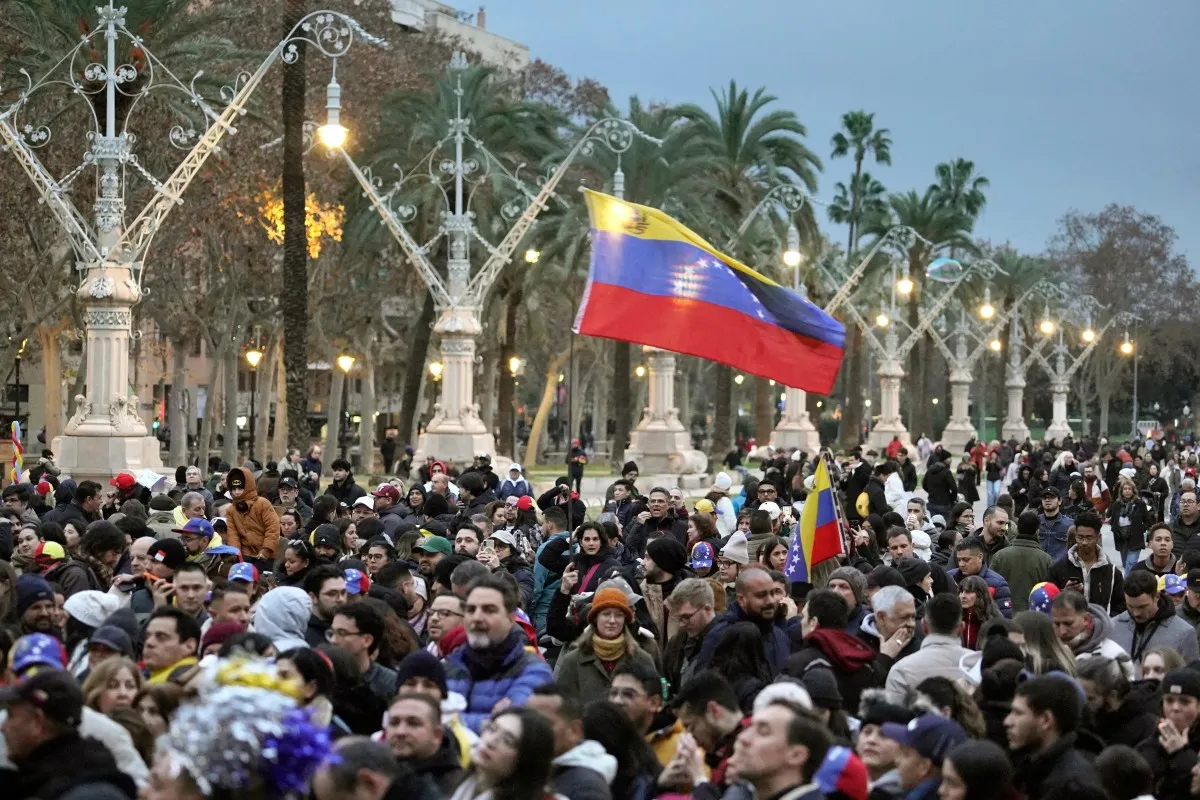
The situation brewing in Venezuela has far-reaching implications, extending well beyond the borders of the embattled South American nation. While the political and humanitarian crisis has been unfolding for years, whispers of potential military intervention – particularly involving the US under a "hypothetical" Trump scenario – are sending ripples of concern across the Atlantic, specifically to Spain. Why Spain, you ask? It’s a multifaceted relationship built on historical ties, economic interests, and a significant Venezuelan diaspora.
Venezuela Crisis: Will Oil & Immigration Devastate...
Let’s start with the numbers. Spain is home to an estimated 600,000 Venezuelan citizens. That's a huge influx, largely driven by the deteriorating conditions back home. Another wave triggered by a military intervention could easily overwhelm existing resources and further strain social services. Imagine the logistical challenges – housing, healthcare, employment – all hitting Spain simultaneously. It’s a daunting prospect.
Beyond the humanitarian aspect, Spain's economic interests are deeply entwined with Venezuela, particularly in the oil sector. Spanish companies have invested heavily in Venezuela's oil industry for decades. A military intervention, especially one aimed at regime change (let's say, the hypothetical capture of Nicolás Maduro), could throw those investments into total chaos. Think nationalization, asset seizures, and long-term uncertainty. It's not just about profits; it's about the potential loss of strategic resources and the impact on Spain's energy security.
Now, I'm not saying military intervention is inevitable, but the mere possibility is enough to send shivers down the spines of Spanish policymakers. They're caught in a difficult position. Condemning Maduro's regime is one thing, but supporting actions that could destabilize the region further and unleash another refugee crisis is a completely different ball game. It's a tightrope walk with no easy answers.
And let's be real, even a successful intervention wouldn't guarantee stability. The power vacuum left behind could easily be filled by other actors, potentially leading to a prolonged period of conflict and even greater instability. This scenario is not something Spain would want to see. The knock-on effects would be felt for years to come, both economically and socially.
Ultimately, Spain’s best hope lies in a peaceful, negotiated solution to the Venezuelan crisis. A solution that addresses the underlying issues of poverty, corruption, and political repression. But with the ever-present threat of external intervention looming, a peaceful resolution seems increasingly elusive. Only time will tell how this complex situation unfolds, but one thing is certain: Spain is watching very closely, and bracing for the potential fallout.
Comments
Please sign in with Google to post a comment
No comments yet. Be the first to comment!