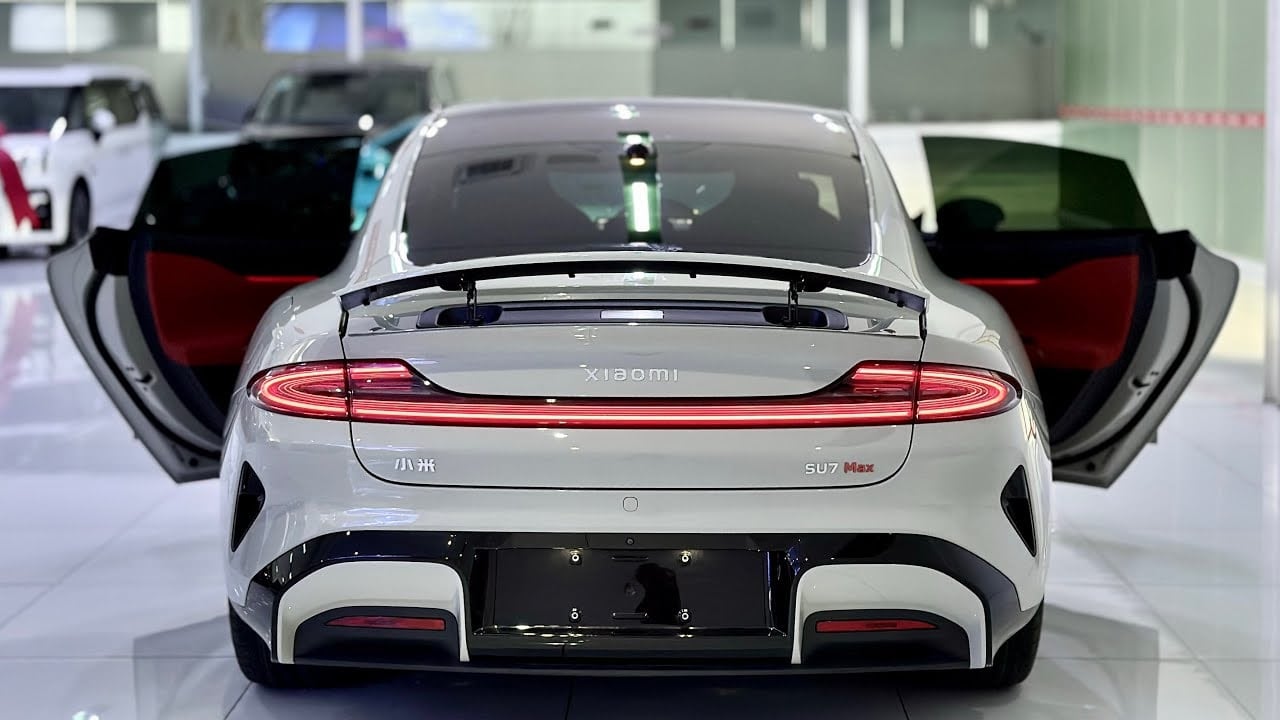
The automotive world is officially on notice. Xiaomi, yes, the *phone* company Xiaomi, isn't playing around. For years, the whispers were "they're just a phone maker," but their first year in the car business has been nothing short of a complete disruption. Frankly, even I'm a bit stunned by how quickly they've managed to shake things up.
Tech Giant SHOCKS with New Gadgets! Will Sales Hit...
It's a seismic shift, really. Having conquered the tech world, Xiaomi is now setting its sights on the asphalt, and they're doing it with a ferocity that has established automakers scrambling. The big news? Xiaomi’s first electric vehicle, the SU7, has reportedly blown past 400,000 deliveries in its debut year. Let me repeat that: 400,000 vehicles. In one year. That's not just impressive, that's practically rewriting the rulebook on automotive launches.
Think about it. Building a car factory from scratch, especially one churning out electric vehicles, is a herculean task. Doing it as a tech company, without decades of automotive experience? Well, many considered it impossible. But Xiaomi seems to have leveraged its expertise in rapid-fire smartphone production and robotic manufacturing to create an incredibly efficient assembly line. It’s like they’ve taken the "fast fashion" model of electronics and applied it to car manufacturing. The result is undeniable.
I've heard whispers that their initial production targets were constantly being revised upwards, simply because demand was so high. Factories are reportedly running at full tilt, 24/7, trying to keep up. And here’s another kicker: while other automakers are still wrestling with chip shortages and battery supply bottlenecks, Xiaomi seems to have side-stepped those issues, leveraging their "supply chain experience" from the electronics sector. They're getting cars to customers *without* months-long wait times, a feat that even established EV giants like XPeng and Nio are struggling to match. This is a key differentiator, and it's clearly resonating with buyers.
The aggressive growth strategy, undoubtedly spearheaded by CEO Lei Jun, points to an even bigger explosion in 2026. This 400,000-vehicle milestone is particularly significant when you consider that it was achieved before their highly anticipated SUV model (the MX11) even hit full-scale production. This suggests that Xiaomi could reach its ambitious target of one million vehicles annually much sooner than anyone, even perhaps Xiaomi themselves, initially projected. Get ready, traditional automakers – the storm is coming, and it’s powered by electricity.
Comments
Please sign in with Google to post a comment
No comments yet. Be the first to comment!