Washington D.C. – In a move that sends a clear signal about the simmering tensions between the executive and legislative branches, the Senate on Thursday took a significant step towards curbing President Trump’s ability to unilaterally launch further military actions against Venezuela. The 52-47 vote advanced a war powers resolution, revealing a growing bipartisan concern over what some perceive as an increasingly aggressive foreign policy, particularly in our own hemisphere.
Trump's Venezuela Plan BLOCKED! What Will Happen N...
This isn't just another procedural hurdle; it's a pointed message. While the resolution faces an uphill battle to actually becoming law, requiring both Trump’s signature and passage through the Republican-controlled House, the vote itself highlights a real unease within the GOP ranks. The recent U.S. military seizure of Venezuelan leader Nicolás Maduro in a surprise raid clearly rattled a few cages on Capitol Hill.
The catalyst for this resolution? The Trump administration’s relentless pursuit of control over Venezuela's oil resources and, frankly, its government. The war powers resolution seeks to ensure that any future attacks on the South American nation require explicit congressional approval. It's a check on power, plain and simple.
What's interesting is the breakdown of the vote. Senators Rand Paul of Kentucky, Lisa Murkowski of Alaska, Susan Collins of Maine, and Todd Young of Indiana broke ranks to join Democrats in backing the resolution. Trump, predictably, didn't take it well. He took to social media to blast these senators, suggesting they "should never be elected to office again" and claiming the vote "greatly hampers American Self Defence and National Security.” Honestly, the man's predictable outrage almost makes one wonder if he's actually listening to the concerns of these senators.
Democrats, who've tried similar resolutions before only to see them fail amid Trump's escalating pressure on Venezuela, are seizing on the moment. They argue that the capture of Maduro, and even the administration's reported interest in acquiring Greenland (remember that?), necessitate a stronger congressional hand on the foreign policy tiller.
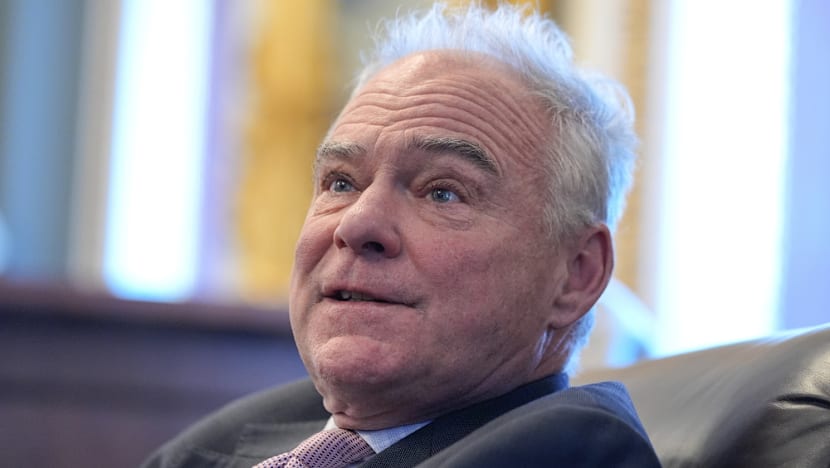
"It’s time for Congress to assert its control over military action of this kind, and it’s time to get this out of secrecy and put it in the light," declared Sen. Tim Kaine, D-Va., the driving force behind the vote. Kaine's words resonate, especially given the whispers of secrecy surrounding the Maduro capture.
Republican leaders, for their part, claimed they were kept in the dark about the Saturday morning raid that led to the capture of Maduro and his wife, Cilia Flores. However, after classified briefings from administration officials, they largely expressed…satisfaction? It's a curious response, suggesting perhaps a reluctant acceptance of the administration's methods. The administration has been bending over backwards to justify its actions in Central and South America, citing everything from counter-terrorism authorizations to classifying the Maduro seizure as a law enforcement operation to bring him to trial in the U.S.
"I think the president has demonstrated at least already a very strong commitment to peace through strength, especially in this hemisphere," offered Senate Majority Leader John Thune, R-S.D. "I think Venezuela got that message loudly and clearly.” Whether Venezuela *actually* got that message, or whether it just feels increasingly targeted and destabilized, is another question entirely.
Comments
Please sign in with Google to post a comment
No comments yet. Be the first to comment!