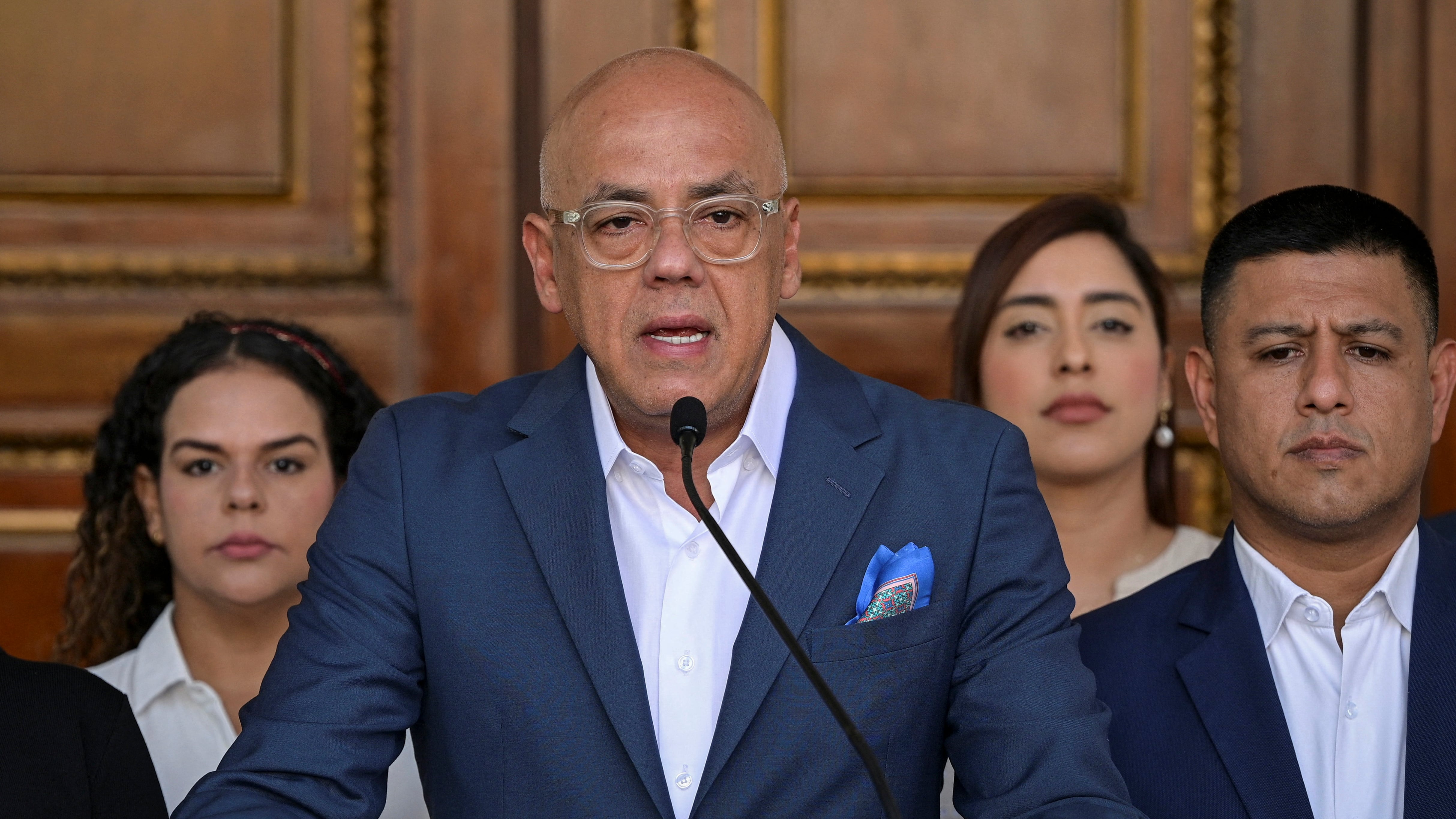
Venezuela just announced it's releasing a "significant number" of prisoners, a move that's raising eyebrows and sparking debate across the political spectrum. National Assembly President Jorge Rodríguez, a key figure in the ruling Chavista government, made the announcement Thursday, framing it as a "unilateral gesture" aimed at solidifying peace. I have to admit, the timing is definitely interesting, given everything else that's going on.
Venezuela Prisoner Release: Is This Real Peace?! W...
Rodríguez carefully avoided using the term "political prisoners," opting instead to emphasize the gesture as a commitment to "peaceful coexistence." He stressed that this release is meant to show Venezuela's dedication to unity, regardless of political, religious, or socio-economic divides. Essentially, they're trying to project an image of reconciliation and stability.
Now, here's where things get a bit more complex. The Venezuelan government is insisting that this decision is entirely independent of the recent arrest and imprisonment of President Nicolás Maduro in New York. Maduro's been under pressure from the United States for quite some time, and this release could be interpreted as an attempt to ease international tensions. But the official line is that it's purely about internal peace. Take that as you will.
Rodríguez urged everyone to see this as a collective contribution to Venezuela's future prosperity. He also gave a shout-out to some international players, including former Spanish Prime Minister José Luis Rodríguez Zapatero, Brazilian President Lula Da Silva, and the government of Qatar, thanking them for their mediation efforts. These kinds of acknowledgements often hint at more complex behind-the-scenes negotiations than what's immediately visible.
Right now, specifics about the release are pretty vague. We don't know exactly how many people will be freed, who they are, or the conditions of their release. Will they be completely free, or will they be subject to travel bans or required court appearances? Past experiences suggest that restrictions are likely, which dampens some of the optimism surrounding the announcement.
Human rights organizations are understandably pushing for a full amnesty, arguing that many arrests have been "arbitrary and unjustified." While there were political prisoners under Hugo Chávez, the numbers have reportedly skyrocketed under Maduro's administration. These groups argue that a truly genuine move towards peace would involve a complete clearing of the slate. It's a waiting game to see if this is just a symbolic gesture or a real commitment to change. I, for one, am hoping for the latter.
Comments
Please sign in with Google to post a comment
No comments yet. Be the first to comment!