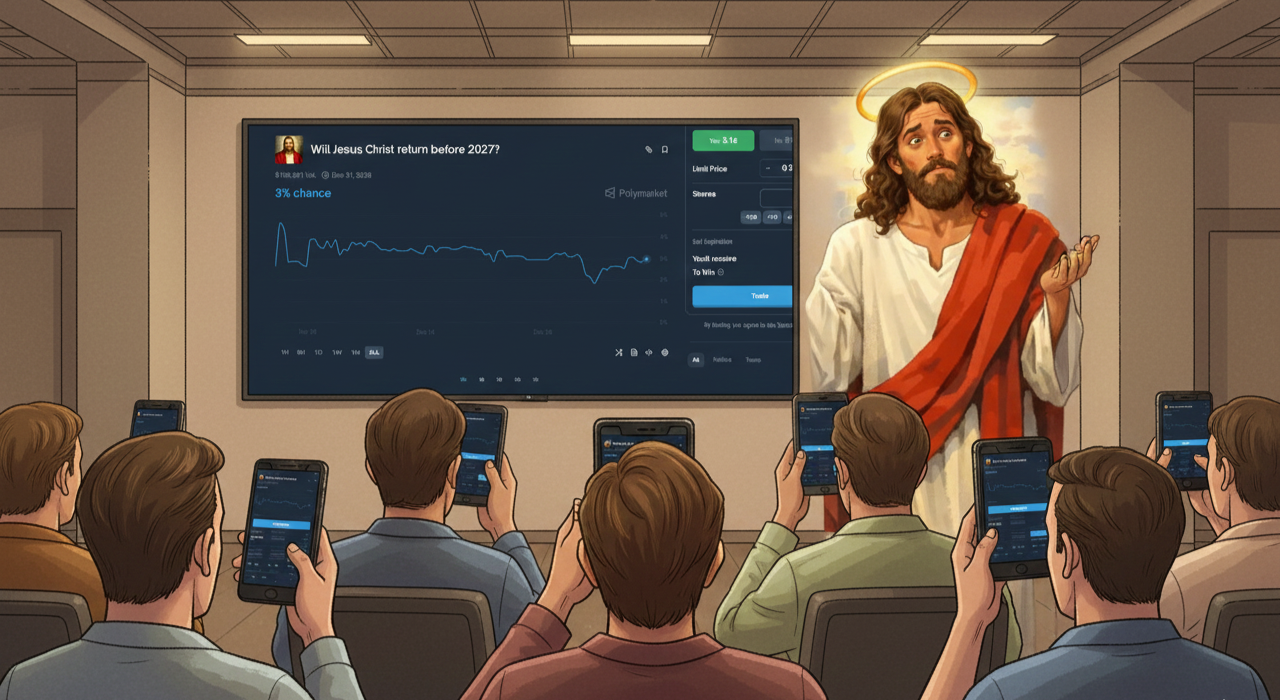
Alright folks, you've heard of betting on elections, maybe even celebrity marriages. But hold onto your hats, because things have taken a decidedly… biblical turn. Prediction markets, those quirky corners of the internet where people wager on future events, are now letting you put your money where your faith is (or isn't) regarding the Second Coming of Jesus Christ. Specifically, will it happen by the end of 2026?
Jesus Returning in 2026?! Shocking Bets Fuel End-o...
Yes, you read that right. Polymarket, a platform usually buzzing with predictions about political races and legal battles, is now hosting a very different kind of wager. They're offering "Yes" or "No" shares on the return of Jesus before 11:59 PM ET on December 31, 2026. And while I'm no theologian, it's safe to say the "No" side is heavily favored. As of today, the implied probability of the Second Coming happening by then is hovering around a mere 3%. Talk about long odds!
Now, I know what you're thinking: "Is this for real?" Apparently, it is. People are actually putting real money on this. A "Yes" share currently costs pennies, meaning a successful bet could yield a return of over 5,700%. That’s a tempting proposition for some, I suppose, especially those who are certain they know something the rest of us don't. It’s an interesting commentary, isn't it? The market is essentially treating the most profound religious event in history as a tradable commodity, assigning it a quantifiable probability. Kinda wild when you think about it.
This isn't even the first time Polymarket has dabbled in divine prophecy. They ran a similar market for 2025, asking the same question. That one attracted a cool $3.3 million in bets, with the overwhelming consensus being that Jesus wouldn't be making a reappearance anytime soon. And they were right. The "Yes" side briefly spiked in popularity during the spring, reaching about a 4% implied probability, but then the faith waned as the year progressed. By December, it was all but over.
So, what does all this mean? Well, probably not much, except that some people have money to burn and a fascination with improbable events. It also says something about our culture, I think. We're increasingly comfortable quantifying everything, even the things that are traditionally considered beyond measurement. Whether it's a sign of the times, a harmless bit of fun, or something more profound, I'll leave that up to you to decide. But I'll be watching the odds, just in case. You never know, right?
Comments
Please sign in with Google to post a comment
No comments yet. Be the first to comment!