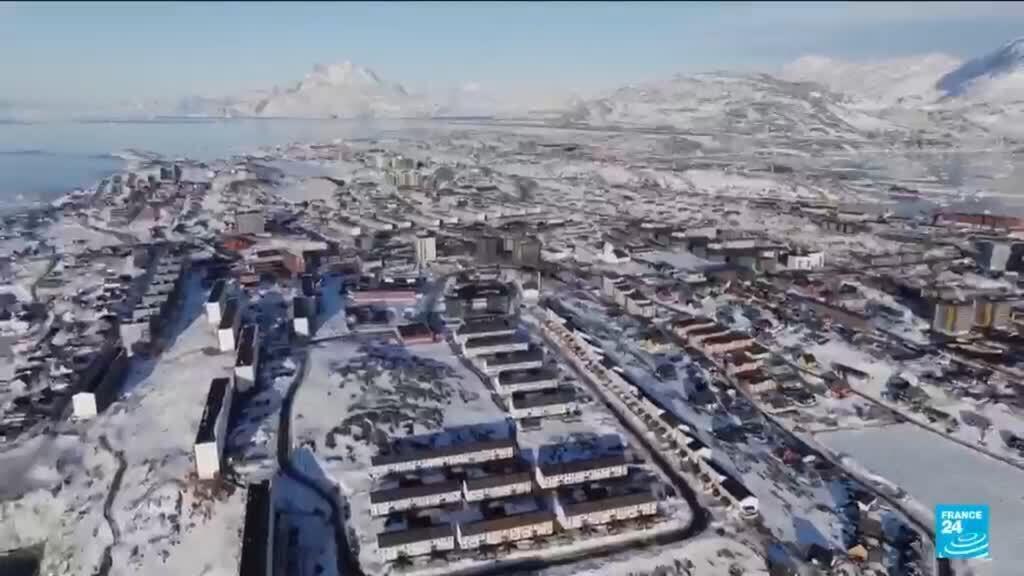
Greenland's coolly rejected the idea of a US takeover, putting a definitive "no" on the table this week. The autonomous Danish territory made it crystal clear: President Trump's suggestions of acquiring the island, one way or another, are simply a non-starter. It's a firm stance, and one that underscores the growing strategic importance – and perhaps sensitivity – surrounding the Arctic region.
Greenland SHOCK! Rejects US Takeover - What Will H...
The Greenlandic government's official statement, while diplomatic, left absolutely no room for misinterpretation. "Greenland is not for sale," they asserted, adding the kicker that they could not accept a US takeover "under any circumstance." It's a pretty blunt message, especially considering the often-nuanced language of international relations. You have to wonder what prompted such a forceful response.
France 24's Monte Francis, reporting on the situation, highlighted the underlying tensions. While Trump's remarks might seem almost whimsical, they reflect a deeper geopolitical game unfolding in the Arctic. As climate change melts polar ice, previously inaccessible resources and shipping routes are becoming increasingly viable, sparking a renewed interest from major powers.
It's easy to dismiss this as just another Trumpian headline grab, but I think it's more complex than that. The US has a long history of interest in Greenland, stemming back to the Cold War when the Thule Air Base became a crucial early warning site. That strategic significance hasn't disappeared, and with Russia and China also vying for influence in the Arctic, Greenland suddenly finds itself at the center of a potential power struggle.
Of course, selling Greenland isn't really up to Denmark or Greenland themselves, at least not entirely. The island enjoys significant autonomy, but defense and foreign policy remain largely the domain of Copenhagen. So even if Trump could somehow persuade the Danish government (a highly unlikely scenario, given their initial reactions), he'd still have to contend with the will of the Greenlandic people. And judging by the government's firm stance, that's a hurdle too high to clear.
Honestly, the whole situation feels a bit surreal. The notion of buying a country sounds like something out of a history book or a Bond movie, not a 21st-century geopolitical strategy. But it does serve as a stark reminder that the Arctic is heating up, both literally and figuratively, and the scramble for its resources and strategic positioning is only going to intensify in the years to come. I'll be watching this story closely – it's far from over.
Comments
Please sign in with Google to post a comment
No comments yet. Be the first to comment!