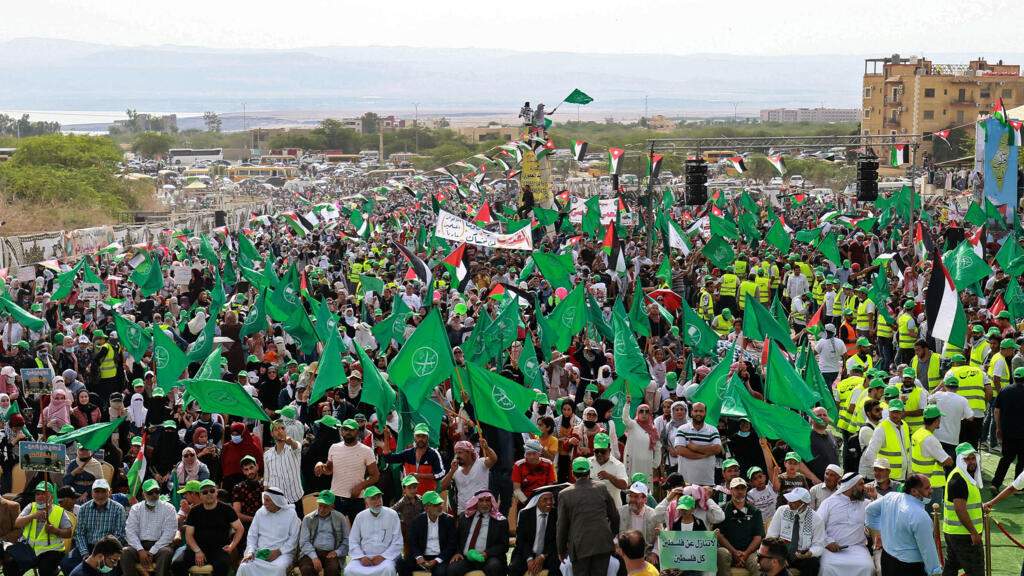
Washington D.C. – In a move sure to ignite controversy across the Middle East, the United States government formally designated the Egyptian, Lebanese, and Jordanian branches of the Muslim Brotherhood as terrorist organizations on Tuesday. This isn't just some bureaucratic reshuffling; it's a major policy shift that could have serious ramifications for regional stability and U.S. foreign policy.
Breaking: US Brands Muslim Brotherhood Terrorist G...
The official announcement, released by the State Department, cited alleged "violence and destabilisation" as the primary justification for the designation. While the U.S. has long held concerns about certain factions within the Brotherhood, particularly in Egypt, this blanket designation across three different national chapters marks a significant escalation. It essentially paints the entire organization, at least in these regions, with the same brush, regardless of nuanced local differences.
Now, it's crucial to remember that the Muslim Brotherhood is a complex and multifaceted organization. It's not a monolithic entity. What holds true for the Egyptian branch, historically known for its more hardline stance, doesn't necessarily apply to the Jordanian chapter, which has often operated within the bounds of the existing political system, albeit with its own distinct Islamist agenda. Lebanon, of course, is a whole different ball game, given the country's fractured political landscape and the Brotherhood's relatively limited influence there.
The implications of this decision are wide-ranging. For one, it allows the U.S. government to impose sanctions on individuals and entities associated with these designated groups. Their assets can be frozen, and travel restrictions imposed. This will undoubtedly hamper their ability to operate, both financially and politically. It also sends a strong message to other countries in the region that the U.S. views the Muslim Brotherhood as a threat. I suspect this move was greeted with quiet approval by certain governments in the region that have long viewed the Brotherhood as a destabilizing influence.
But here’s the catch: this kind of sweeping designation can be a blunt instrument. It risks alienating moderate members of the Brotherhood who may be genuinely committed to peaceful political participation. It could also inadvertently push some individuals toward more radical elements, further fueling instability. It's a delicate situation. In my experience covering these issues, you quickly learn that simplistic solutions rarely work when you're dealing with the intricate tapestry of Middle Eastern politics. The long-term effects of this decision remain to be seen, but one thing is certain: it's a move that will be debated and dissected for a long time to come.
Comments
Please sign in with Google to post a comment
No comments yet. Be the first to comment!