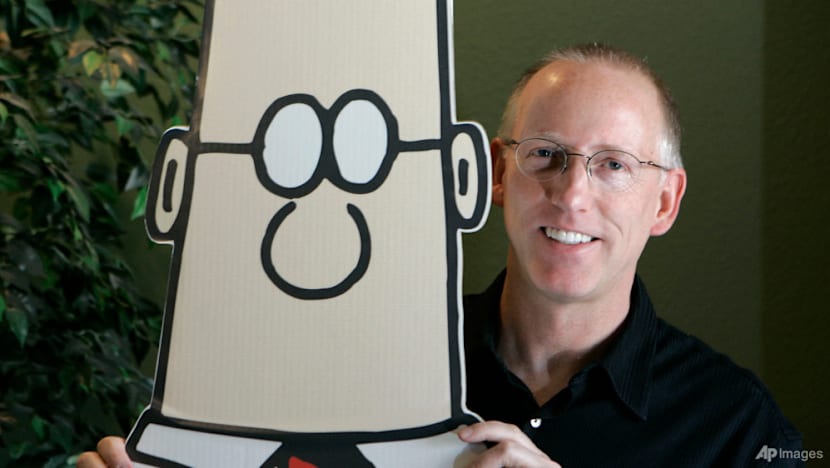
Scott Adams, the man behind the iconic comic strip "Dilbert," which for years skewered the absurdities of office life, has died at the age of 68. His first ex-wife, Shelly Miles, announced his passing on Tuesday via a livestream on his social media channels, saying simply, "He’s not with us right anymore." Adams had previously disclosed his battle with prostate cancer, which had spread to his bones, and that he was receiving hospice care at his home in Northern California.
Dilbert Creator Dead at 68: What Happened Will SHO...
A statement released alongside the announcement read, in part, "I had an amazing life. I gave it everything I had.” Looking back, it’s hard to deny the impact "Dilbert" had on popular culture. For a long time, the comic was everywhere. I remember seeing Dilbert mugs and calendars on desks in nearly every office I visited. It was a shared language for anyone stuck in corporate America.
With its instantly recognizable, mouthless protagonist sporting a white shirt and that perpetually askew red tie, "Dilbert" was a global phenomenon. At its peak, the strip ran in 2,000 newspapers across 70 countries and was translated into 25 languages. Adams even earned the prestigious Reuben Award from the National Cartoonist Society in 1997. That same year, Time magazine named Dilbert as one of the most influential Americans – a fictional character, no less! Time wrote that readers rooted for Dilbert "because he is our mouthpiece for the lessons we have accumulated – but are too afraid to express – in our effort to avoid cubicular homicide.” A pretty accurate assessment, I'd say.
The comic’s success spawned a whole empire: bestselling books, mountains of merchandise, commercials for Office Depot, and even an animated TV series. But the story took a sharp, and frankly, ugly turn in 2023.
Adams' career effectively imploded after he made a series of inflammatory remarks about Black people, referring to them as members of a "hate group" and stating he would no longer "help Black Americans." He later attempted to walk back some of his comments, claiming he was being hyperbolic, but the damage was done. The backlash was swift and severe.
Newspapers across the country immediately dropped "Dilbert," and his distributor, Andrews McMeel Universal, terminated their relationship with him. The Sun Chronicle in Attleboro, Massachusetts, even left the "Dilbert" space blank, choosing to use it "as a reminder of the racism that pervades our society.” A planned book was also shelved. Bill Holbrook, creator of the comic strip "On the Fastrack," summed it up well at the time, telling the Associated Press: "He’s not being cancelled. He’s experiencing the consequences of expressing his views... I am in full support with him saying anything he wants to, but then he has to own the consequences of saying them." A sentiment that resonates, even now.
Comments
Please sign in with Google to post a comment
No comments yet. Be the first to comment!