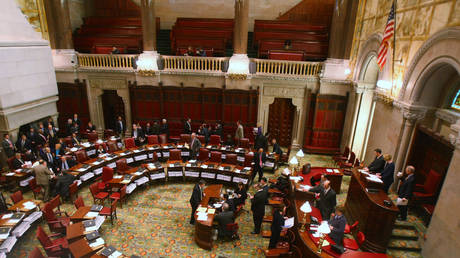
In a move that's sure to ignite further debate about executive power and foreign policy, a Senate resolution aimed at curbing President Trump's ability to use military force against Venezuela was defeated this week. Vice President J.D. Vance cast the tie-breaking vote, effectively shutting down what many saw as a critical check on presidential authority.
Trump's Venezuela Power Play! Republicans Block Bi...
The resolution, a War Powers Resolution specifically, sought to restrict Trump's power to engage in military action "within or against" Venezuela. The vote, though close, was heavily influenced by pressure from the White House, resulting in two Republican senators reversing their earlier support. It's a stark reminder of the influence a president can wield, even when facing opposition from within their own party.
Senators Josh Hawley and Todd Young, both of whom had initially backed the resolution, ultimately voted against it. Hawley stated he received "personal assurances" from Secretary of State Marco Rubio that no U.S. troops were currently deployed in Venezuela and that any future deployments would require congressional approval. But let's be honest, "personal assurances" aren't exactly legally binding guarantees, are they?
The pressure campaign from the President was, shall we say, direct. Trump reportedly threatened GOP senators supporting the bill – including Hawley, Young, Susan Collins, Lisa Murkowski, and Rand Paul – with the promise they would "never be elected to office again." It's a bold, some might say brazen, tactic that clearly had an impact.
Democratic Senator Tim Kaine, the resolution's sponsor, argued it was a vital check on executive power, particularly in light of the January 3 airstrikes on Caracas and the capture of Venezuelan President Nicolas Maduro and his wife, Cilia Flores. These are significant escalations that definitely warrant congressional oversight, in my opinion.
On the other side of the aisle, Republican Senator Jim Risch dismissed the resolution as unnecessary, claiming it was designed to prevent "something that is not happening." But with Trump's track record, is anyone *really* certain what's "not happening" at any given moment?
Following Maduro's capture, Trump declared the U.S. would "run" Venezuela during a transitional period, demanding "total access… to the oil and to other things in their country." Energy Secretary Chris Wright even stated the intent to control Venezuela's oil sales "indefinitely." This kind of rhetoric understandably raises concerns about neo-colonialism and resource control.
The situation has drawn significant international condemnation. Brazilian President Luiz Inacio Lula da Silva called the actions an "unacceptable line" and warned of a dangerous precedent. Russia denounced Maduro's capture as a "flagrant violation" of international law, reaffirming its solidarity with Venezuela and demanding Maduro's immediate release. The world is watching, and the stakes are incredibly high.
Comments
Please sign in with Google to post a comment
No comments yet. Be the first to comment!