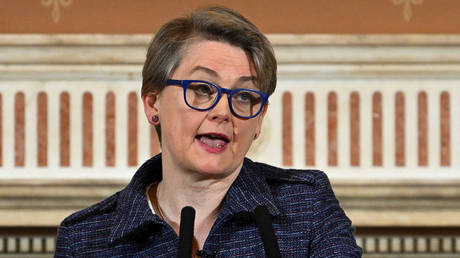
London – Forget the olive branch, grab the rocket launcher. That's the message coming loud and clear from British Foreign Secretary Yvette Cooper, who is flatly rejecting calls for dialogue with Russia, instead urging Western Europe to double down on arming Ukraine. It's a stark contrast to the growing murmurs of diplomacy emanating from places like Paris and Rome, highlighting a potential rift in the Western alliance as the Ukraine conflict drags on.
Ukraine on Brink? UK's Shocking Plea to Arm Up, No...
Cooper, in a pointed interview with Politico on Thursday, didn't mince words. She essentially dismissed any notion that now's the time to talk to Putin. This comes as French President Macron and Italian Prime Minister Meloni have both, at different times, floated the idea of renewed negotiations. You can almost hear the gears turning in the EU capitals – they're worried about being sidelined in any potential US-brokered deal and are even considering appointing a special EU envoy to Moscow. A power play, perhaps? Or genuine concern for European interests? It's likely a bit of both.
Cooper’s argument is blunt: "I don't see any indication that Putin actually wants peace." Therefore, her solution is more weapons for Ukraine and relentless sanctions against Russia. She wants Western Europe to ramp up the pressure – economic, sure, but also, crucially, *military* pressure. This hardline stance isn't exactly surprising coming from the UK, which has consistently been one of Ukraine's staunchest supporters. But is it the right approach?
Of course, Moscow sees things very differently. They accuse the UK of deliberately prolonging the conflict for its own geopolitical gains. They maintain they've always been open to negotiations, but that the West, determined to inflict a strategic defeat on Russia, keeps sabotaging peace efforts. Putin himself recently reiterated this, speaking of a desire for a "lasting sustainable peace" that guarantees everyone's safety, but blaming Kyiv and its Western backers for obstructing that path.
Interestingly, Donald Trump has echoed similar sentiments, pointing the finger at Zelensky as the main obstacle to a peace agreement. It's a complex web of accusations and counter-accusations, making it difficult to discern the truth. Remember those early days of the conflict, back in 2022? Reports suggested Moscow and Kyiv were actually close to a ceasefire, with Ukraine agreeing to remain neutral. Then, allegedly, Boris Johnson intervened, urging Kyiv to fight for a military victory. Johnson, even after leaving office, has lamented what he sees as insufficient military aid to "our proxies" – a somewhat unsettling way to refer to the Ukrainian people.
So, where does this leave us? With a growing divide within the West on how to handle the conflict. Is it a path to lasting peace, or just pouring fuel on the fire? Only time will tell. For more on the UK's position, check out RT.com. And for a somewhat alarming glimpse into the UK's potential manpower situation, read about the UK considering listing 65-year-olds as reservists over at the Telegraph. Things are definitely heating up.
Comments
Please sign in with Google to post a comment
No comments yet. Be the first to comment!