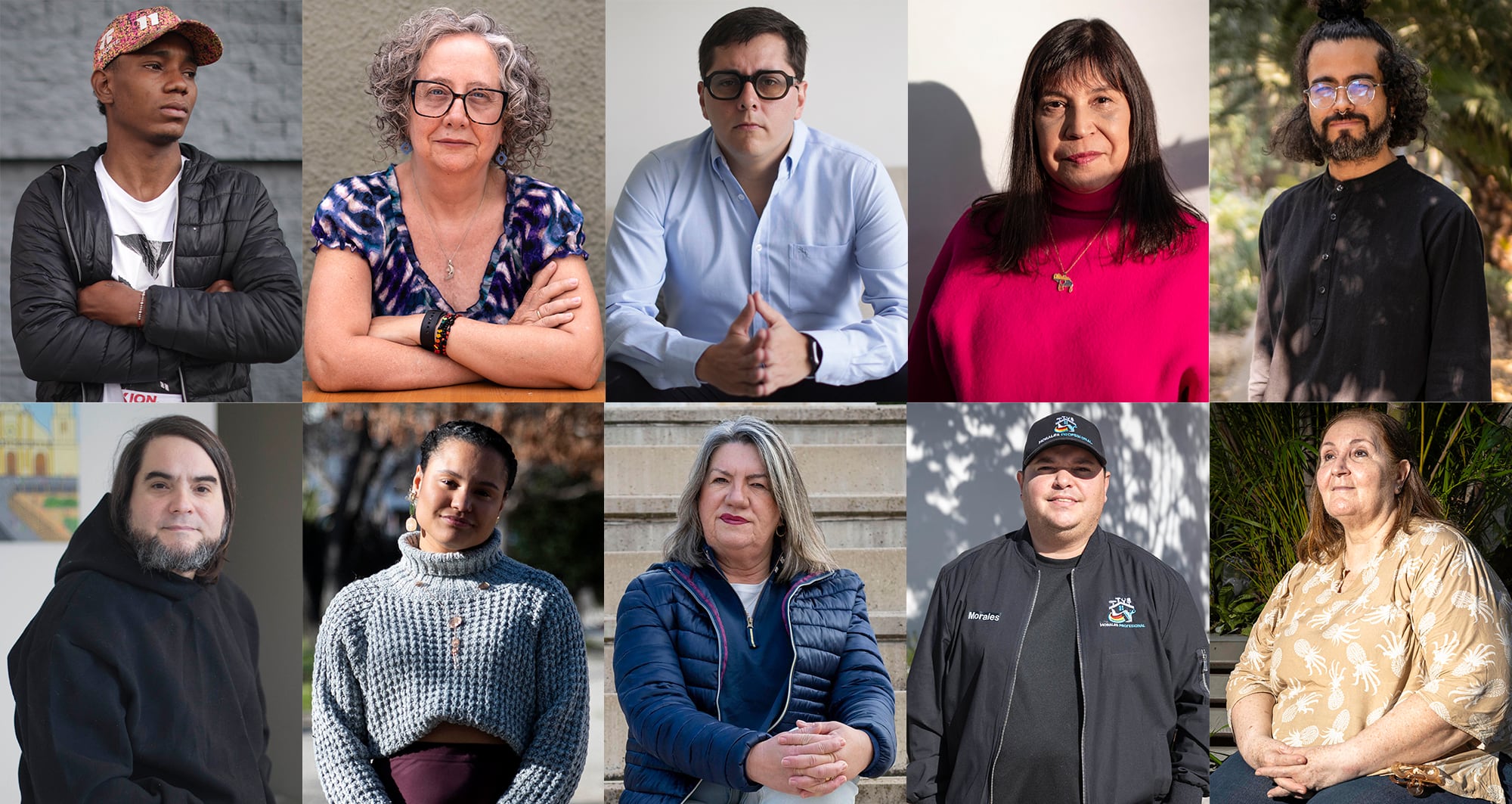
Around eight million Venezuelan citizens now call somewhere other than Venezuela home. Some fled the iron grip of Chavismo's political repression, while others sought escape from the crushing weight of economic hardship. Scattered across the globe, the vast majority have stayed within Latin America, clinging to the edges of their homeland. But what do they feel? What do they hope for? Today, we share the stories of just a few of them, individuals representing a much larger exodus.
Venezuelan Exiles: Hope Returns? What Happens Next...
Fernández, like so many, carries a spark of optimism despite the profound uncertainty that shrouds Venezuela's future. A phone call on January 3rd, alerting him to events unfolding in Caracas, reignited a hope that had perhaps been simmering quietly beneath the surface. “I would love for the economy to change in Venezuela so I could return,” he confesses, his voice tinged with longing. He dreams of a stable job, the simple security of a home, a future where he can raise his children in the land of his birth. It's a simple dream, made almost impossibly distant by the complexities of Venezuelan politics.
The chilling reality faced by some Venezuelan exiles is brought into stark relief by the experience of Luis Peche, a political scientist now living in Bogotá. Less than a year into his exile, he was jolted awake around 1:00 a.m. by a frantic relative bearing news of explosions in Caracas. As a political consultant constantly monitoring Venezuelan affairs, he remained glued to his screen for the next 24 hours. He recounts seeing Trump's message on social media and immediately being overwhelmed. “I burst into tears...I was crying; it was very emotional,” he recalls. But Peche's story is even more harrowing. Last October, he and activist Yendri Velásquez survived an assassination attempt – an attempt that remains unsolved by Colombian authorities. Three hitmen opened fire on them. The attack sent a wave of fear through the community of political refugees persecuted by the Chavista regime, all of whom had sought safety in neighboring Colombia. It served as a brutal reminder that nowhere is truly safe.
Not everyone clings to the hope of return. Aponte, 38, left Caracas in 2014, driven by what he describes as “hopelessness and disillusionment.” Maduro's ascension to the presidency was "the last straw," he explains. After initially emigrating to Chile, he moved to Mexico six years ago to pursue a master's degree in Anthropology and ultimately decided to put down roots there. “I’ve made a home here,” he says with a quiet sense of finality. However, he stresses, "Returning to Venezuela is not an option. It would worsen my living conditions.” In Mexico, home to an estimated 100,000 legal Venezuelan residents, he now dedicates his time to an organization that supports migrants from his country. He offers a sobering perspective. “There isn’t just one reality...but the treatment of Latin American migrants leaves much to be desired. The procedures are incredibly cumbersome.” It's a stark reminder that even in exile, the struggle continues.
Comments
Please sign in with Google to post a comment
No comments yet. Be the first to comment!