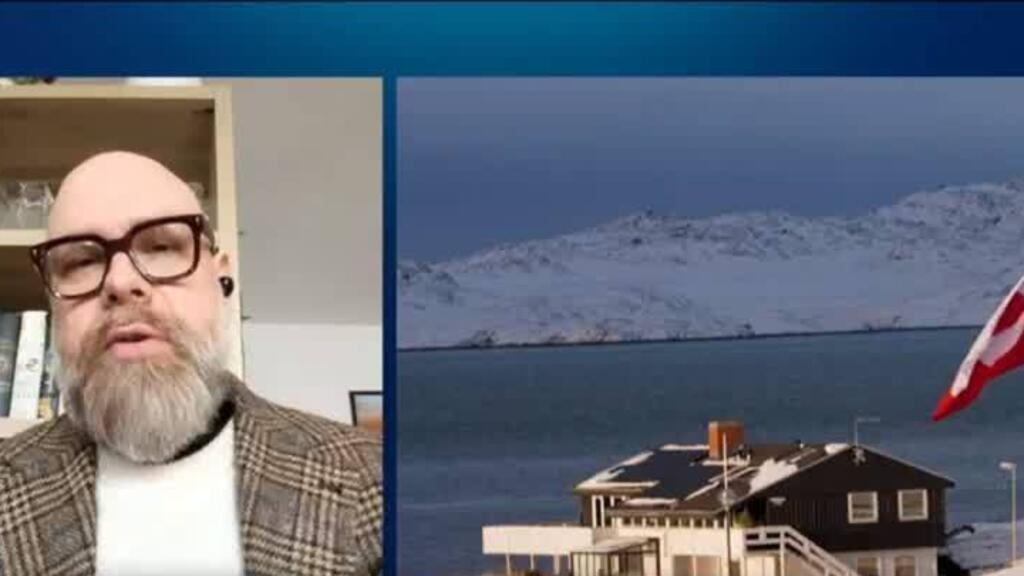
President Trump's past, shall we say, *unconventional* approach to foreign policy is back in the spotlight, and this time it involves Greenland. Remember when he floated the idea of buying the massive, icy island? It wasn't just a bizarre headline – according to at least one expert, it's actually having real, and potentially damaging, consequences for NATO.
Trump's Greenland Gambit: Is He Weakening NATO?! E...
Jean-François Bélanger, an assistant professor at the Royal Danish Defence College's Institute for Military Operations, argues that Trump's pursuit of Greenland – however seriously he actually intended it – is actively weakening the transatlantic alliance. His assessment? It's "playing straight into Russia's hands." Ouch.
Now, you might be thinking, "Greenland? Russia? What's the connection?" Well, NATO's strength rests on its unity and mutual trust. When a major player like the U.S. starts making moves that are perceived as undermining the sovereignty of a key ally (Denmark, in this case, which governs Greenland), it creates friction. And friction, as any mechanic will tell you, slows things down and causes damage over time. Especially when there are sensitive geopolitical considerations.
Bélanger's point, as I understand it, is that Russia thrives on division within the West. Any cracks in the NATO armor, any perceived lack of commitment or respect among its members, are exploited by Moscow to advance its own agenda. Think about it: Russia has been actively trying to sow discord within the EU and NATO for years, using disinformation campaigns and other subversive tactics. Trump's Greenland idea, whether intended or not, provided them with some pretty solid ammunition.
It's not just about the specific issue of Greenland, either. It’s about the broader signal it sends. Does the U.S. truly value its allies and their territorial integrity? Or is it willing to pursue its own interests, regardless of the impact on the alliance? These are the kinds of questions that are being asked, and the answers aren't always reassuring. If allies start to doubt the commitment of the U.S., they may start looking elsewhere for security and support – and that's exactly what Russia wants.
Of course, this is just one expert's view. However, Bélanger's credentials and the logic of his argument are compelling. It's a reminder that even seemingly outlandish ideas can have serious, unintended consequences in the complex world of international relations. This Greenland episode serves as a cautionary tale: sometimes, the best foreign policy is simply not to make things unnecessarily complicated.
Comments
Please sign in with Google to post a comment
No comments yet. Be the first to comment!