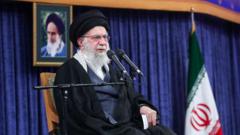
Iran's Supreme Leader, Ayatollah Ali Khamenei, has finally admitted that thousands of people died during the recent wave of protests that swept the country. While this acknowledgment is a stark admission of the scale of the government crackdown, it comes with the familiar finger-pointing, blaming the United States for instigating the unrest. It's a complicated situation, to say the least.
Iran Leader's SHOCKING Admission: Thousands Dead?!...
The numbers are staggering. According to the US-based Iranian Human Rights Activists News Agency (HRANA), a reported 3,090 people lost their lives during the protests. Now, as a journalist, I always approach these numbers with a healthy dose of skepticism; activist groups often inflate figures, while governments tend to downplay them. However, even if the true number is lower, it's still a horrific toll. The information blackout caused by the internet shutdown has made verifying these figures independently incredibly difficult, which only adds to the anxiety and distrust.
Khamenei's speech on Saturday doubled down on the anti-American rhetoric, a move that, frankly, wasn't unexpected. President Trump's recent encouragement of Iranian protestors and his veiled threats of military intervention certainly poured fuel on the fire. It's a dangerous game of geopolitical chess, and the ordinary Iranian people are the pawns getting sacrificed.
These protests, initially sparked by economic grievances back on December 28th, have clearly morphed into something much larger – a direct challenge to the Supreme Leader's authority. The Iranian government, predictably, is painting the demonstrations as "riots" orchestrated by their enemies. But let's be clear: when people take to the streets en masse, risking their lives, it's usually a sign of deep-seated frustration, not just external manipulation.
The response from Iranian security forces has been brutal. Verified videos circulating online show them firing on unarmed protestors. While things seem to have quieted down in recent days, the heavy security presence and restricted internet make it hard to get a clear picture of what's actually happening on the ground. One resident in Shiraz told BBC Persian that while things have "gone back to normal," security forces are still patrolling to maintain control. That’s hardly a ringing endorsement of stability.
Khamenei didn't stop at blaming the US; he also called President Trump a "criminal" and demanded that America be "held accountable." These are strong words, and they further escalate the already tense relationship between the two countries. Trump, as of yet, hasn't responded directly. The US State Department, however, issued a warning about reports of potential Iranian attacks on American bases, cautioning Tehran against "playing games with President Trump." It's a war of words, but the threat of something more is always lurking beneath the surface.
And finally, there's the odd situation with the US military presence in Qatar. The reduction of personnel at the Al-Udeid air base, described as a "precautionary measure," raises more questions than it answers. Is this a genuine de-escalation attempt, or simply a strategic repositioning? President Trump claims the "killing in Iran has stopped," but he hasn't ruled out military action. It's a confusing, volatile situation, and one we will continue to monitor closely. The human cost, however, is already tragically clear.
Comments
Please sign in with Google to post a comment
No comments yet. Be the first to comment!