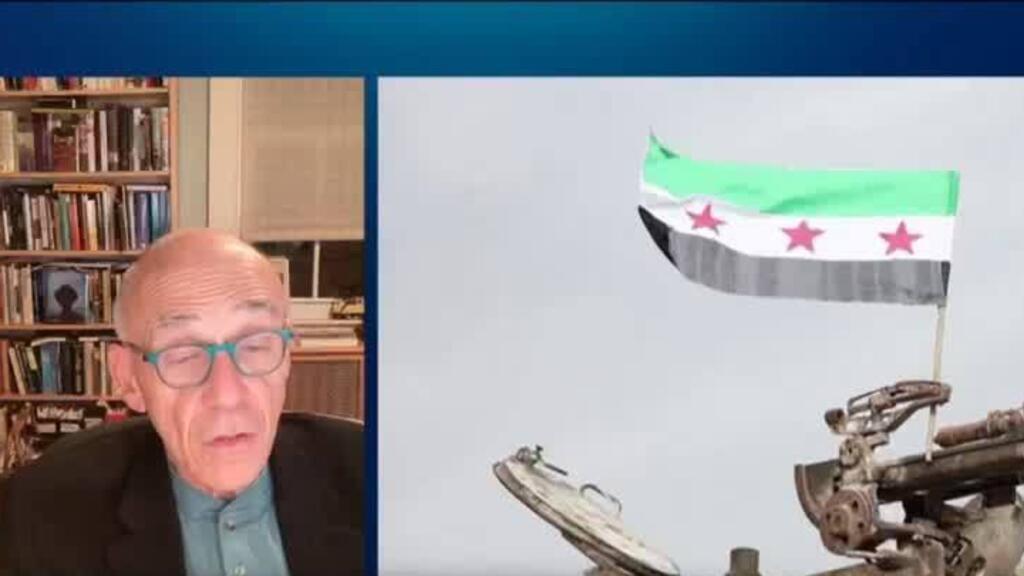
The situation in northeastern Syria is getting increasingly tense, folks. Kurdish-led forces, who've been key allies in the fight against ISIS, are now facing the full force of the Syrian army as it pushes deeper into territory they previously controlled. This weekend saw a significant shift: these forces reportedly relinquished control of Syria's largest oil field on Sunday, a real blow both strategically and economically. The Syrian government is clearly consolidating its power, and the Kurds are facing a tough decision.
Kurdish Forces to Guerrilla War?! Syrian Army's Ad...
But what does this mean for the future? Well, according to several analysts, including Henri Barkey, Professor of International Relations at Lehigh University, we're potentially looking at a shift in tactics from the Kurdish side. Instead of large-scale battles, they might transition to guerrilla warfare. Think hit-and-run attacks, ambushes, and a focus on disrupting Syrian army operations from the shadows. It's a scenario that could dramatically escalate the conflict and further destabilize an already volatile region.
I mean, let's be honest, the Syrian army has the upper hand in terms of conventional military power. But guerrilla warfare is a different beast altogether. It's a long, drawn-out struggle that can be incredibly difficult to counter. It relies on local knowledge, popular support (or at least tolerance), and the ability to blend in with the civilian population. If the Kurdish forces can effectively implement these tactics, they could make it very costly for the Syrian government to maintain control over these areas.
The handover of the oil field is significant because it showcases the changing power dynamics. The Syrian government is clearly determined to reassert its authority over all of Syria, including the resource-rich northeast. This push, however, is directly challenging the Kurdish forces who have built a degree of autonomy in the region. The international community is watching closely, but as we've seen in the past, intervention is a complex and often fraught issue.
Ultimately, this situation highlights the tragic and complex nature of the Syrian conflict. The fight against ISIS may be winding down, but the power vacuum it left behind is creating new and dangerous tensions. A shift towards guerrilla warfare could prolong the fighting indefinitely, leading to further suffering for the Syrian people. It's a worrying prospect, and one that demands serious attention from policymakers around the world. We can only hope that a path towards a peaceful and just resolution can be found before things spiral completely out of control.
Comments
Please sign in with Google to post a comment
No comments yet. Be the first to comment!