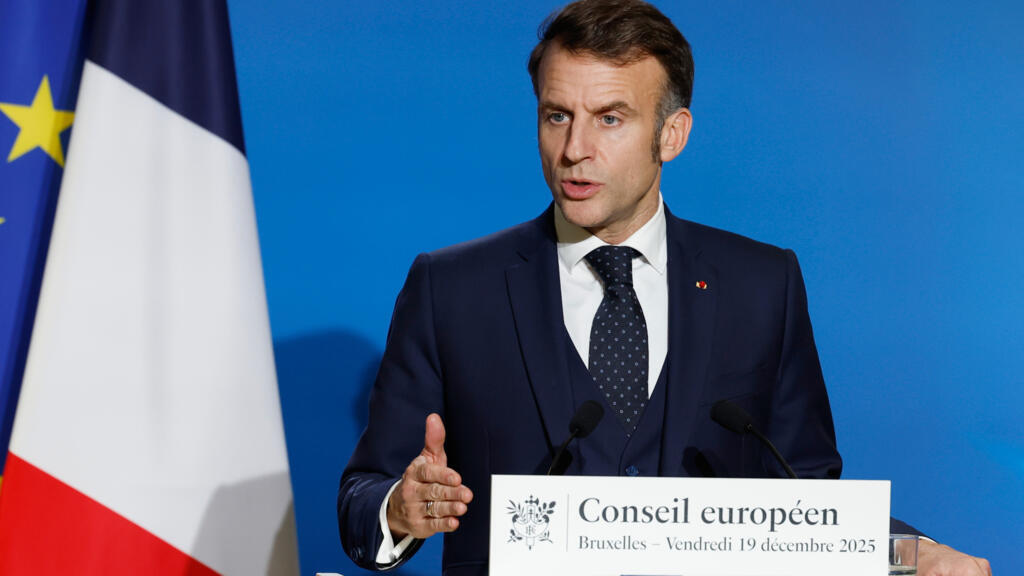
The EU's got a new weapon in its arsenal, and it's not afraid to show it off – or at least, talk about it. Following some eyebrow-raising tariff threats lobbed by the US concerning Greenland, French President Emmanuel Macron casually mentioned the EU's "anti-coercion instrument" over the weekend. Now, this isn't some futuristic laser cannon; it's a trade mechanism, adopted last year, that's got some folks calling it a "bazooka." But what exactly *is* this thing?
EU's 'Bazooka' vs. US Over Greenland?! What Happen...
Essentially, it's designed to push back against countries that try to bully EU member states through trade. Think of it as a sophisticated shield against economic strong-arming. The EU doesn’t want to be pushed around, and this instrument is meant to send that message loud and clear.
So, how does this "bazooka" actually work? The details are complex, involving a range of potential retaliatory measures. We're talking about things like tariffs, of course, but also restrictions on investment, access to public procurement contracts, and even intellectual property. The idea is to inflict economic pain on the coercing country, making them think twice about using trade as a weapon.
Now, the interesting thing is that this instrument hasn't actually been used yet. It's still sitting there, primed and ready, a sort of economic deterrent. Its very existence, proponents argue, might be enough to prevent some countries from trying to pressure the EU in the first place. It's like having a really big dog – you don't necessarily need it to bite, its presence alone can often scare off intruders.
Of course, the big question is whether the EU would *really* pull the trigger on this thing against a major economic power like the United States. That's where things get tricky. A full-blown trade war would be damaging for everyone involved, and the EU would undoubtedly weigh the costs and benefits very carefully. It's one thing to talk tough, but quite another to actually unleash the bazooka. But, Macron's mention of it sends a clear signal: the EU has options, and it's not afraid to consider using them.
It's worth remembering that international relations are a delicate dance, and this anti-coercion instrument adds another layer of complexity. Will it deter future trade threats? Will it be used sparingly, or will it become a regular tool in the EU's arsenal? Only time will tell. But one thing is for sure: the world is watching, and everyone's keen to see how this particular drama unfolds.
Comments
Please sign in with Google to post a comment
No comments yet. Be the first to comment!