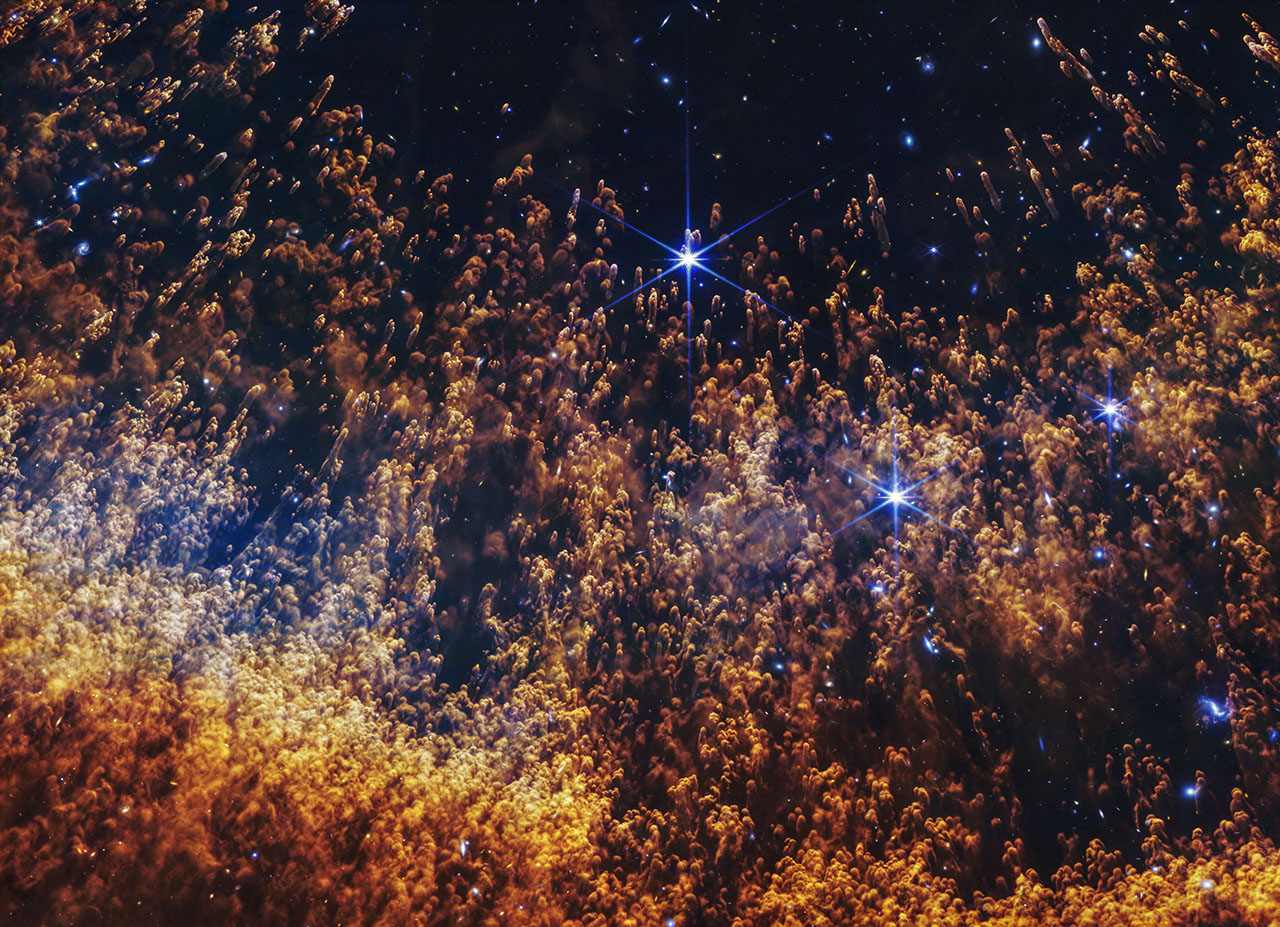
Hold onto your hats, folks, because NASA’s James Webb Space Telescope just dropped another cosmic bombshell. This time, it’s a mind-blowing close-up of the Helix Nebula, and honestly, it’s like staring into the eventual fate of our own solar system. We're talking about truly unprecedented detail here, bringing the intricate structure of gases expelled by a dying star into razor-sharp focus. It's the kind of image that makes you feel simultaneously insignificant and deeply connected to the universe.
Webb Telescope Unlocks Helix Nebula's Secrets! Pre...
What's so cool about this isn't just the pretty picture – although it is *really* pretty. It’s the story it tells about stellar recycling. These dying stars are literally seeding the cosmos with the materials that will form future generations of stars and planets. NASA keeps reminding us of our place in this whole thing, and with good reason: it’s awe-inspiring.
The new image, snapped using Webb's Near-Infrared Camera (NIRCam), shows off these amazing comet-like knots and intense stellar winds. You can practically see the layers of gas shed by the dying star interacting with their surroundings. Imagine these blistering winds of super-hot gas colliding with slower, colder shells of dust and gas ejected earlier. It's like cosmic sculpting, creating the nebula's incredibly complex structure.
Now, the Helix Nebula isn't exactly a stranger. It's been observed for a couple of centuries. But Webb's near-infrared vision is a total game-changer. The knots really pop, sharper than anything we've seen before from Hubble or Spitzer. It also reveals this clear shift from the hottest to the coolest gas as the shell expands outward from the central white dwarf. It's almost like you can feel the temperature difference just by looking at the image.
Speaking of that white dwarf, it's a blazing remnant core of the original star, sitting right at the heart of the nebula (just outside the image frame, unfortunately). Its intense radiation is what lights up the surrounding gas, creating a whole spectrum of features. Hot ionized gas closest to the white dwarf? Check. Cooler molecular hydrogen farther out? Got it. Protective pockets where complex molecules can start forming within dust clouds? You betcha. This whole interaction is crucial, since this stuff is the raw material for forming new planets in other star systems. Think about that for a second!
The colors in Webb's image aren't just for show, either. They actually represent temperature and chemistry. The blue hues mean the gas is hottest, energized by the white dwarf's ultraviolet light. As you move outward, the gas cools into yellow regions where hydrogen atoms are combining into molecules. And then, at the outer edges, you see reddish tones – the coolest material, where the gas thins and dust begins to form. It's the star's final breath, transforming into the building blocks of new worlds. It's just... incredible.
Remember those hints from Spitzer about complex molecules forming in the Helix Nebula? Well, Webb's superior resolution is now showing us exactly *how* they form, in those shielded zones within the nebula. This is just another piece of the puzzle, and Webb is helping us put it all together. It's one thing to suspect something is happening; it’s another to actually *see* it. And seeing it with this level of detail? That's what makes this era of space exploration so exciting.
Comments
Please sign in with Google to post a comment
No comments yet. Be the first to comment!