It's not every day you hear about a new Comet discovery, especially one made during a routine check! A Spanish astronomical observatory has done just that, spotting a new comet for the first time in over four decades. This is quite a find, considering the dominance of large, automated sky surveys in this field these days.
Comet Sighting! Did a Spanish Telescope Just Break...
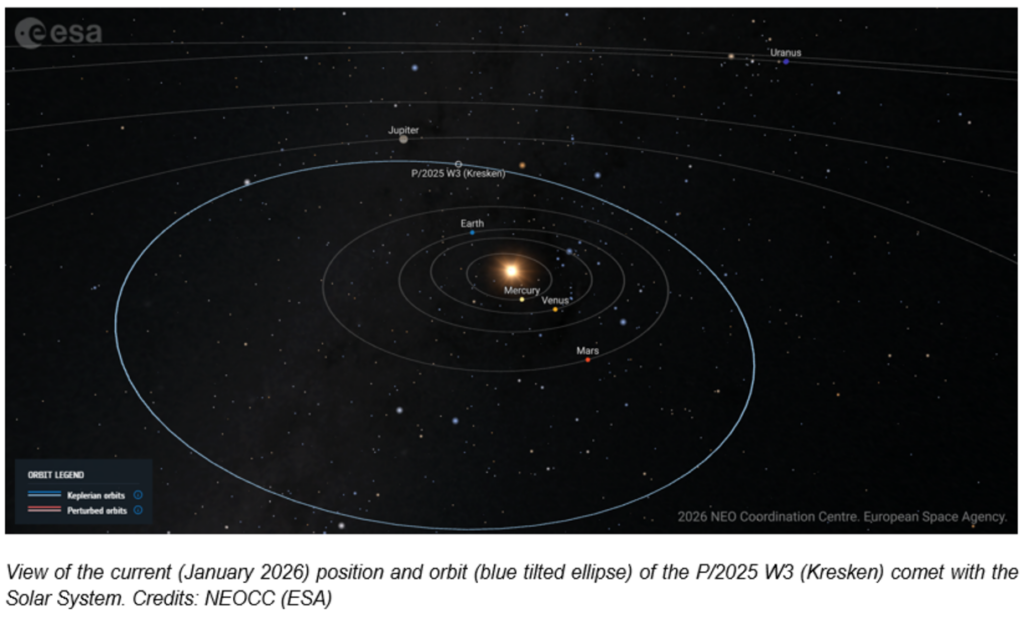
According to reports, the comet was detected on November 28, 2025, during testing of a brand-new, high-sensitivity camera installed on the 80-centimetre Schmidt telescope at the Calar Alto observatory. Imagine that – a Comet discovery while just making sure the new equipment is working properly! It was Rainer Kresken, an engineer working with the European Space Agency, who spotted it while calibrating the camera as part of ESA’s Space Safety Programme.
What makes this discovery even more remarkable is that it wasn't the result of a dedicated comet-hunting campaign. These kinds of finds are becoming increasingly rare outside of the big, automated sky-survey projects. Calar Alto itself confirmed the significance, stating that this is only the second comet discovered using their Schmidt telescope – the first one was back in 1985! It's a pretty significant moment for Spanish astronomy.
The last time a comet was detected from a Spanish facility was over 40 years ago, so this new discovery really puts things into perspective. I remember reading about the big comet discoveries of the 90s as a kid; it felt like a different era. Now, with so much of the sky constantly monitored by robotic observatories, a "manual" discovery like this feels almost like stumbling upon a hidden gem.
Of course, the work isn't done. Astronomers are emphasizing that further observations are needed to fully understand the comet’s physical characteristics and its long-term orbit. Its current classification is still under review, so there's plenty more to learn about this celestial wanderer. Still, a remarkable find for the Calar Alto observatory and a reminder that even in the age of automation, human observation can still lead to amazing discoveries. It's a win for Spain, and a win for anyone who loves peering up at the night sky!
Comments
Please sign in with Google to post a comment
No comments yet. Be the first to comment!