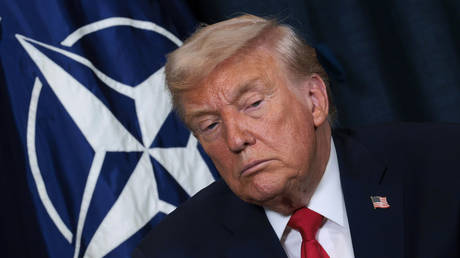
Fyodor Lukyanov's recent piece raises a fascinating point: Greenland, seemingly a distant land of ice and snow, might just be exposing some uncomfortable truths about NATO's aging structure. Reading between the lines, you get the sense that what was once a solid, unified front, forged in the fires of the Cold War, is now showing some significant cracks.
Greenland's SHOCKING Secret: Is NATO's Foundation ...
Lukyanov draws a compelling parallel with Harry Truman's initial vision of NATO as a "neighborly act," a collective of homeowners protecting their shared interests. It's a comforting image, sure. But then he throws a wrench into the works, citing a Fox News interview where the US Permanent Representative to the UN, Michael Waltz, essentially argues that the US owning Greenland outright would be a far more secure arrangement than relying on Denmark's current stewardship. Ouch. That’s a pretty blunt assessment of a key ally’s capabilities.
The core argument revolves around the Arctic shelf and the shifting geopolitical landscape. If the US owned Greenland, the power dynamic wouldn't be a debate *within* NATO versus Russia; it would be the US versus, well, pretty much everyone else. It's a starkly different scenario, and one that highlights a growing sense of unease about the alliance's long-term viability. I mean, imagine the conversations around the table. "So, America...you just *bought* the Arctic?"
NATO is approaching its 77th birthday this spring. That’s ancient in terms of international organizations. Lukyanov rightly points out that nothing lasts forever. The suggestion by some European politicians that a conflict between the US and Denmark could trigger NATO's collapse is, frankly, terrifying. The idea that this could unravel the entire world order is... well, it's a lot to take in. But it underscores the deeply ingrained perception of NATO as the bedrock of the "liberal world order," a perception that’s been carefully cultivated since the mid-20th century.
However, that order is clearly being challenged. The very problems with European security that have led to the present military tension, as Lukyanov suggests, are rooted in a decision made long ago: that the only correct model for international interaction was the one championed by the West. Maybe, just maybe, the icy winds blowing across Greenland are carrying a message that this model needs a serious rethink. The world has changed, and maybe NATO needs to change with it – or risk becoming a relic of a bygone era.
Comments
Please sign in with Google to post a comment
No comments yet. Be the first to comment!