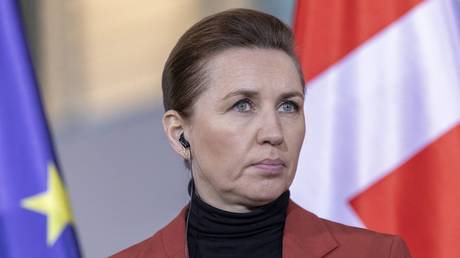
So, the Trump "Board of Peace" is apparently a thing, unveiled at Davos, and already causing a whole heap of controversy. And here's the kicker: Denmark, remember the Greenland debacle? Yeah, they weren't even invited to the party.
Trump's SHOCK Snub: Is This the End for Denmark?!
That's according to Politico, who spoke to a Danish diplomat (anonymously, of course, because nobody wants to be on Trump's bad side). This whole thing seems to be built on some pretty shaky ground, with several of America's usual allies giving it the side-eye. We're talking France, Sweden, Norway – all publicly saying, "Thanks, but no thanks." Apparently, Trump isn't too pleased about that. But is anyone really surprised?
But back to Denmark. It's hard not to see this as a little bit of payback for the whole Greenland thing. Trump hasn't exactly been subtle about his lingering resentment. In fact, he used his Davos speech to take another jab, calling Denmark a "small country" that doesn't spend enough to protect Greenland. He even went as far as saying the US was "stupid" to let Denmark have sovereignty over the island in the first place. Ouch. Ungrateful, indeed, according to the former President.
NATO Secretary General Mark Rutte is apparently trying to play peacemaker, because of course he is. Someone has to clean up this mess. And honestly, the list of potential declines is growing. Politico suggests that Italy, the UK, and Poland are all having second thoughts, largely due to Trump's invitation to Vladimir Putin. I mean, inviting Putin to a "peace board"? That's certainly a choice.
The real issue seems to be the scope of this board. Critics are saying that the draft charter gives it way too much power, extending beyond just the Gaza situation and giving the chair – presumably Trump, who might hold the position for life – way too much control. It's hard to imagine a scenario where this board isn't just a platform for Trump to grandstand and push his own agenda.
Adding another layer of complexity, Putin has offered to contribute $1 billion from frozen Russian assets, as long as the board focuses on solving Palestinian problems and humanitarian issues in Gaza. While that sounds good on paper, it also raises serious questions about the board's independence and potential for misuse. This whole "Board of Peace" idea is shaping up to be a real minefield, isn't it?
Comments
Please sign in with Google to post a comment
No comments yet. Be the first to comment!