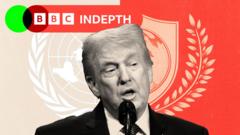
Could Trump's New Board of Peace Sideline the Struggling UN?
Trump's Peace Board: UN's Demise?! What Happens Ne...
President Trump, never one for understatement, has vowed to "end decades of suffering" with his newly formed Board of Peace. But is this a genuine attempt at global harmony, or, as critics allege, a self-aggrandizing project designed to reshape the international order in his image?
"Together we are in a position to… end decades of suffering, stop generations of hatred and bloodshed, and forge a beautiful, everlasting and glorious peace for that region and for the whole region of the world," the president declared, channeling his characteristic optimism. The question, of course, is whether this is achievable, or even desirable, given the potential implications for existing global institutions.
While a world weary of conflict desperately wants to believe him, many observers and officials view the initiative with suspicion, seeing it as further evidence of Trump's ambition to dismantle the post-war international order and replace it with institutions more directly under his control. This isn't just about ego; it's about power.
"We will not let anyone play us," Poland's Prime Minister Donald Tusk warned tersely on social media, a sentiment echoed by many in Western Europe. Contrast that with the effusive praise from Viktor Orban, the president's staunchest European ally: "If Trump, then peace." It's a stark divide, and one that highlights the deeply polarizing nature of the Trump presidency.
The precise function of the Board, which Trump will head "in perpetuity," remains shrouded in ambiguity. Some observers are openly questioning whether it's an attempt to create a parallel UN, a sort of Trump-branded alternative to the often-gridlocked international body. I have to admit, given the administration's past pronouncements, this doesn't seem far-fetched.
Leaked details of the draft charter paint a worrying picture. It stipulates that he will serve as the Board's chairman for life, even after leaving office. And it grants him vast powers, including the authority to invite or exclude member states, create or dissolve subsidiary bodies, and even appoint his successor! It's a level of control that would make even the most autocratic of leaders blush.
This latest development comes amidst a particularly tumultuous month, one that has already seen the US capture of Venezuela's leader, presidential threats and preparations for military action against Iran, and that bizarre proposal to acquire Greenland, which sent shockwaves throughout Europe. It feels like the world is holding its breath.
Nineteen countries from around the globe, including Argentina, Azerbaijan, former Soviet republics, and Gulf kingdoms, attended the Board's inauguration in Davos. But many more have either politely declined or are hedging their bets. Even Russia, which Trump claims is "on board," has clarified that it remains only a "consulting partner." As Sweden put it, "As the text stands right now, we're not joining."
Ultimately, critics view the Board as a vanity project for a president openly seeking the Nobel Peace Prize, an accolade awarded to President Obama early in his first term. Whether it's a genuine attempt at peacemaking or a cynical power play remains to be seen. But one thing is clear: the world is watching, with a mixture of hope, apprehension, and a healthy dose of skepticism.
Comments
Please sign in with Google to post a comment
No comments yet. Be the first to comment!