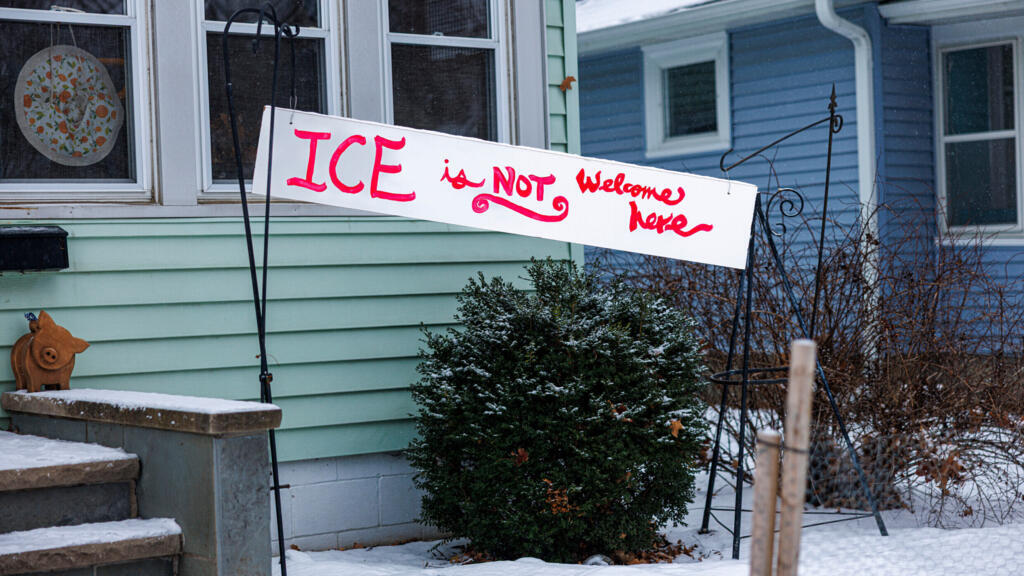
A firestorm is brewing over a leaked Immigration and Customs Enforcement (ICE) memo that seems to throw constitutional protections right out the window. The document, now circulating among legal circles and civil rights organizations, outlines a new policy empowering ICE agents to forcibly enter private homes *without* a judge's warrant. That's right, no warrant required.
ICE Secretly RAIDING Homes?! Is YOUR Door Next?!
This revelation is, to put it mildly, deeply concerning. It immediately raises serious questions about the erosion of our fundamental rights. Think about it – the Fourth Amendment exists specifically to protect us from "unreasonable searches and seizures." This memo appears to directly contradict that very principle. I remember learning about this in high school civics – it's pretty basic stuff!
According to the leaked memo, ICE argues this authority is necessary to effectively enforce immigration laws. They claim it's crucial for apprehending individuals deemed a threat to national security or public safety. However, critics are blasting this justification as a dangerous overreach, a slippery slope that could lead to widespread abuses and violations of privacy. It feels like a heavy hammer being used where perhaps a delicate scalpel is more appropriate.
The core of the legal argument against this policy rests on a landmark 1980 Supreme Court decision, *Payton v. New York*. This ruling unequivocally established that warrantless entries into private residences are presumptively unconstitutional, even when officers have probable cause to believe a crime has been committed. Unless there are exigent circumstances – like someone's life being in imminent danger – a warrant is generally required. The memo sidesteps this critical legal precedent, leaving many legal experts scratching their heads. How can they simply ignore a Supreme Court ruling?
Civil liberties groups are already gearing up for a legal challenge, arguing that this policy will inevitably lead to unlawful intrusions, targeting vulnerable communities and eroding trust in law enforcement. The potential for abuse is undeniable. Imagine the fear and anxiety this will create, particularly within immigrant communities already wary of ICE. It's hard to see how this policy will *improve* public safety. More likely, it'll just deepen the divide between law enforcement and the people they are supposed to protect.
The implications of this memo are far-reaching. It’s not just about immigration enforcement; it's about the fundamental balance between security and liberty. We’ll be watching this story closely, because it has the potential to reshape the landscape of law enforcement in America, and not in a good way. The question remains: will the courts step in to uphold the Constitution and protect the rights of all citizens? Only time will tell, but the stakes are incredibly high.
Comments
Please sign in with Google to post a comment
No comments yet. Be the first to comment!