Why the Abnormal Has Been Normalized in Spain’s Rail System
Spain's Rail System: How Did "Abnormal" Become the...
Spain’s rail system. Once the darling of European infrastructure, often described as modern, reliable, and strategically vital. It was presented as a symbol of technological progress and effective public investment. But that narrative, frankly, has become increasingly difficult to sustain.
In the space of a single week, Spain has suffered five separate train accidents, exposing systemic weaknesses that can no longer be dismissed as isolated incidents. Five accidents? It's not just bad luck, is it? These events point to a deeper and more structural problem. One where abnormal practices, both technical and institutional, have been allowed to persist for so long that they have become, chillingly, part of normal operations.
This normalization, as any seasoned engineer will tell you, doesn't happen overnight. It develops slowly, insidiously, when warning signs are ignored, oversight weakens, and accountability becomes…blurred. Over time, systems adapt *to* risk instead of eliminating it, creating conditions where failure is no longer an anomaly but an eventual outcome. We've seen this pattern play out in other sectors, from aviation to nuclear energy. It's a recipe for disaster.
In complex infrastructure systems, serious failures are rarely isolated events. They are usually preceded by long periods of minor irregularities. Think: delayed inspections, deferred maintenance, procedural shortcuts justified as temporary solutions. When these irregularities don't produce immediate consequences, they begin to lose their power to generate alarm. Staff adapt. Managers rationalise. Institutions continue operating as if nothing is fundamentally wrong. I've seen this firsthand; it's like a slow-motion car crash.
This, then, is the normalization of the abnormal. A process where unsafe or improper conditions are tolerated long enough to be perceived as standard practice. The Bird’s Safety Pyramid explains how catastrophic outcomes are built on layers of ignored issues. At the top sits the visible failure – the derailed train. Beneath it lie dozens of minor incidents and hundreds of unsafe or irregular conditions. You can't fix the train crash without addressing the foundation.
In rail systems, these conditions often include underfunded maintenance, repeated technical alerts, governance weaknesses, and opaque decision making. When these issues persist without decisive intervention, risk accumulates quietly, like rust eating away at vital components. The absence of immediate disaster is often mistaken for proof of stability. In reality, it's often a sign that the system is simply absorbing damage, a damage that will eventually find a way to express itself.
Rail infrastructure depends heavily on public funding. How that funding is allocated, supervised, and audited directly affects safety outcomes. When funds intended for maintenance or system improvement are misused, diverted, or poorly controlled, technical risk skyrockets. Allegations of misuse of public funds and favour granting to private companies strike at the heart of this issue. When procurement decisions are influenced by personal or political interests rather than technical need, preventive maintenance suffers. And ultimately, the public pays the price.
By Nazario Rodriguez • Published: 24 Jan 2026 • 14:35 • 3 minutes read
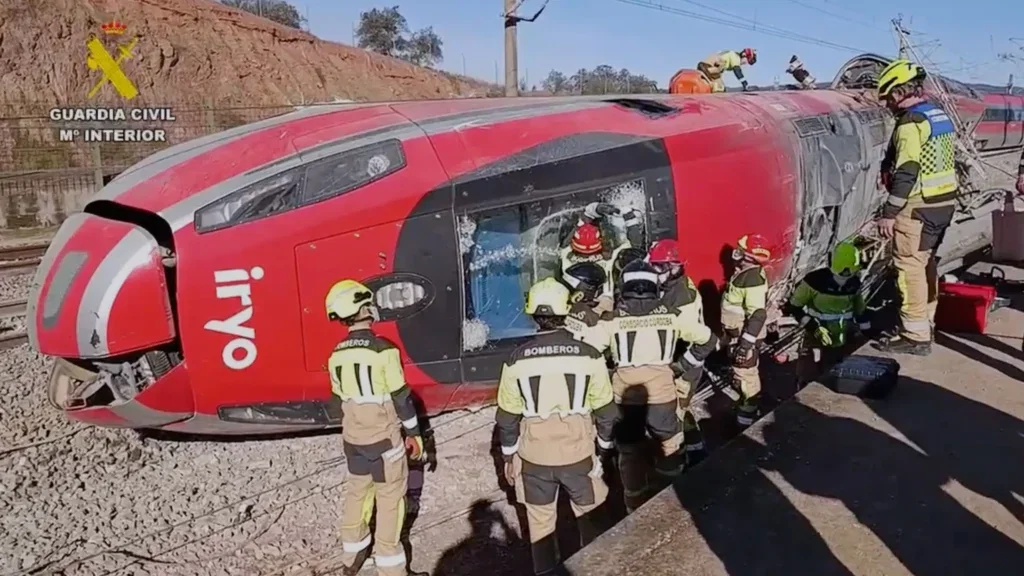
Emergency services inspect an overturned Renfe train as part of the official investigation into the rail accident in Spain. Photo Guardia Civil.
Comments
Please sign in with Google to post a comment
No comments yet. Be the first to comment!