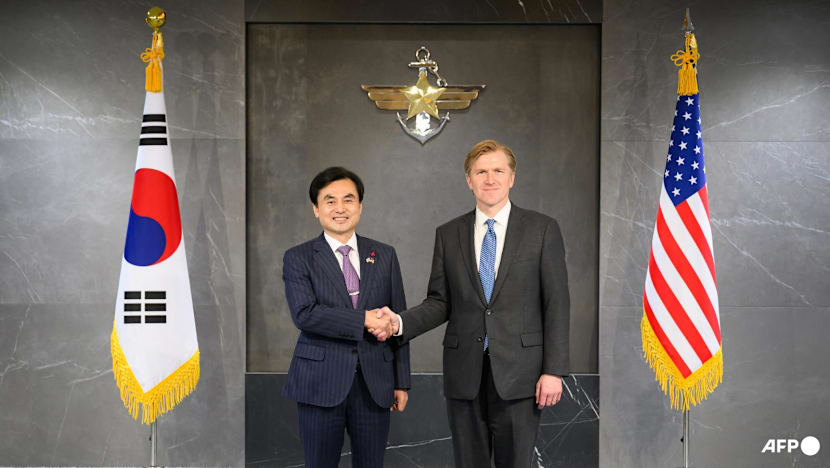
Seoul is buzzing this week after a significant announcement: the US and South Korea have agreed to deepen cooperation on South Korea's aspirations to acquire Nuclear-powered submarines. While these discussions have been ongoing for some time, the commitment to "enhance collaboration" signals a potentially major shift in the regional security landscape.
Nuclear Sub Alliance: US & S. Korea's SHOCKING Dea...
The announcement came after talks between US Under Secretary of Defense for Policy Elbridge Colby and South Korean Defence Minister Ahn Gyu-back on Monday. Colby's visit, notably his first overseas trip since taking on the role, underscores the importance Washington places on the relationship with Seoul, particularly as the US appears to be encouraging South Korea to take on a larger role in regional defense.
According to a statement released by South Korea's defence ministry, both Colby and Ahn agreed that cooperation on the Nuclear-powered submarine project would “fortify South Korea’s ability to lead the peninsula’s defense and elevate the security alliance." This is pretty significant language. It suggests not just a tactical upgrade, but a strategic shift in how the two nations view South Korea's role in maintaining stability on the Korean peninsula and beyond.
Now, let's be clear, this isn't just about South Korea wanting fancy new subs. A nuclear-powered submarine capability would be a game-changer. The increased range and endurance, compared to conventionally powered submarines, would allow South Korea to project power further afield and, critically, deter potential adversaries, especially North Korea, more effectively. Imagine having a submarine that doesn't need to surface as often, therefore less vulnerable, patrolling the waters around the Korean peninsula. That's a serious deterrent.
Of course, this development isn't without its potential complications. China, in particular, is likely to view the prospect of a nuclear-powered South Korean submarine fleet with considerable unease. Any shift in the balance of power in the region tends to make waves. It's a delicate dance, and how this cooperation unfolds will be watched very closely by all the major players in East Asia.
Colby's Asian tour also includes a stop in Japan, further highlighting the US's focus on strengthening its alliances in the region. It's all interconnected, and the increased cooperation on nuclear-powered submarines with South Korea is just one piece of a much larger puzzle. The next few months will be crucial in seeing how this agreement translates into concrete action and, more importantly, how it impacts the overall security dynamics of the region.
Comments
Please sign in with Google to post a comment
No comments yet. Be the first to comment!