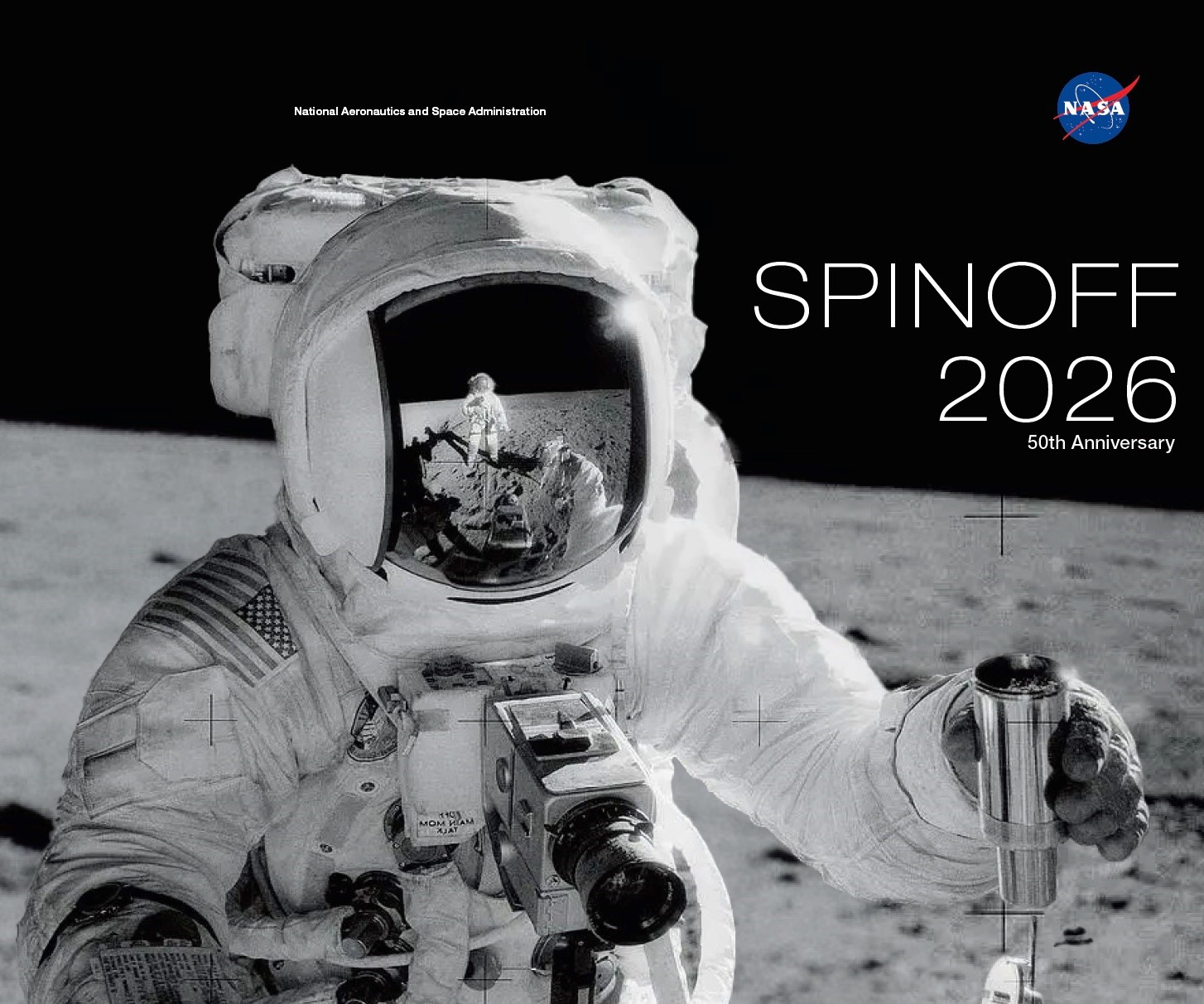
NASA is celebrating a half-century of quietly revolutionizing life here on Earth. How, you ask? Through its Technology Transfer program, a dedicated initiative focused on bringing the brilliant innovations born from space exploration down to us regular folks. The latest milestone is the release of "Spinoff 2026," a publication that reads like a blueprint for a better future, all thanks to the ingenuity sparked by reaching for the stars.
NASA's Secret Earth Tech? You Won't Believe What's...
This year's cover is a striking image: astronaut Alan Bean from the Apollo 12 mission in 1969, holding a lunar soil sample container. But it's not just a nostalgic look back. It's a reminder that those giant leaps for mankind are also feeding groundbreaking progress right here, right now. As NASA Administrator Jared Isaacman put it, "NASA’s work has always delivered returns well beyond the mission itself." Think lunar missions and Mars exploration translating directly into advancements in medicine, aviation, and even agriculture. Pretty cool, right?
The 50th edition of "Spinoff" showcases a fascinating array of companies leveraging NASA-derived tech. Take 3D printing, for example. Two firms are using these technologies initially developed for building habitats on other planets to create custom wall panels and affordable housing neighborhoods. It's a powerful example of how space-age concepts can solve very real-world problems.
Remember those sci-fi movies where robots handle all the mundane tasks? Well, NASA's vision of robots assisting astronauts is materializing on Earth, too! Two companies, nurtured by NASA, are commercializing software for cleaning robots and even developing humanoid robots for warehouse and assembly line work. Suddenly, the future feels a little less distant.
"Incredible feats on distant worlds require incredible innovation," says Dan Lockney, Technology Transfer program executive at NASA Headquarters. And he's right. It's not just about getting to the Moon or Mars; it's about the incredible problem-solving that happens along the way. Lockney is understandably excited about the breakthroughs to come from upcoming lunar explorations and missions to Saturn's moon Titan.
But the story doesn't end there. "Spinoff" also highlights lifesaving spinoffs, such as implantable heart monitors derived from tech originally designed for astronauts on the International Space Station. And those personal locator beacons getting a boost from NASA's satellite communication technology? Potentially game-changing for search and rescue efforts.
We're talking food safety procedures, memory foam (yes, that came from NASA!), miniaturized camera technology, scratch-resistant lenses, and even wireless headsets. It's a veritable treasure trove of everyday innovations we owe to the space program. Personally, I'm amazed at how much of our modern life has roots in the pursuit of the cosmos.
Finally, "Spinoff 2026" isn't just a retrospective. It's an invitation! The "Spinoffs of Tomorrow" section highlights 20 technologies ripe for commercialization. If you're an entrepreneur looking for your next big idea, or just curious about the future, it's worth checking out. You can access the full report at https://go.nasa.gov/4t5Xv12. It's a chance to participate in NASA's legacy of innovation, and maybe even help bring a little bit of the stars down to Earth.
Comments
Please sign in with Google to post a comment
No comments yet. Be the first to comment!