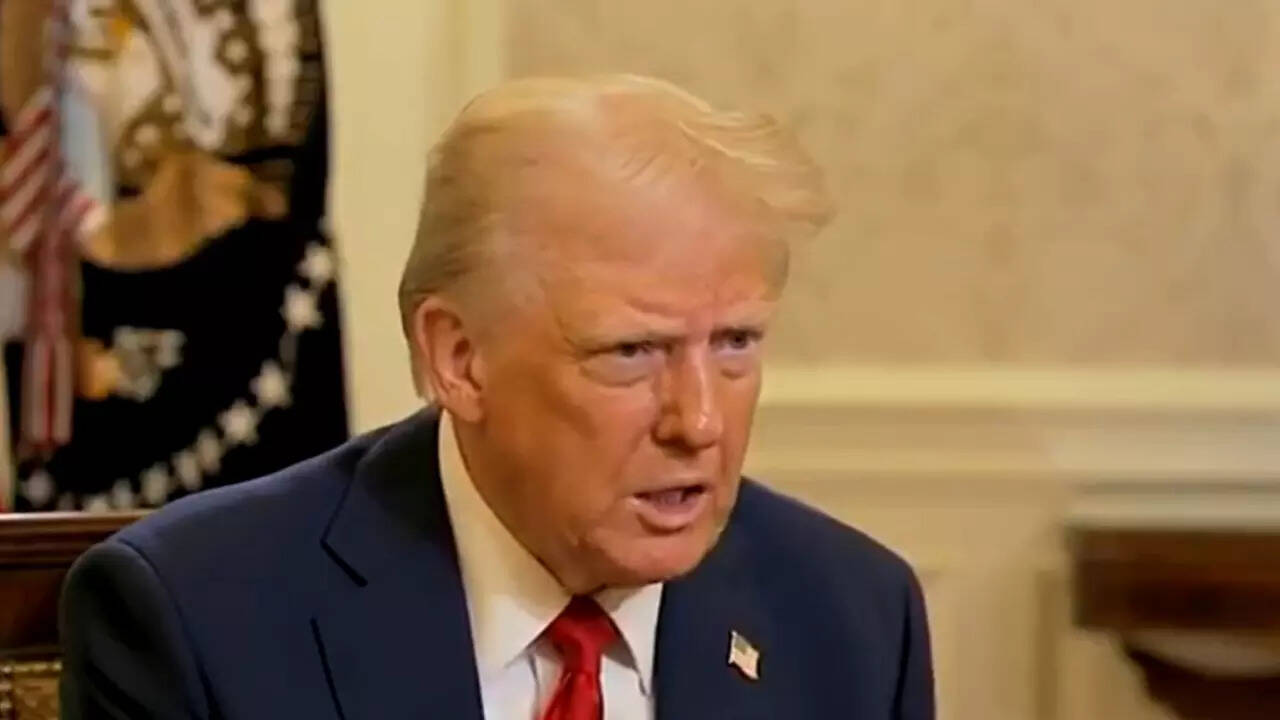
WASHINGTON – Things are definitely heating up, again, in the Middle East. President Trump announced Monday that a "big armada" is being deployed near Iran, even as he insists Tehran secretly "wants to talk" and, get this, "strike a deal." It's a classic Trumpian mix of saber-rattling and…optimism? Maybe? Whatever it is, it's keeping everyone on edge.
Iran on Edge: Trump's "Big Armada" Signals Deal or...
According to White House insiders, military action is still very much on the table. This comes after Trump reportedly almost greenlit strikes on Iranian targets earlier this month, supposedly in response to the regime's brutal crackdown on protesters. He pulled back at the last minute, but the military build-up continued. You know, just in case.
Axios reported that no final decision has been made, and Trump is expected to huddle with his advisors this week. More military options will be presented, because apparently we haven't got enough already. To add to the tension, the USS Abraham Lincoln aircraft carrier strike group officially entered U.S. Central Command's (CENTCOM) area of responsibility yesterday. It's hard to see this as anything but a very deliberate message.
In an interview, Trump doubled down on the Lincoln deployment, boasting, "We have a big armada next to Iran. Bigger than Venezuela." Because apparently, comparing international crises is now a thing. He was coy about specific military options or his preferred course of action, though.
However – and this is the part that gives some folks pause – he insisted diplomacy is still an option. "They want to make a deal. I know so. They called on numerous occasions. They want to talk," he said. Who "called" and about what remains vague. You know, typical Trump.
The real question, of course, is what kind of deal we're talking about. Some of Trump's more hawkish advisors have been pushing him to enforce his "red line" and punish the regime for its actions, particularly given his earlier promises of support for the protesters. Others are questioning the wisdom of bombing Tehran, suggesting that the regime's current weakness presents an opportunity to push for a more favorable agreement.
U.S. officials have laid out some pretty ambitious terms for any potential deal: Iran would have to completely dismantle its enriched uranium program, cap its long-range missile stockpile, stop supporting regional proxies, and essentially give up any independent uranium enrichment. It's a tall order, to say the least. Iranian officials have expressed interest in talks, but there's no indication they're willing to meet these demands. So, while Trump says they want to talk, what they're willing to concede is another matter entirely. This could be a long and potentially dangerous game.
Adding another layer, Trump also made a pretty bold claim about a previous conflict, saying Iran's "big force of missiles" posed a threat of a damaging surprise attack on Israel last June, before the 12-day war. He asserted that he gave Israel the green light to strike first, preventing a disaster. "They would have attacked...but that first day [of the war] was brutal for them. They lost their leaders and many of their missiles," Trump said. It's a dramatic claim, to be sure, and one that's difficult to independently verify. But it certainly adds to the narrative of an aggressive and unpredictable Iran, at least in Trump's telling.
Comments
Please sign in with Google to post a comment
No comments yet. Be the first to comment!