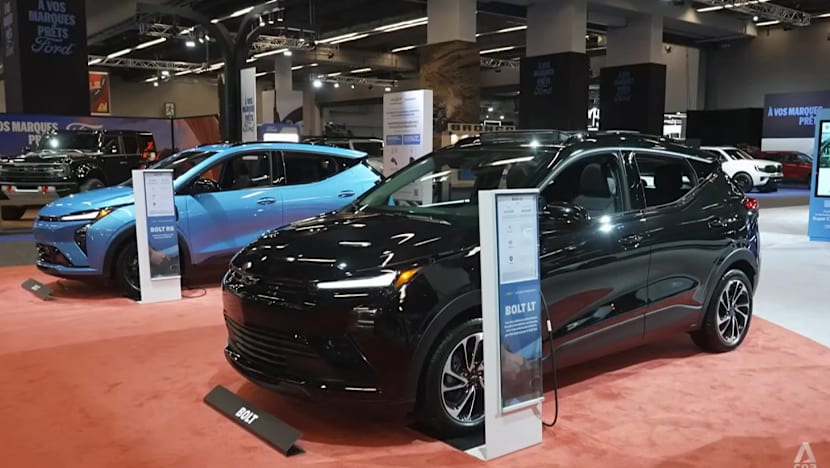
Canada is poised to get a whole lot more Electric vehicles, and potentially at a much lower price. A new trade agreement with China will allow the import of up to 49,000 Chinese EVs at a significantly reduced tariff of just 6.1 percent – a far cry from the standard 100 percent. Sounds good for consumers, right? Well, it's not quite that simple.
Canada-China EV Deal: Boom or Bust for Auto Worker...
The agreement, in exchange for Beijing lowering tariffs on Canadian agricultural products, aims to boost trade diversification, a strategy framed as a vital economic necessity, especially given the current state of Canada-US relations. Mark Carney touched on this in Davos, essentially saying clinging to the past isn't a winning strategy. It's about building something better from the present situation.
The potential savings for Canadian consumers are hard to ignore. We're talking about Chinese EVs that could be $10,000 to $15,000 cheaper than their Western counterparts. And it's not just about price, many of these vehicles are getting good reviews for their quality and tech. As Professor Greig Mordue at McMaster University put it, China hasn't just caught up, they've "jumped far over the rest of the world."
However, that doesn't mean it's going to be a smooth ride for Chinese automakers breaking into the Canadian market. Building the infrastructure, including the sales and distribution networks, and getting regulatory approval for each model will be a challenge. BYD, for example, a major player in the Chinese EV scene, doesn't currently have that established infrastructure here. Tesla, on the other hand, with its Shanghai-produced Model Y and existing Canadian presence, is already well-positioned.
The bigger worry, and the one that unions are sounding the alarm about, is the impact on Canadian auto jobs. Our domestic EV manufacturing base is already pretty limited. Stellantis builds the Dodge Charger Daytona EV in Ontario, but sales are sluggish. And remember General Motors shelving plans for that Ontario plant that was supposed to be our first full-scale EV facility? The fear is that a flood of cheaper Chinese EVs will further undermine the sector. Unifor, representing autoworkers, is very concerned about potential job losses, and rightly so.
So, while cheaper EVs are tempting, this trade deal throws a wrench into an already complex situation for Canada's automotive industry. We'll have to wait and see if the benefits for consumers outweigh the potential costs to our own manufacturing base. It's a gamble, no doubt, and one that Ottawa is clearly betting on.
Comments
Please sign in with Google to post a comment
No comments yet. Be the first to comment!