The dream of reaching Mars, and even further into the cosmos, is taking a significant leap forward. NASA has just announced a major milestone in the development of Nuclear propulsion systems, technology that promises to drastically shorten travel times and expand the possibilities of deep space exploration. This isn't just pie-in-the-sky stuff; this is real, tangible progress being made right now.
NASA's Bold Move: Nuclear Rockets to Conquer Space...
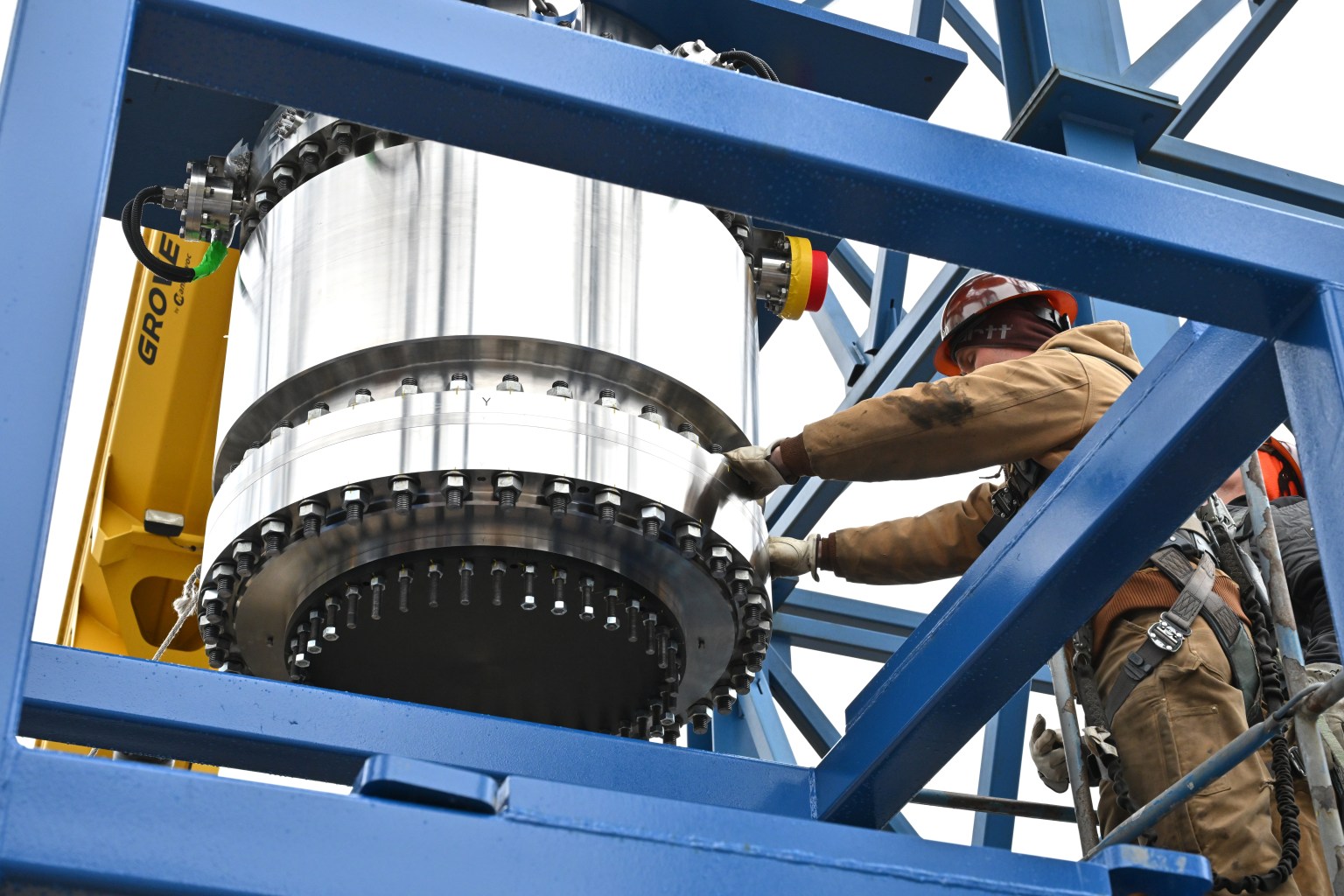
The core of this progress lies in the successful completion of a cold-flow test campaign on a flight reactor engineering development unit. Now, that’s a mouthful, I know. But what it boils down to is this: NASA has built a mock-up of a nuclear reactor, and they've been meticulously testing how propellant flows through it under various conditions. The tests, conducted at NASA’s Marshall Space Flight Center in Huntsville, Alabama, represent the first of their kind since the 1960s, marking a true renaissance in space nuclear technology.
Greg Stover, acting associate administrator of NASA’s Space Technology Mission Directorate, highlighted the importance of this work. "Nuclear propulsion has multiple benefits including speed and endurance that could enable complex deep space missions," he stated. He went on to emphasize that shortening travel times is key to expanding mission capabilities, ultimately allowing us to explore deeper into the solar system than ever before. Imagine getting to Mars in months instead of years – that's the kind of game-changing potential we're talking about here.
Over several months in 2025, teams at Marshall Space Flight Center conducted over a hundred tests on the engineering development unit. This unit, built by BWX Technologies, isn't just a tiny prototype; it's a full-scale, flight-like model, about the size of a 100-gallon drum. It simulates the flow of propellant throughout the reactor, allowing engineers to gather crucial data about its operational characteristics and fluid flow performance. Think of it as a sophisticated wind tunnel for a nuclear rocket engine. This data is instrumental in understanding how these reactors behave and how to optimize them for space travel. It's a slow, methodical process, but the payoff could be astronomical – literally.
These cold-flow tests are the culmination of years of work by NASA and its industry partners. While the details are still emerging, it’s clear that this project represents a major step forward in unlocking the potential of nuclear propulsion for future missions. It's exciting to think about what this could mean for our future in space. Perhaps, one day, we'll look back at this moment as the true beginning of our interstellar journey.
Comments
Please sign in with Google to post a comment
No comments yet. Be the first to comment!