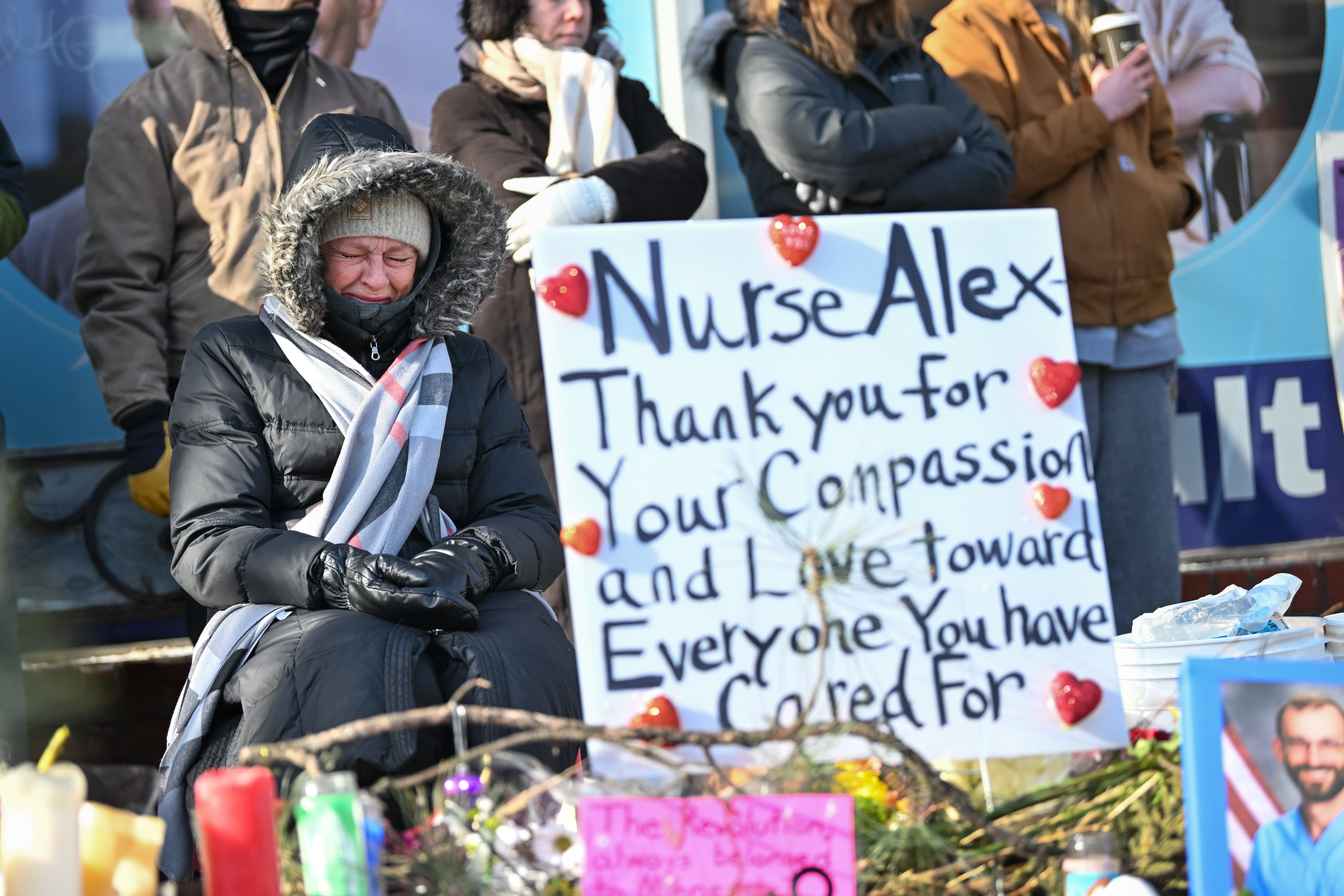
Minneapolis: One city, three monuments against Police brutality in the United States. It’s a grim tally, a visual representation of a problem that continues to haunt this city and the nation as a whole.
Minneapolis' Powerful Protest: 3 Monuments That De...
The sites where federal agents killed Alex Pretti and Renee Good have become part of a growing, heartbreaking memorial landscape, joining the now-permanent one that still stands, nearly six years later, in honor of George Floyd. I spent some time this week visiting each of these places, and the weight of it all is palpable.
Almost three weeks after Good's death, a makeshift shrine marks the spot where her car came to a stop after she was fatally shot. What strikes you is the immediate, almost desperate effort to memorialize her life. A journalist, identified only as Vizzions, arrived in the city seeking to contribute during a time of crisis. He decided to stay and tend to the memorial erected by residents in Good's memory. It's an act of solidarity, a way to bear witness.
“When you’re a journalist, you often work in a community, but rarely with it,” Vizzions explained last Sunday, next to the fire that keeps him warm each day in the open air, where temperatures can drop to minus 25 degrees Celsius – that's bone-chilling. He clears the snow, replaces the flowers ("it’s not that they’re dead, they’re frozen,” he says with a kind of weary acceptance), and maintains a peaceful atmosphere for those paying their respects. It's a thankless job, but an essential one.
The site is more than just a memorial; it's a haunting reminder, a point on the map connecting three separate tragedies of alleged Police brutality in the United States, a phenomenon particularly devastating in Minneapolis. The other two memorials, of course, commemorate George Floyd, the African American man whose dying words, "I can't breathe," became a rallying cry, and Alex Pretti, the most recent victim, adding another layer of grief to an already devastated community.
Sisters Etta and Ellie Draper made a pilgrimage to these three locations last Sunday, a day Etta described as "especially difficult." You could see the pain etched on their faces. The Floyd memorial stands at the entrance of the store where police officer Derek Chauvin killed him for allegedly trying to pay for cigarettes with a counterfeit bill. It’s a place of pilgrimage, of mourning, and of quiet defiance.
Etta, carrying a whistle used by activists to warn of raids or hinder the work of Immigration and Customs Enforcement (ICE) and U.S. Border Patrol agents, explained that she occasionally visits the intersection of 38th and Chicago Avenue, now renamed George Floyd Square. The altar there features portraits of Floyd and mementos of others killed by police violence, along with dried and painted flowers and snow. Nearby, there are free books and clothes, and an abandoned gas station displays a sign reading: "While there are people, there will be power." It’s a space that's both sacred and deeply political.
A thread connects the uprising following Floyd's death with the current protests in Minneapolis, aimed at halting what some see as an authoritarian drift in the U.S. government. The current demonstrations draw on the communication infrastructure and connections forged in the wake of Floyd's death. Many see the deaths of Floyd and Good as two sides of the same coin, despite their differing backgrounds – Floyd, a Black security guard down on his luck, and Good, a white poet and mother of three. The fight for justice continues, etched in snow and flowers across this grieving city.
Comments
Please sign in with Google to post a comment
No comments yet. Be the first to comment!