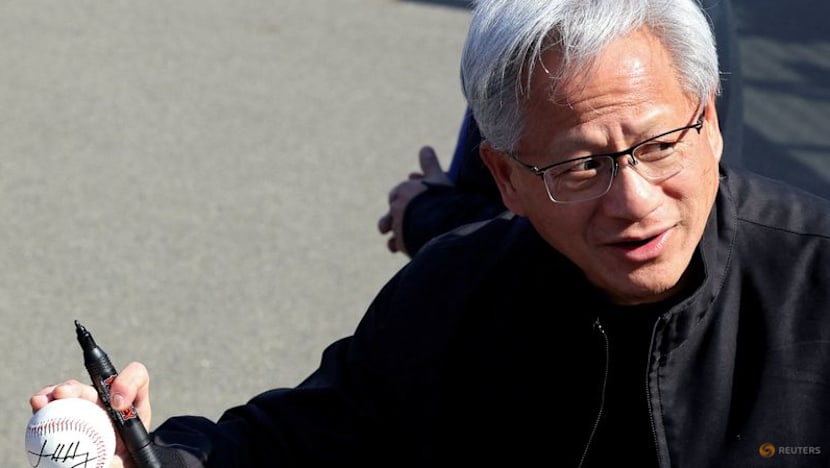
Nvidia's CEO, Jensen Huang, is keeping his fingers crossed. Despite what seems like a green light from U.S. export authorities and a strong appetite from Chinese companies, the fate of Nvidia's H200 chip sales in China still hangs in the balance. The big hurdle? Beijing's ongoing deliberation over import licenses.
Nvidia's China Chip Nightmare: Will H200 Ever See ...
Huang, fresh off a visit to China where he reportedly met with key players including customers, partners, and government officials, made his plea publicly. Speaking to reporters at Taipei's Songshan airport, he stated, "The H200 license is being finalized. I'm hoping the Chinese government will allow Nvidia to sell the H200; they have to decide. I'm looking forward to a favorable decision," adding with a touch of pragmatism, "We just have to wait patiently." It's a delicate dance, to be sure.
The situation got a bit murkier earlier this week when Reuters reported that ByteDance, Alibaba, and Tencent—some of China’s biggest tech giants—had apparently secured approvals to purchase a total of over 400,000 H200 chips. However, the report suggested these approvals came with strings attached, essentially preventing these companies from actually finalizing their orders. That's a pretty significant detail, and if true, casts a shadow over the whole situation.
Huang, however, seemed to downplay that specific report. He told reporters that Nvidia hadn't received that particular information and, as far as he understood, the Chinese government was still in the midst of making its decision. He understandably remained tight-lipped beyond that.
So, what's the hold-up? While China hasn't explicitly stated its reasons for the delay, most industry observers believe it boils down to a balancing act. Beijing wants to meet the growing demand for powerful AI chips from its domestic tech sector. But, simultaneously, it wants to nurture and support its own rapidly developing domestic chip industry. Nvidia's H200, the company's second most powerful chip, obviously presents a challenge to that goal.
Adding another layer to the complexity is the fact that China is not a technological monolith. As Huang himself noted, “China has many strong chip companies," stressing the need for Nvidia to compete vigorously. And competition, as we know, can be a powerful catalyst for innovation, but also for protectionism. The outcome will be interesting to watch unfold. It’s not just about Nvidia’s bottom line; it's about the future of AI development on a global scale.
Finally, when pressed on the issue of manufacturing capacity, particularly with TSMC, Nvidia’s manufacturing partner already stretched thin, Huang assured that orders were the primary concern. “The first thing we need is orders. We have a supply that supports all of our existing customers," he emphasized. "If H200 is approved, we will work with TSMC to schedule and plan the supply and deliver as fast as we can." Let’s see if that approval comes through.
Comments
Please sign in with Google to post a comment
No comments yet. Be the first to comment!