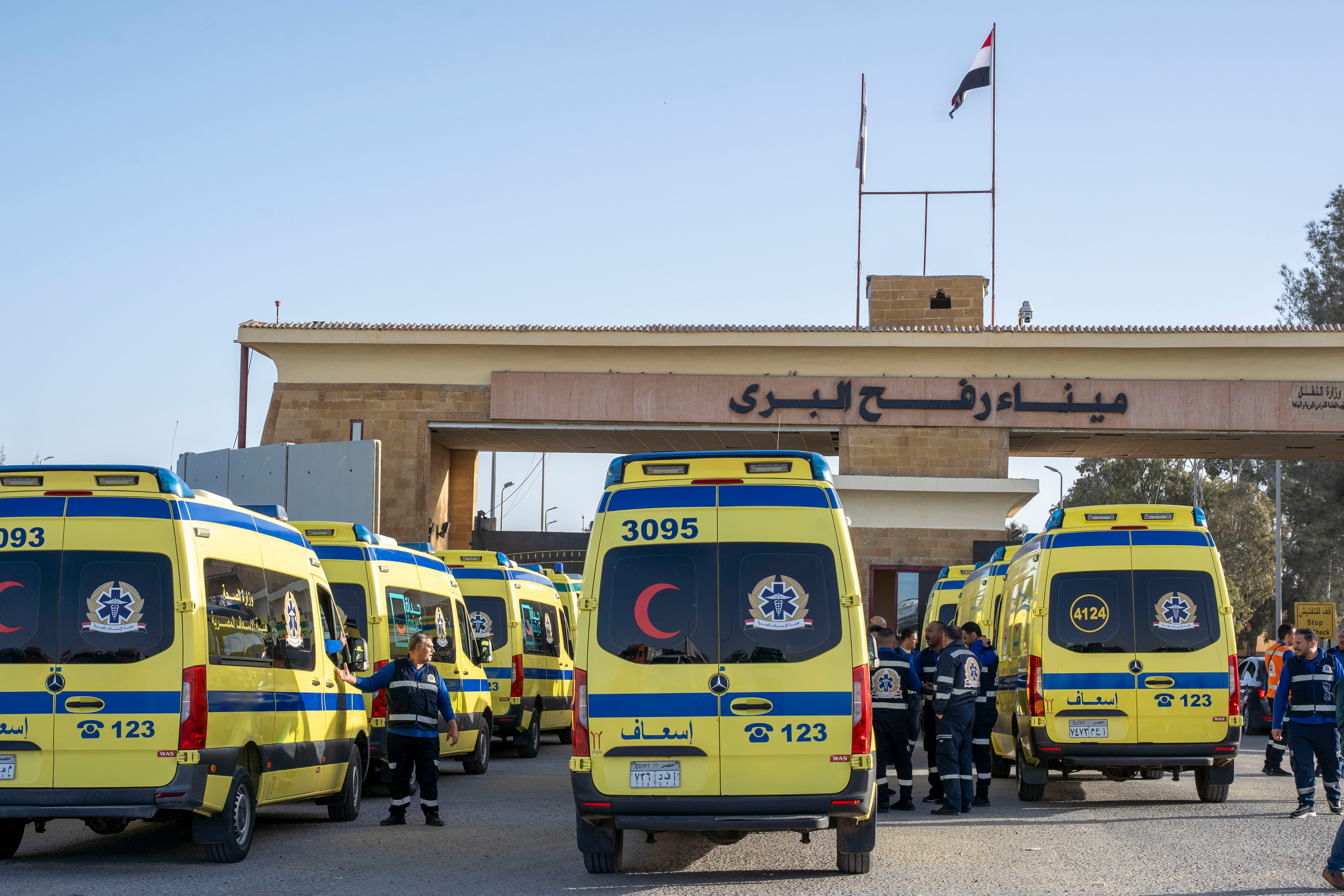
Hope and heartbreak mingle at the Rafah border crossing today. After weeks of closure, the crossing between Gaza and Egypt has partially reopened, offering a sliver of hope for those desperate to leave or return. An Egyptian official confirmed that a mere 50 Palestinians were expected to cross in each direction on Monday, the first day of operation. It's a start, yes, but hardly enough to address the immense need.
Gaza Crossing Opens... But Who's REALLY Getting Th...
While this limited reopening is being touted as a positive step following the recent ceasefire, it feels more symbolic than substantive. Only a tiny fraction of those stranded outside Gaza will be able to return home, and crucially, no goods are currently permitted to pass through. Egyptian state media and an Israeli security official both confirmed the news, speaking anonymously, as is so often the case in these sensitive situations.
And even as this trickle of people begins to move, violence continues to cast a long shadow. Just today, hospital officials reported that an Israeli navy ship fired on a tent camp, tragically resulting in the death of a 3-year-old Palestinian boy. The Israeli military has stated they are investigating, but that offers little comfort to a grieving family, or indeed, to anyone who believes in the sanctity of life.
The human stories emerging from this situation are, as always, gut-wrenching. Rajaa Abu Mustafa, for example, has been waiting anxiously outside a Gaza hospital, hoping to get her 17-year-old son, Mohamed, evacuated. He was blinded last year, shot in the eye while desperately seeking food from aid trucks. "We have been waiting for the crossing to open," she said. "Now it’s opened and the health ministry called and told us that we will travel to Egypt for (his) treatment.” You can only imagine the relief, tinged with anxiety, in her voice.
Compounding the situation is the fact that Israel has, since the conflict began, banned patients from being sent to hospitals in the occupied West Bank and east Jerusalem. This has effectively severed a vital lifeline for Palestinians requiring specialized medical care unavailable within Gaza. It's a deeply worrying development that further restricts access to essential healthcare.
Israel has indicated that both it and Egypt will be vetting all individuals passing through Rafah, with supervision from European Union border patrol agents, alongside a small Palestinian presence. The hope is that the number of travelers will gradually increase, but that depends entirely on the smooth operation of this vetting system. I can't help but wonder how long that will take, and how many more lives will be put on hold in the meantime.
Egypt has consistently emphasized the need for the crossing to remain open for Palestinians, understandably fearing that Israel might use it as a tool for displacement. This is a legitimate concern, given the history of this conflict. And while the reopening is a step in the right direction, it's crucial that it translates into a genuine and sustained easing of restrictions for the people of Gaza. Anything less is simply unacceptable. The death of the three-year-old boy, a casualty in a conflict that seems to have no end, should be a stark reminder of the urgency and the stakes.
Comments
Please sign in with Google to post a comment
No comments yet. Be the first to comment!